Ghana's Teacher Strike Battle: Unions Demand Action, Gov't Faces Pressure!
Pre-tertiary teacher unions in Ghana are maintaining a nationwide strike amid ongoing negotiations with the government, sparking a debate among stakeholders. While a labour consultant criticizes the continued industrial action, education policy analysts defend it, emphasizing past delays and the need for concrete payments for validated promotion claims. Negotiations continue, with a focus on promotion arrears and collective agreement terms.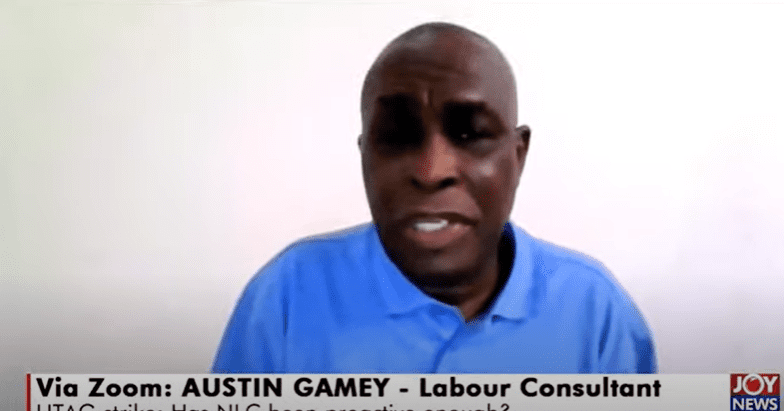
The pre-tertiary teacher unions in Ghana are engaged in a nationwide strike, a decision that has sparked diverse opinions among key stakeholders while negotiations with the government continue. The strike was initiated over concerns including outstanding promotion claims and the renegotiation of their collective agreement.
Labour consultant Austin Gamey has strongly criticized the unions' decision to maintain the strike during ongoing negotiations. Speaking on JoyNews’ The Pulse, Mr. Gamey argued that continuing industrial action while engaging in talks is counterproductive and akin to negotiating with “handcuffs” on the other party. He stressed that globally, negotiations are not typically conducted while a strike is active, and such actions can undermine the relationship between the parties. While acknowledging that the government's initial response to the teachers' concerns might have lacked urgency, he pointed to the ongoing validation of promotion claims as a genuine step towards resolution, urging both sides to recognize these efforts and foster a stronger relationship.
Conversely, education policy analyst Dr. Peter Anti, Executive Director of the Institute for Education Studies (IFEST), has staunchly defended the teacher unions' stance. Dr. Anti asserted that the government failed to act with sufficient urgency despite ample prior notice from the unions regarding their concerns, including the collective agreement which expired in June 2026, with renegotiation discussions initiated as far back as late 2025. He contends that the strike itself compelled the government to intensify action, notably by validating over 51,000 promotion claims from a backlog of more than 80,000. However, Dr. Anti critically highlighted that “validation doesn't mean payment” and warned against suspending the strike prematurely, citing past instances where government assurances led to prolonged delays in resolving issues. He emphasized that industrial action (“strike is the only language that the government understands”) is necessary to ensure concrete progress, including actual payments and signed agreements.
Dr. George Smith-Graham, the Chief Executive Officer of the Fair Wages and Salaries Commission (FWSC), rejected claims of government inaction, stating that the FWSC began negotiations with the unions in April, following their initial approach last year regarding continuous service. He clarified that mere dissatisfaction with government's initial proposals did not equate to a lack of engagement. While acknowledging the strike has complicated the situation, Dr. Smith-Graham reiterated the government's commitment to continued negotiations as the preferred method for resolving the outstanding issues.
Jacob Anaba, President of the National Association of Graduate Teachers (NAGRAT), added a specific demand for clarity regarding the remaining 29,000 teachers whose promotions are still awaiting processing, alongside the 51,000 already processed. He stressed the importance of knowing the status and timeline for these documents and, crucially, pointed out that “even the 51,000 that have been processed, none has received a dime.” Mr. Anaba mentioned that the Education Minister had indicated supplementary vouchers and payments from October 6. The promotion issue, he noted, is integral to the broader collective agreement negotiations.
Renewed negotiations between the teacher unions, the Fair Wages and Salaries Commission, and the Ghana Education Service concluded on Tuesday, October 6, without a definitive agreement. The parties are set to reconvene on Wednesday, October 7, as efforts persist to find a resolution to the ongoing industrial action by pre-tertiary teachers. The differing perspectives underscore the complexities of the dispute, balancing the right to strike with the imperative of maintaining stable labour relations and ensuring educational continuity.