Trump Greenlights Firing Squad for Fort Hood Shooter
President Donald Trump has approved the execution of Nidal Malik Hasan, the Fort Hood shooter, by firing squad. This decision marks a rare instance in U.S. military history and aligns with Trump's strong support for capital punishment, which has seen his administration expand execution methods. The approval follows a recent botched lethal injection attempt in Tennessee, adding to the ongoing debate surrounding capital punishment.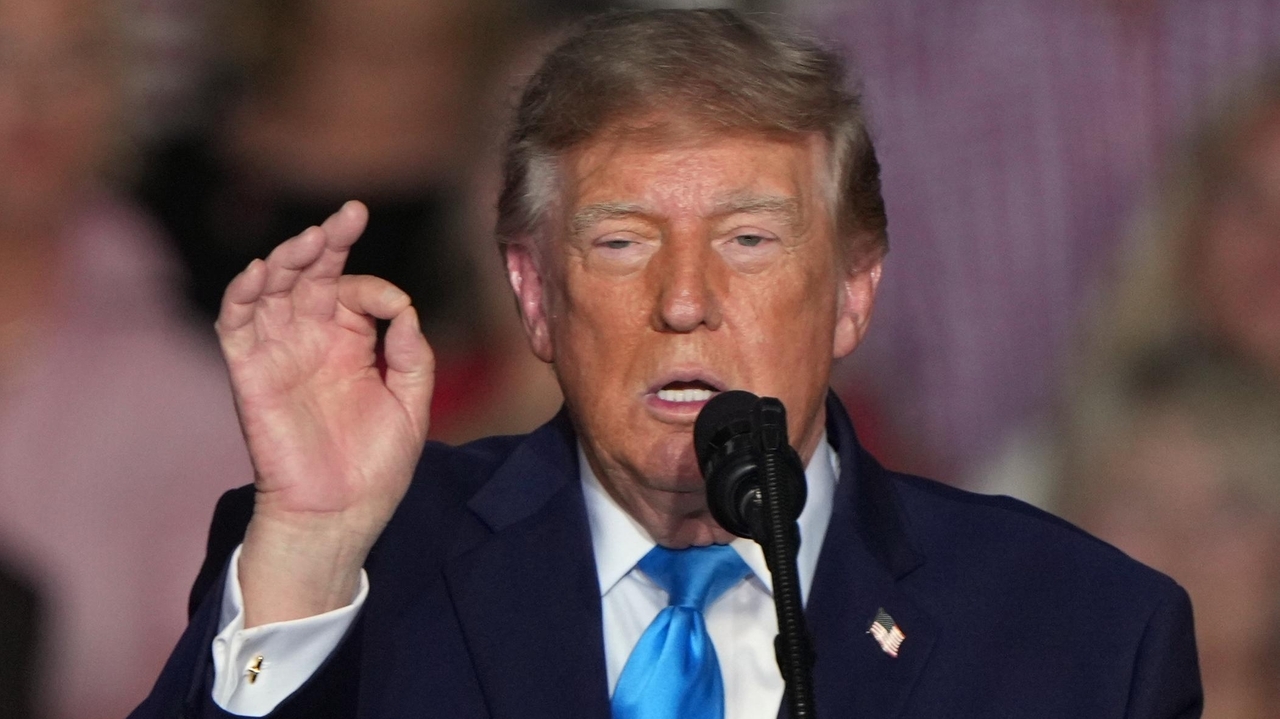
President Donald Trump has formally approved the execution by firing squad of Nidal Malik Hasan, a former U.S. Army psychiatrist convicted for the devastating 2009 Fort Hood, Texas, shooting. The approval follows a recommendation from Defense Secretary Pete Hegseth, as confirmed by Pentagon spokesman Sean Parnell on Monday, who remarked, “Judgement day for Hasan has finally come.” The specific time and location for the execution will be determined by the secretary of the Army.
If carried out, Hasan’s execution would be a historically significant event, marking the first U.S. military execution since April 13, 1961, when Army Pvt. John A. Bennett was hanged for rape and attempted murder. The last known military execution by firing squad, or “musketry,” occurred even earlier, on November 9, 1945, according to data from the nonprofit Death Penalty Information Center, which meticulously tracks capital punishment in the United States.
Hasan, an American-born Muslim, unleashed a horrific attack at Fort Hood’s Soldier Readiness Processing Center, where troops were preparing for deployment to Afghanistan. He killed 13 people and injured 32 others, reportedly shouting “Allahu akbar!” before firing a handgun equipped with laser sights. During his 2013 court-martial, where he represented himself, Hasan admitted responsibility for the shooting, stating his actions stemmed from his belief that he was on the “wrong side of a war against Islam.” He had been scheduled to deploy to Afghanistan in late November 2009 and expressed a strong aversion to deployment.
Execution by firing squad remains a rare method in the United States, permissible in only a handful of states including Idaho, Oklahoma, Utah, South Carolina, and Mississippi. The Death Penalty Information Center reported that three individuals in South Carolina were executed by firing squad just last year. Prior to that, only three people had undergone this method of execution since 1977, all in Utah.
President Trump has consistently advocated for capital punishment throughout his political career. During his first presidential term in 2020, the Justice Department resumed federal executions after a nearly two-decade hiatus. In his second term, his administration lifted a moratorium on federal executions and actively pushed for more death sentences. More recently, in April, the Justice Department announced plans to expand the methods used for federal death sentences beyond lethal injection, explicitly including the electric chair and firing squads. Federal officials were also directed to reinstate the execution protocol from Trump’s first term, which utilizes the drug pentobarbital for lethal injections.
The approval of Hasan’s execution by firing squad comes shortly after a reported botched attempt to execute Christa Pike in Tennessee. Pike, sentenced to death for her involvement in a 1995 murder, was administered two doses of pentobarbital via lethal injection but continued to breathe for almost an hour, according to court filings by her legal team. Her attorney reported her remaining in critical condition, highlighting the complexities and controversies surrounding execution methods.