When Sacred Calendars Align: What a Rare Religious Overlap Can Teach Us
As Lent, Ramadan, and the Lunar calendar converge in February 2026, this short piece explores religious tolerance, communal living, and the importance of practicing respect beyond policy declarations.
It doesn’t happen often that major religious observances share the same moment on the calendar.
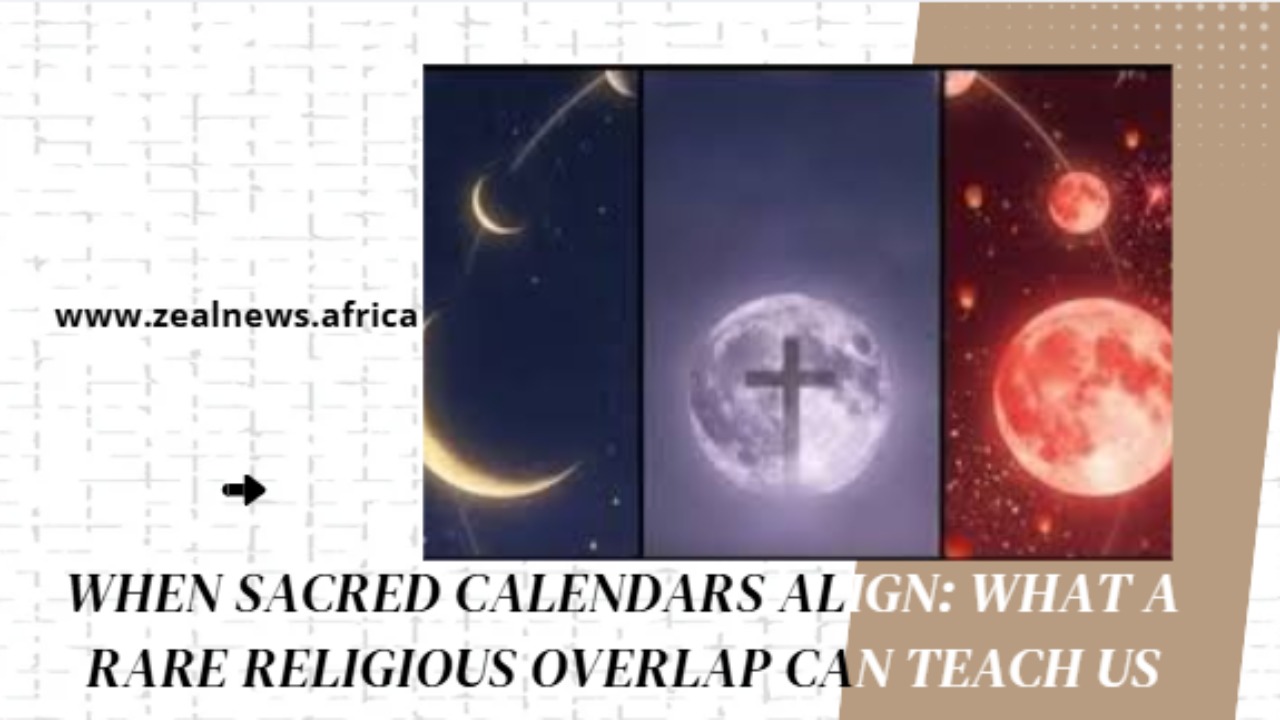
Yet February 17, 18 and 19, 2026 within the same 48 hour window marked that convergence. Lent, Ramadan, and the Lunar New Year period intersect in close proximity, a rare alignment that some projections suggest may not repeat in the same way until 2189.
The last time it was said to happen according to reports was in 1863. This is made possible as Ramadan moves backwards yearly by at least 10 days, cycling through the Gregorian calendar every 33 years.
The Lunar New Year and the start of the Christian Lent have a fixed window of between February and March.
For the Christians it is predominantly seen among Roman Catholics, Anglicans, Lutherans, Methodists, many Presbyterian and Reformed churches which will also mark a beginning of a fasting period for them.
For some, this is simply an interesting fact. For others, it is symbolic.
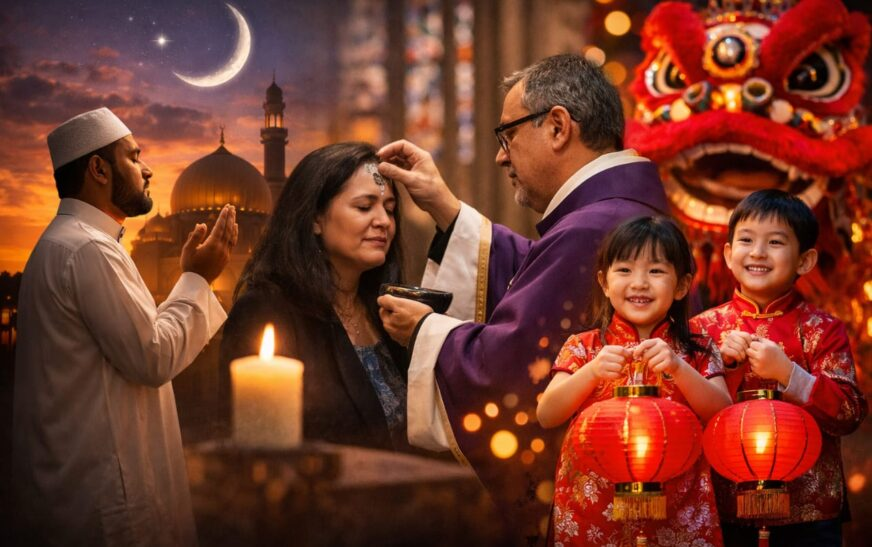
Three distinct traditions, Christianity, Islam, and Chinese culture that observe the Lunar New Year, marking sacred time within the same calendar window.
But beyond curiosity lies a deeper reflection that we must all intentionally not ignore.
In a world that often highlights religious differences through headlines and policy debates, what does it mean when sacred seasons overlap?
What does it reveal about how communities share space, workplaces, classrooms, markets, and neighborhoods during spiritually significant periods?
This convergence offers something subtle, a reminder that coexistence is not theoretical.
It is practical, lived, and often happening quietly around us.
Beyond Policy And Living Religious Tolerance Daily

Social Insight
Navigate the Rhythms of African Communities
Bold Conversations. Real Impact. True Narratives.
Religious tolerance is frequently discussed at conferences, written into national constitutions, and promoted in official speeches.
Governments reaffirm commitments to freedom of religion. Institutions release statements encouraging respect and diversity.
Yet tolerance does not thrive on paper alone, it thrives in ordinary moments and understanding that we all as humans try to find expression of what can be.
Tolerance is visible when a colleague adjusts a meeting schedule to accommodate someone fasting during Ramadan.

It appears when Christian communities observe Lent and their fasting exercises while their Muslim neighbors give them space for that.
It shows in workplaces or international settings where Lunar New Year celebrations are recognized without diminishing other faith traditions.
Tolerance becomes meaningful when it moves from policy to practice.
The coincidence of Lent and Ramadan, both seasons of reflection and discipline, highlights shared human themes: restraint, charity, introspection, renewal.
While theological foundations and beliefs differ, the emphasis on consecration, self-control, generosity, and spiritual growth resonates across traditions.
Similarly, the Lunar New Year, though culturally rooted, emphasizes renewal, new beginnings, family unity, gratitude, and hope for prosperity.
These values are not isolated to one belief system; they are universal aspirations and humanly sought after.
When such periods unfold simultaneously, societies face a practical question: can communities respect one another’s sacred time without competition or strife?
Social Insight
Navigate the Rhythms of African Communities
Bold Conversations. Real Impact. True Narratives.
The answer does not depend solely on governments or religious leaders. It depends on individuals.
Religious tolerance is enacted in subtle ways:
Respecting dietary restrictions during communal meals.
Allowing space for prayer or reflection.
Avoiding dismissive remarks about another’s belief system.
Recognizing that freedom of religion includes the freedom to observe, abstain, or celebrate differently.
In pluralistic societies, communal living requires more than coexistence, it requires awareness and respect for the belief of others.
The alignment of these observances in 2026 does not demand grand declarations.
Instead, it presents an opportunity to observe how daily interactions reflect genuine respect for each other.
Employers and business owners acknowledging diverse needs and friends learning about each other’s traditions without suspicion or ridicule.
Tolerance, in its most authentic form, is not passive endurance. It is an active act of consideration.
It does not mean agreement, it means recognition of how diverse we are and distinct in our mode of operation as humans.
Shared Time, Shared Responsibility
Social Insight
Navigate the Rhythms of African Communities
Bold Conversations. Real Impact. True Narratives.
The alignment of Lent, Ramadan, and the Lunar calendar cycle in February 2026 may be rare.
If projections hold true, a similar overlap may not occur again until 2189. But rarity alone is not what makes the moment meaningful.
What matters is how societies respond.
Religious freedom is a protected right in many nations, yet the daily experience of that freedom depends on culture as much as law.
Policies may establish protection, but communities establish tone.
Living communally in a religiously diverse world requires maturity.
It requires resisting the instinct to center only one tradition in shared spaces.
It asks individuals to acknowledge that spiritual devotion can look different across faiths and that difference does not threaten coexistence.
When sacred calendars align, they quietly remind us that no belief system exists in isolation.
Our workplaces, neighborhoods, and public institutions are shared environments.
The responsibility for tolerance rests not just with leaders, but with everyone participating in those spaces.
Social Insight
Navigate the Rhythms of African Communities
Bold Conversations. Real Impact. True Narratives.
Perhaps the real significance of February 18, 2026, is not its statistical rarity.
Perhaps it is the reminder that while religions may follow different calendars, humanity shares the same timeline.
Respecting that shared timeline, with empathy, curiosity, and restraint, is what transforms tolerance from a slogan into a lived reality.