When A People Refused To Wait: The Story Of Sam Mbakwe International Airport
The untold story of Sam Mbakwe International Cargo Airport, Owerri, the first airport in Nigeria built through community contributions, and how it became a lasting symbol of civic ambition and South-East development.
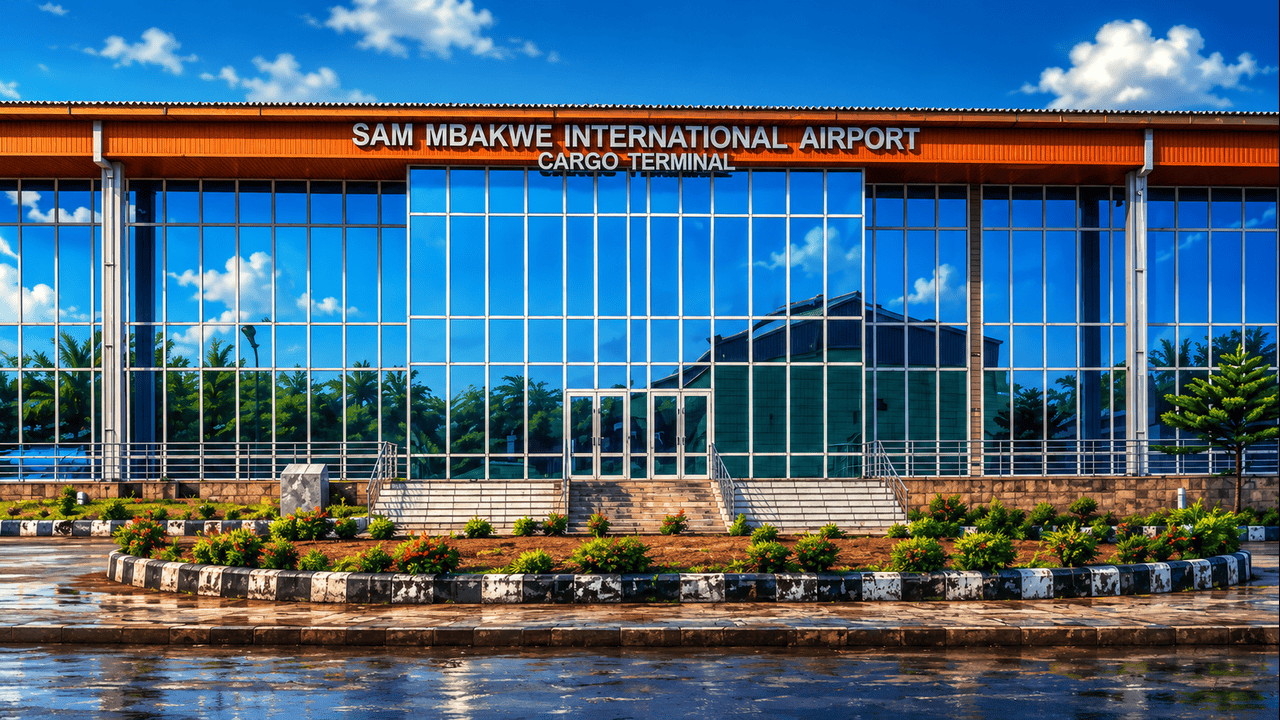
Would you ever believe that a public infrastructure such as an airport was built by the contributions and fundraising of ordinary people? Not on a federal budget line or an oil block allocation but contributions from regular citizens.
Business men and women, traders, civil servants, prominent individuals and sons and daughters of a state emptying their pockets because their governor asked them to dream bigger than their circumstances allowed.
That's the story of Sam Mbakwe International Cargo Airport in Owerri, and it remains one of the most remarkable civic achievements in Nigeria's history.
Long before state governments treated airports as prestige projects or political talking points, one state built the first of its kind through the hands of its own citizens and the wider Igbo nation.
Today, that airport carries international flights, and its story still holds lessons for anyone who thinks big infrastructure can only come from the Presidency in Abuja or from oil money.
More importantly, it reminds us that communities can become nation-builders when leadership inspires collective action.
A Governor Who Asked His People To Build Something Bigger Than Government
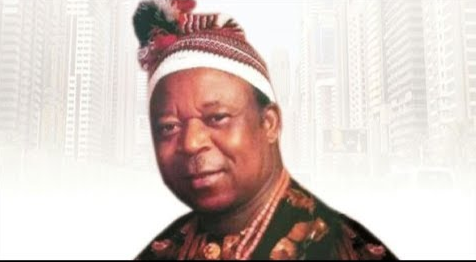
The idea belonged to Chief Sam Mbakwe, the first democratically elected civilian governor of old Imo State, a territory that has since split into Imo, Abia, and parts of Ebonyi.
Mbakwe took office in 1979, in a South-East still rebuilding from the wounds of the civil war and still watching federal infrastructure investment flow elsewhere. He wanted an airport for his people, and he didn't wait for Abuja to hand him one.
Construction began in the early 1980s, and government funds alone didn't carry it. Mbakwe's administration turned to the people themselves, ndi-Imo and ndi-Igbo more broadly, calling for donations and organised fundraising to push the project forward.
Indigenes of the state and Igbo people well beyond its borders answered that call, and the money they raised became the backbone of the build.
That collective act is what makes this airport different from every other one on the continent at the time. It stands today as Nigeria's first state-owned airport and, by most historical accounts, the first community-funded airport project anywhere in West Africa.
In an era where citizens are often disconnected from public infrastructure projects, the story feels almost unbelievable. Imagine thousands of people contributing not because they were compelled by taxes or government policy, but because they believed an airport could redefine the economic future of their region. It was infrastructure funded by hope and sustained by trust in leadership.
From Community Purse To Runway: A Decade-Long Wait
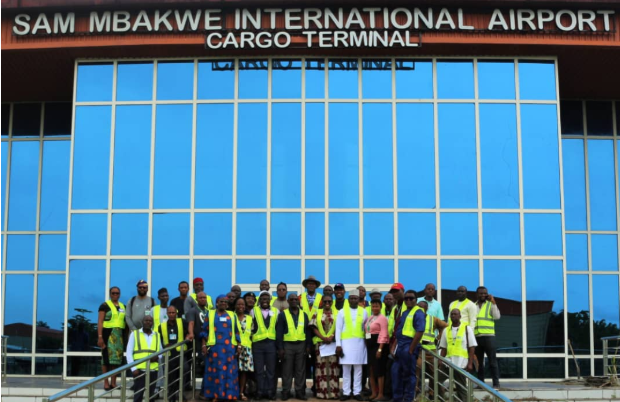
Building an airport from contributions doesn't happen overnight, and Owerri's didn't. The early structure served small domestic operations while the state kept expanding it in phases through the 1980s and into the 1990s.
Sitting in Ngor Okpala Local Government Area, roughly 23 to 25 kilometres southeast of Owerri city, the airport grew slowly, funded in stretches whenever government revenue and public goodwill lined up.
History
Rewind the Stories that Made Africa, Africa
A Journey Through Time, Narrated with Insight.
The federal government eventually stepped in to support the project under successive military administrations. In 1994, the airport was formally handed over to the Federal Airports Authority of Nigeria for management, and it was Navy Captain James N. J. Aneke, then military administrator of Imo State, who oversaw its completion and commissioning.
The airport was later named after Mbakwe himself, a fitting tribute to the governor whose vision, and whose people's pockets, built it.
It's worth sitting with that timeline for a moment. An idea in 1979. Contributions raised through the early 1980s. A federal handover in 1994. Fifteen years between the dream and the day it became someone else's responsibility to run.
Few public projects survive that kind of patience, and fewer still survive it because the people funding it never stopped believing in it. The airport's journey speaks to something often missing from conversations about development in Nigeria: consistency.
Infrastructure is rarely built in a single administration or political cycle. Sometimes, it requires communities willing to believe in a vision long before it becomes tangible.
A Living Legacy: What The Airport Looks Like Today
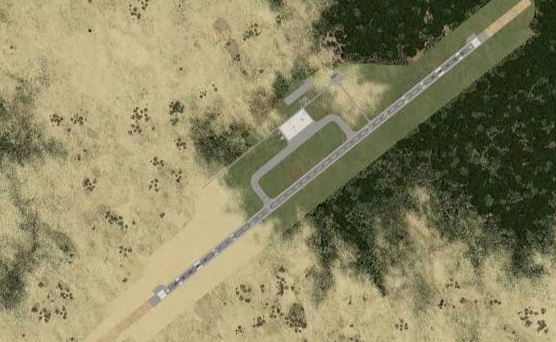

Sam Mbakwe International Cargo Airport (IATA: QOW, ICAO: DNIM) is still very much alive. It serves Owerri, Aba, and Umuahia directly while supporting economic movement into Onitsha, Calabar, and Akwa Ibom State.
In 2015, it was already handling over 313,343 passengers a year, with passenger traffic climbing more than seven percent from the year before and by 2024, the airport was already handling 583,000 passengers, marking a substantial increase from the 313,343 passengers recorded in previous years.
The airport kept adding milestones well into the current decade. In May 2024, Governor Hope Uzodinma's administration installed night landing facilities, ending more than three decades without them.
The first night flight touched down from Abuja on May 25 that year. Then, on May 9, 2025, the airport recorded its first-ever international flight, a non-stop Air Peace Boeing 777 carrying 315 Hajj pilgrims from Owerri to Medina, Saudi Arabia.
More than four decades after Mbakwe first asked his people to dig into their pockets, their airport is now flying Nigerians to the Holy Land. Few community projects get to watch their own growth unfold this fully. What began as an ambitious idea has become an economic and logistical asset connecting the South-East to both national and international destinations.
What This Airport Still Teaches Us
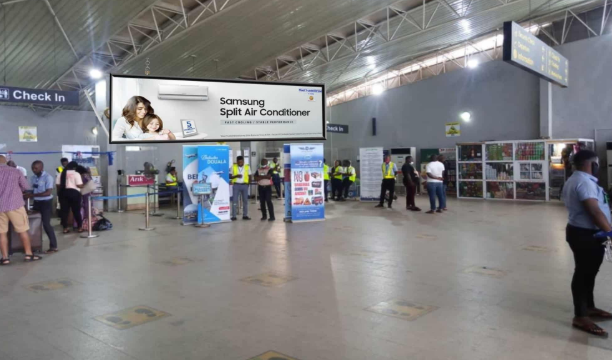
Sam Mbakwe's airport says something that policy documents rarely capture: infrastructure doesn't always have to wait on the federal government's mood or the price of crude oil. When a community believes in a project and a leader is transparent enough to earn that belief, ordinary contributions can lay a runway that outlives the governor who first dreamed it.
In many ways, the airport challenges one of Nigeria's most enduring assumptions, that development is something people must wait for. The people of old Imo State did not merely ask for infrastructure; they participated in building it. They proved that collective ambition, when properly mobilised, can become concrete, steel, and eventually economic opportunity.
Owerri's airport took over forty years to become an international gateway, but it never stopped being what it always was, proof of what ndi-Igbo can build when they build it together. This is what happens when people refuse to wait.