Akume Ignites Power Rotation Debate: North-South Zoning Imperative for Future Elections
Senator George Akume, the Secretary to the Government of the Federation, reiterated the critical importance of Nigeria's established power rotation agreement between Northern and Southern regions, calling it fundamental to national cohesion and democratic growth. He urged strict adherence to the agreed eight-year alternating presidential cycles. Akume also acknowledged the significant charitable interventions by the Order of the Knights of St. Mulumba, emphasizing the need for collaborative efforts in national development and welfare.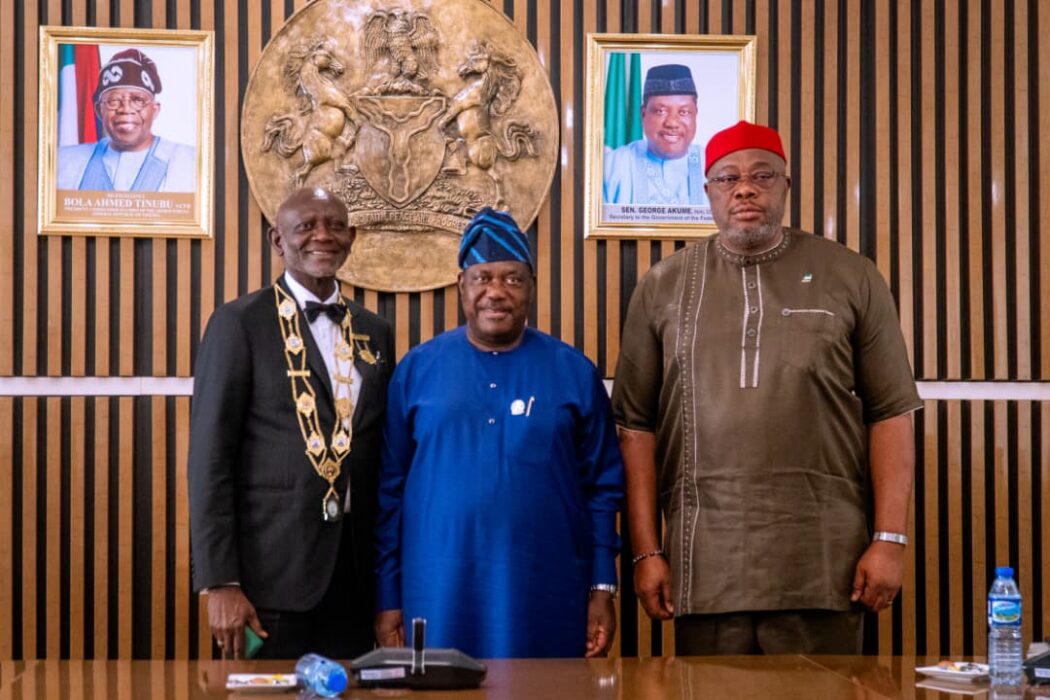
The Secretary to the Government of the Federation (SGF), Senator George Akume, CON, recently underscored the critical importance of the power rotation agreement between Northern and Southern Nigeria. He described this arrangement as a foundational understanding essential for sustaining national cohesion, ensuring fairness, and fostering democratic growth since the return to civilian rule in 1999.
Akume made these remarks during a meeting in Abuja with a delegation from the Order of the Knights of St. Mulumba (KSM) Nigeria, led by its Supreme Knight, Sir Steve Adehi. Recalling the origins of the agreement, the SGF, through a statement by his Director of Information, Chris Ugwuegbulam, noted that it was forged in Kaduna in 1999. This followed extensive consultations among governors-elect on the platform of the Peoples Democratic Party (PDP) and prominent political leaders. These leaders recognized the vital need for an equitable distribution of political power to preserve Nigeria’s unity.
The consensus reached was that presidential power should alternate between the North and the South in eight-year cycles, commencing with the South. This was seen as a practical measure designed to promote political balance, strengthen mutual trust, and safeguard the country's territorial integrity. The discussions were primarily driven by concerns regarding the concentration of political power in one region and the increasing dissatisfaction among stakeholders who believed a deliberate, structured arrangement was necessary to ensure fairness and national inclusion.
According to the SGF, this power-sharing mechanism has significantly contributed to the continuity of democratic governance. It provides a robust framework for managing Nigeria's diverse regional landscape, ensuring that neither the North nor the South feels permanently excluded from the highest political office. Akume firmly asserted that the principle of power rotation should not be viewed as a temporary political convenience but rather as a crucial political understanding deeply rooted in the imperatives of fairness, mutual respect, and national stability.
Furthermore, the SGF expressed strong disapproval of attempts by Northern aspirants to contest the presidency before the completion of the South's current eight-year tenure. He insisted that the North must respect the established sequence and allow the arrangement to run its full course. He specifically maintained that, following the eight-year administration of former President Muhammadu Buhari, of blessed memory, the current tenure of a Southerner should be honored in strict adherence to the principle of alternating power between the two major regions.
During the same meeting, the SGF extended his gratitude to the Order of the Knights of St. Mulumba for their diverse charitable interventions aimed at improving the welfare of vulnerable members of society. He highlighted that the government’s development agenda must be evaluated against both immediate economic pressures and the long-term requirements for national growth. Akume called for a broader understanding of ongoing reforms and investments, stressing that sustained collaboration among Federal, State, and Local Governments is indispensable for addressing the nation’s challenges and enhancing citizens' welfare.
Earlier, the Supreme Knight of the Order of the Knights of St. Mulumba, Sir Steve Adehi, elaborated on the organization's charitable work. These initiatives include supporting medical treatment for patients, assisting inmates with financial obligations to facilitate their release from correctional facilities, providing boreholes, renovating schools, and supporting hospitals. Sir Adehi clarified that these interventions stem from the recognition that government alone cannot adequately address the numerous social and economic challenges facing the populace. He emphasized the vital role of complementing government efforts through private philanthropy, partnerships, and community-based initiatives designed to alleviate poverty and improve living conditions across the nation.