We Order Food Online Far Too Much
We grew up being told to avoid food from strangers but now you can a generation raised to avoid food from strangers now relying heavily on online food delivery. Read about what this really means culture, lifestyle shifts, convenience, class, and the evolving meaning of food in modern society.
Don't eat from them you don't know them, even if they are neighbors they are strangers to you that was how most of our mothers taught us while growing up and if you dare disobey you would meet an iron hand melting out punishment on you.
Whether you admit it or not, there is a strange cultural irony woven into the lives of today’s young adults. Many of us grew up with one of the most repeated warnings of childhood: never take food from strangers, it was a regular anthem in many homes. It was a rule that carried the weight of caution and cultural security, a reminder that danger often hides in the innocent. Yet somehow, as the world progressed and without hesitation, we now live in a world where ordering a meal from an unseen cook, prepared in an unfamiliar kitchen, and delivered by someone whose face we barely remember has become a daily ritual. The generation raised to be suspicious now relies on the very thing it feared. We trust sealed nylon bags, sealed food takeaways, branded stickers, algorithmic ratings, digital receipts and even the mere recommendation from a friend. And with one tap, we invite strangers, not only to bring us food but to shape what we eat and how we live.
This shift is more than convenience; it is a cultural pivot that tells a deeper story about modern life, changing habits, and the quiet loneliness of the contemporary lifestyle. So it's obvious that the world have moved past our mother's cultural fear, but let's face it in this present age, cooking and going about a busy schedule is not easy, so why not just order right?
From Protective Upbringing to Digital Trust: How We Modified Our Fears
This upbringing shaped so many African households including the one I grew up in, growing up back then everything was built on a foundation of caution and cultural regard. Don’t eat outside. Don’t collect food in school from those you don’t know. Don’t accept snacks handed over the fence. Don’t trust unfamiliar kitchens.
If you're given a food take it with a smile but don't eat it, so that you won't appear rude, but don't eat it. But today any food available bring am come.
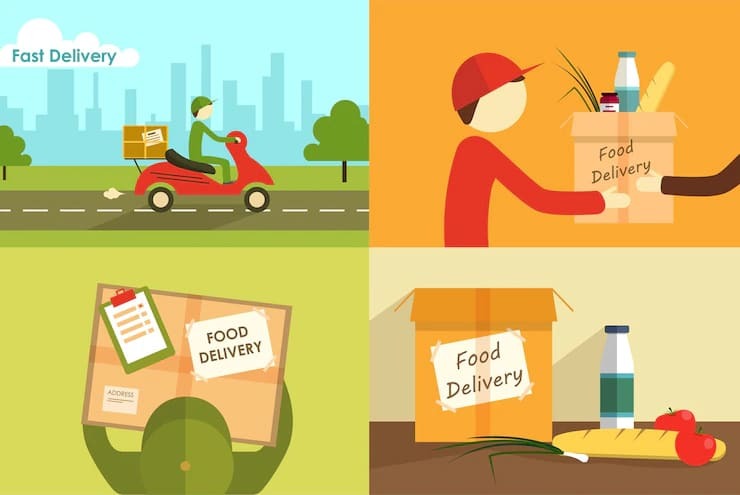
These rules were not paranoia; they were survival principles. Many parents believed, sometimes with reason, that safety could collapse with one bite from the wrong source, to them food was not only for nourishment; it was also tied with trust, identity, and safety.
But along the line as time progressed we or someone rewrote those rules. The very children lectured endlessly about food safety have become adults who trust digital strangers more than physical acquaintances. Instead of knowing who cooked the food, we rely on ratings from faceless reviewers and a star system that decides what is edible and what is not. The fear did not disappear, it simply changed shape. We now trust processes, not people. Apps have become our new parents. Delivery riders are the new familiar faces. Digital platforms have become the gatekeepers of what is considered safe, clean, and authentic. Which is a good thing because who doesn't want their lives to become easy? In many ways, this shift shows how society evolves: caution transforms into convenience, fear bends into trust, and traditions dissolve into new cultural behaviours that feel normal even when they contradict the past.
The Lifestyle Shift: Why Modern Life Forces Us Into Convenience
Behind this transformation is the undeniable speed of modern life. Today’s generation is not simply lazy or indulgent; they are overwhelmed. Long commutes, corporate pressures, late-night deadlines, and the mental fatigue of surviving in rapidly evolving cities leave little room for planning, cooking, or even grocery shopping. Food ordering is no longer indulgence; it is survival in a fast world.
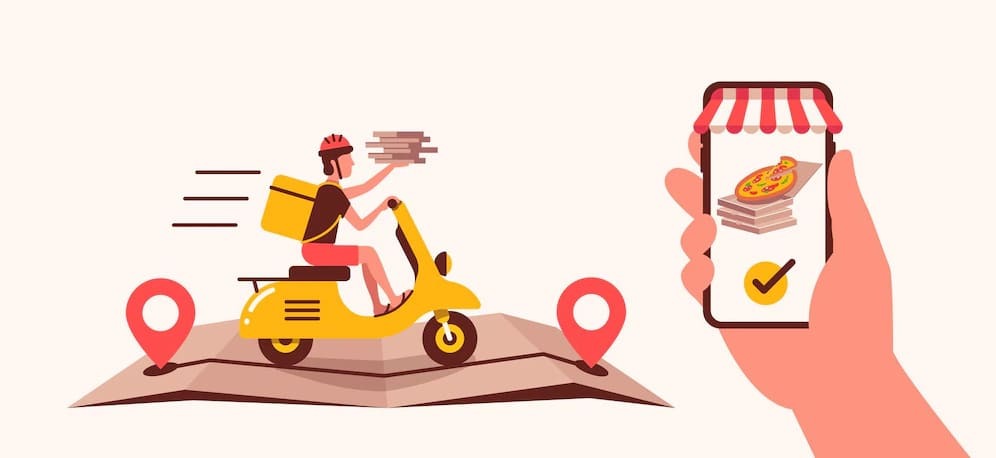
For many 9-to-5 workers, especially in African cities where traffic consumes hours and work culture demands near-constant availability, having food delivered is not a luxury but a lifeline, in Nigeria alone, Glovo a good delivery app delivered over 71 billion naira worth of food in just four years and the food delivery market in Nigeria is expected to reach 5.70 billion dollars by 2029. All of this explains a whole of things, it fills the gaps created by exhaustion. It replaces the time that no longer exists. It meets the need for quick nourishment when the body has run ahead of the schedule.
There is also a subtle cultural shift happening here. Home-cooked meals were once a sign of proper upbringing, discipline, and family structure. Today, a carefully selected meal from an app has become its own version of care. People send food as gifts. Colleagues bond over delivery menus. Couples deepen intimacy by sharing favourite orders. Convenience has become a culture.
And in this transition, we see the tension between who we were raised to be and who life has forced us to become. We are a generation that values safety but depends on speed. We admire tradition but cling to convenience. We long for the slow rhythm of home kitchens but survive through the fast hands of digital service.
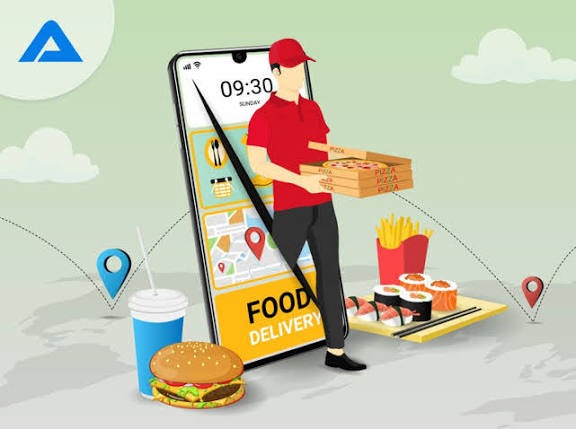
On the bright side if you still think about it, the food delivery is a goldmine of opportunities for those who can strategically position themselves to make wealth, many might argue that the market is saturated but I daresay the methods aren't, because innovation is bedrock for real time value. The African food market is booming because literally everyone must eat everyday. Since 2017, there has been significant growth in Africa’s food delivery market. According to Statista, revenue in Kenya alone climbed from 2 million dollars to 36 million dollars in 2020, while the South African market recorded 732 million dollars in 2020, the highest revenue in Africa.
According to organized data from research, online food delivery (OFD) revenue globally is growing at a remarkable speed. These figures may seem ordinary or may be in the past but one thing is sure the food delivery market is a goldmine.
The Cultural Cost: What We Lose When Food Stops Being Personal
This ease, however, comes with a cultural cost. When food becomes an outsourced task rather than a personal practice, something important slips away quietly. Cooking carries memory, identity, creativity, and even emotional grounding. It is where families bond, where traditions are passed down, where childhood flavours form the core of who we become.

But as ordering replaces cooking, many traditions lose their meaning. The recipes grandmothers guarded are now forgotten. The bonding moments mothers tried to create in the kitchen fade. Even the act of tasting food while cooking, a ritual of instinct and intuition, no longer fits into our schedules. We lose the small joys of spice adjustments, burnt attempts, successful experiments, and shared meals that carry the warmth of effort.
On a citywide scale, this shift deepens class divisions. Those who can afford daily convenience rely heavily on app-based delivery. Those who cannot must find alternative ways to keep food traditions alive. And in the process, food becomes another symbol of economic separation, a classism scale of some sort where convenience becomes a privilege disguised as normalcy.
Yet, even with these losses, the truth remains that this generation is navigating a world its parents never imagined: a digital landscape shaped by pressure, speed, loneliness, and limited time. Ordering food is not simply carelessness; it is adaptation.
Relearning Balance: Finding Meaning Between Convenience and Culture
Perhaps the challenge ahead is not to abandon the convenience we have come to depend on but to relearn a balance that honours both our past and our present. We can still embrace technology without losing the cultural grounding that food offers. The modern world will always prioritize ease, but individuals can choose moments to reconnect with the things that matter. Cooking occasionally does not have to be an obligation; it can be a quiet rebellion against the chaos of life, a reminder that not everything must be rushed.
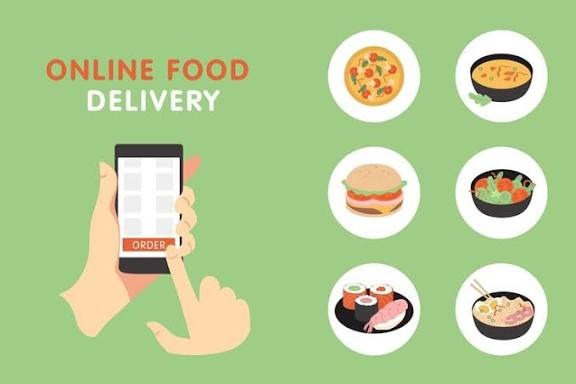
This generation’s contradiction, raised to fear food from strangers but living in a world where strangers feed us daily, reflects the changing face of culture. It shows that traditions can evolve, that lifestyles can shift, and that values can adapt to new realities and so should you and be tied to one ideology, yes anything can change. What matters now is awareness. Awareness that convenience should not erase connection. Awareness that modern speed should not silence cultural memory. Awareness that food, even in its most rushed form, still carries a story.
In the end, the digital age did not destroy tradition—it simply pushed us to redefine it. And maybe that is the real lesson: culture is not what we inherit unchanged; it is what we reshape to survive.