Unveiling the Fascinating Science of How Airplanes Defy Gravity
Ever wondered how airplanes stay in the air? Understand the science of lift, thrust, drag, and weight that makes flight possible for every aircraft
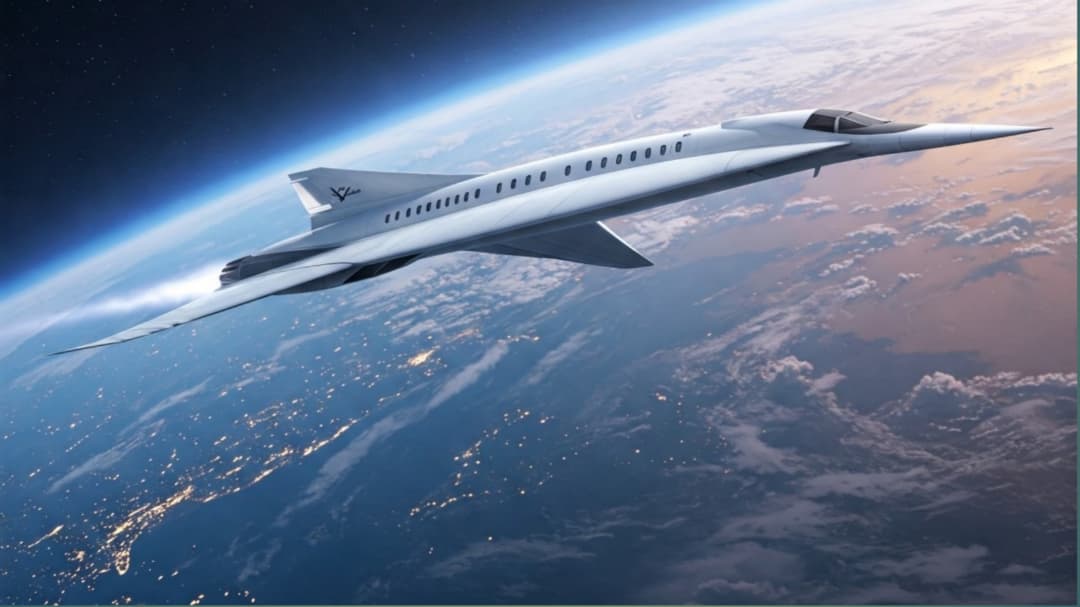
Every time we board a plane, many of us glance out the window and wonder: How does something as heavy as an airplane stay in the sky? After all, these machines weigh tens or even hundreds of tonnes, yet they soar thousands of feet above the ground.
There is a blend of physics, engineering, and motion that transforms the sky into a highway for human travel.
Four Forces at Work in Flight
At every moment while a plane is flying, four fundamental forces are interacting:
Lift – pushes the airplane upward
Weight (gravity) – pulls the airplane downward
Thrust – pushes the airplane forward
Drag – resists forward motion
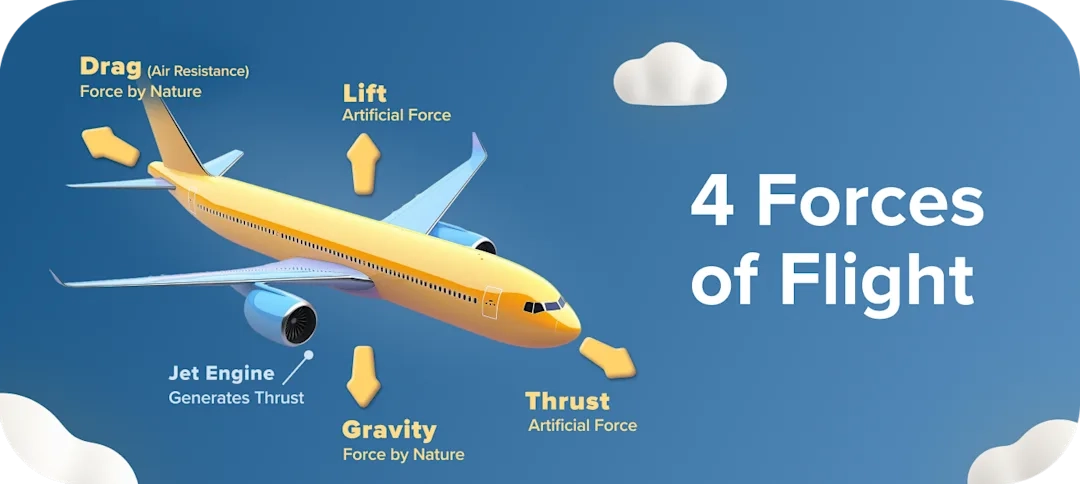
Source: Google
For steady, level flight, lift must be equal to or greater than the plane’s weight and thrust must beat drag. When this balance is achieved, the aircraft flies.
LIFT
Lift is the key force that keeps an airplane aloft. It comes mainly from the shape and motion of the airplane’s wings.
A wing is not flat. It is shaped into an airfoil, with a curved top surface and a flatter bottom. As the airplane moves forward, air splits at the wing’s leading edge and flows over and under the wing.
According to Bernoulli’s principle, a fundamental principle in fluid dynamics, air moving faster has lower pressure than air moving slower. Because the wing’s upper surface is curved, air flows faster above the wing and slower underneath. This difference in pressure creates an upward force called lift.
But that’s not the full picture. The angle of attack, the angle between the wing and the oncoming air also plays a crucial role. When the wing is tilted slightly upward relative to the airflow, it pushes air downward.
The air reacts by pushing the wing upward and this contributes significantly to the lift force.
Thrust
Lift doesn’t happen in a vacuum, it requires movement. That’s where thrust comes in.

The engines of a plane, whether jet engines on large airliners or propellers on smaller aircraft generate thrust by pushing air backward. In accordance with Newton’s Third Law, this backward push produces a forward motion. The faster the plane goes, the more air flows over the wings, and the more lift is generated.
Without sufficient thrust, a plane could not reach the speed needed to produce lift. That’s why planes race down runways, they need speed to generate enough lift to rise off the ground.
Balancing Drag and Gravity
While thrust pushes forward and lift pushes upward, two opposing forces work against the plane:
Drag— resistance caused by air pushing against the aircraft’s surfaces.
Weight (gravity) — pulls the plane toward the Earth.
Engineers spend a great deal of effort designing aircraft that reduce drag by giving them smooth, streamlined shapes. Less drag means less fuel needed to maintain speed and greater overall efficiency.
Meanwhile, a plane’s structure and wing design are optimized to generate the maximum possible lift for its size and weight. If lift falls below weight, as it can in a stall (when airflow becomes turbulent over the wing), the aircraft begins to descend.
The Role of the Wing’s Shape
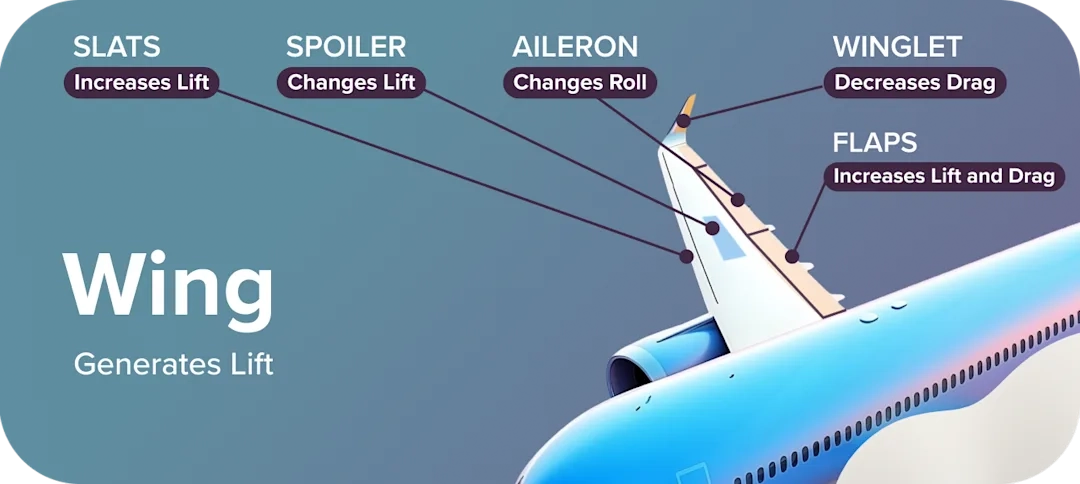
While early explanations of flight focused on the idea that air molecules traveling over the top of the wing must arrive at the back at the same time as those underneath, this is not true in modern physics and scientists consider this “equal transit time” idea a misconception.
What is important is that the airflow over the curved upper surface moves faster, creating a region of lower pressure. Coupled with the downward deflection of air caused by the angle of attack, this difference in pressure and direction produces lift, lifting the aircraft against gravity.
Pilots control lift and flight stability using flight surfaces:
Ailerons — tilt the aircraft left and right
Elevators — tilt the nose up or down
Rudder — steers the plane left or right on its vertical axis
Together with autopilot systems and onboard computers, these controls help maintain a smooth and stable flight.
Conclusion
Even if an engine fails, a plane can glide because lift continues as long as there is forward motion and airflow over the wings. Pilots are trained to manage such emergencies, using lift and glide paths to safely reach the ground.
Airplanes flying thousands of feet above us are extraordinary achievements of engineering and physics. They are living examples of how forces work together: thrust propelling forward, lift pushing upward, and design shaping efficiency.