Universe's Fate Sealed? 'Stuart' Bosses Unveil 'Ambitious' Season 2 Plans
"Stuart Fails to Save the Universe" boldly transforms "The Big Bang Theory's" Stuart Bloom into a sci-fi hero, leading a genre-bending series that blends multi-camera sitcom comedy with ambitious interdimensional adventures. Created by Chuck Lorre, Zak Penn, and Bill Prady, the show features meticulous production, a wealth of Easter eggs, and a groundbreaking meta-finale. Renewed for a second season, it has earned critical acclaim for its creative risks and unique storytelling.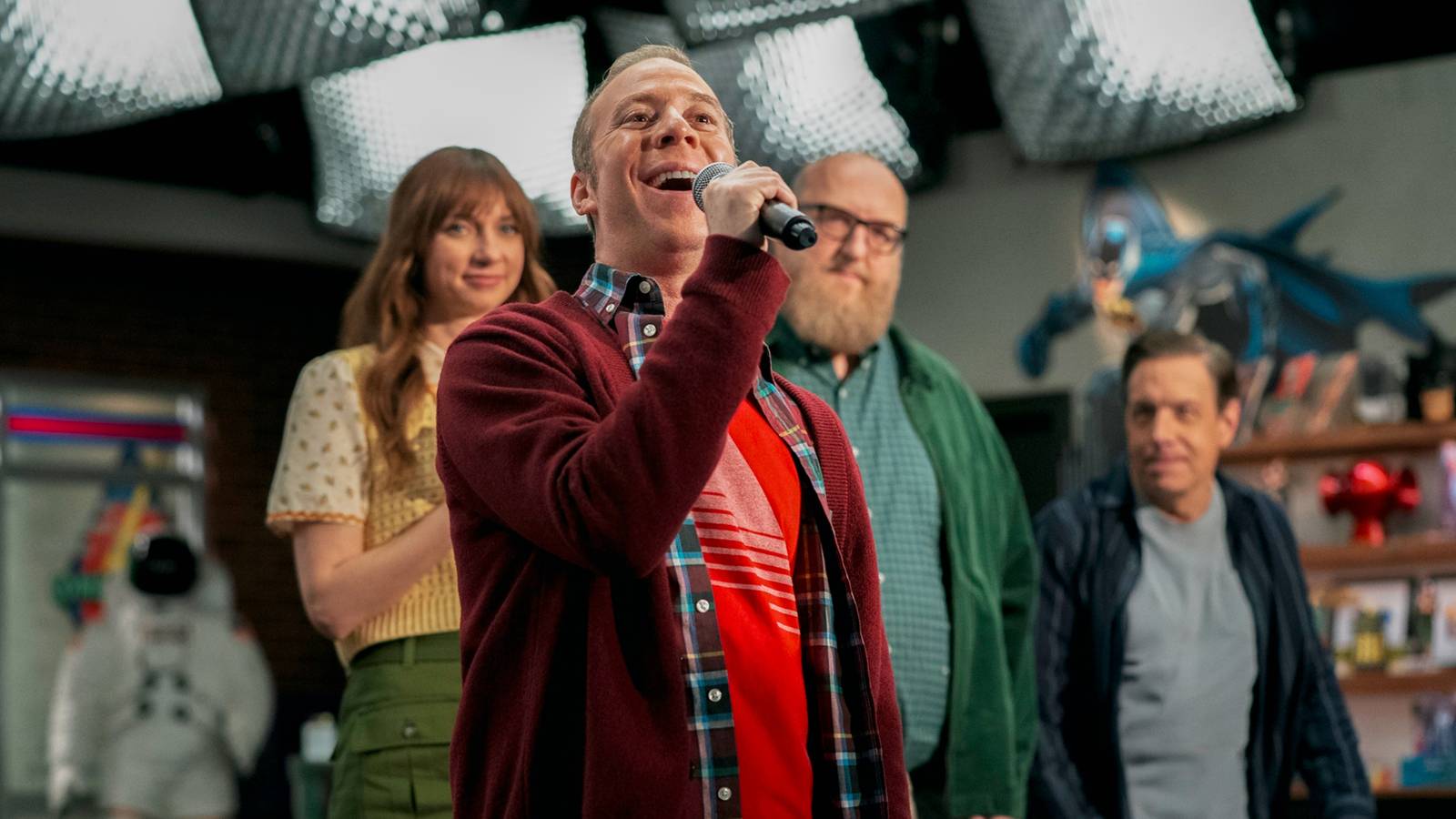
"Stuart Fails to Save the Universe" has captured the attention of comedy fans by daring to transform an almost unremarkable secondary character, Stuart Bloom (Kevin Sussman), from "The Big Bang Theory" into the unlikely hero of a genre-rewriting sci-fi series. This ambitious undertaking, from series creators Chuck Lorre, Zak Penn, and Bill Prady, ventures far beyond the multi-camera world of its sitcom origins, presenting ten distinct sci-fi stories, each with its own universe, explosive CGI effects, and seemingly unlimited Easter eggs.
The concept for a Stuart Bloom-centric spin-off was initially unexpected, especially given the existing "The Big Bang Theory" spin-offs like "Young Sheldon" and "Georgie & Mandy's First Marriage." Stuart's story hadn't been deeply explored, making him an unconventional choice for a lead. However, the idea wasn't entirely new; Bill Prady had pitched a similar concept to HBO 12 years prior, right as "The Big Bang Theory" was concluding. Despite initial disinterest, the idea resurfaced, with Chuck Lorre expressing a desire to push creative boundaries and do something entirely new. He proudly notes the team's success in pulling off such a creatively risky and fresh endeavor.
The series distinguishes itself by taking enormous creative swings. Zak Penn highlights Episode 6, “Spoiler: Corn Is Delicious,” where humanity descends from cows, as an example of its unpredictable nature. The sci-fi genre's freedom allows each episode to reinvent itself to the extreme, functioning almost as its own pilot. Lorre explains, "Every episode was a standalone, start-from-scratch story," meaning writers had to establish new rules, stories, and visual identities weekly, a process he likened to creating 10 individual pilots.
Despite this constant reinvention, the creators ensured the series remained grounded in its "Big Bang Theory" roots by maintaining its sitcom soul. As Lorre clarifies, "We're [still] writing characters, and we're writing comedy, and that we didn't change." The focus remained on humor and character development, ensuring that no matter how strange or grand the universe, the characters had to be funny first, with spectacle serving as a secondary element.
Attention to detail permeated every aspect of the production, from visual effects to practical elements. Zak Penn praises the crew's collaborative spirit in executing difficult tasks. The team consciously sought to create visuals that were not only "fun to watch" but also capable of eliciting laughter, acknowledging that special effects are now common even in TV commercials. Episode 3, "Spoiler: Bert Is Magic," exemplifies this blend, featuring a magical battle where Bert unleashes a huge CGI shark, and Kripke transforms into a penguin. Penn stresses the combination of CGI with incredible stunt work and pyrotechnics, citing the curved floor from Episode 4, "Spoiler: Stuart Makes a Wallet," as a favorite example of practical effects.
Beyond the action, the show was meticulously crafted to appeal to "The Big Bang Theory" characters themselves, incorporating numerous cameos, Easter eggs, and homages to beloved sci-fi narratives. Episode 4, which rebuilds "The Matrix," famously includes Jon Cryer as a sherpa, Porky Pig, and Weird Al Yankovic playing the accordion. Bill Prady's personal favorite universe, the centaur universe, appeared for only four script pages in Episode 7 but received immense dedication from the art and set decoration teams, who created centaur-rendered DC statues, unique art, posters, and comic book covers, showcasing an incredible tapestry of detail.
The series culminates in a mad, meta finale filmed before a live studio audience, a radical departure that paradoxically led back to the sitcom formula. Characters like Kripke began hearing recorded laughter and discovering comic books depicting their future adventures, leading them to realize they were in a sitcom. The fourth wall physically dissolved into thick fog, transporting them to a television set where they encountered the very actors who play them. This complex twist was not pre-planned but evolved organically, with Lorre stating, "I think we stumbled into it and then fell in love with it."
The finale poses an unsettling question: if the characters can enter a world where their actors exist, are we living in one of the show's universes? Zak Penn humorously warns, "If you believe in the infinite universes theory, then maybe it's a problem for us as well as our characters. But I hope not, because I don't think he'd get it done."
With "Stuart Fails to Save the Universe" renewed for Season 2 in August 2026, the creators already have new ideas, including a challenging "underwater universe" that was considered too difficult for the first season. Warner Bros. and HBO have been incredibly supportive, validating the show's unique premise and the creative team's ambition. Lorre believes that through the first 10 episodes, they have "earned a little bit of confidence that we can pull this off," setting the stage for even more daring concepts in the future. The series is currently available to stream on HBO Max.