Unearthing the Secrets: Why the 'Friday the 13th' Reboot Collapsed Weeks Before Filming!
Leading producers Brad Fuller, Andrew Form, and Simon Kinberg offered an exclusive look into the complexities of filmmaking at SDCC 2026. They shared insights on industry evolution, the stress of pitching, and behind-the-scenes stories from blockbusters like `X-Men: Days of Future Past` and `Deadpool`, highlighting the often-overlooked challenges and creative ingenuity required to bring movies to life.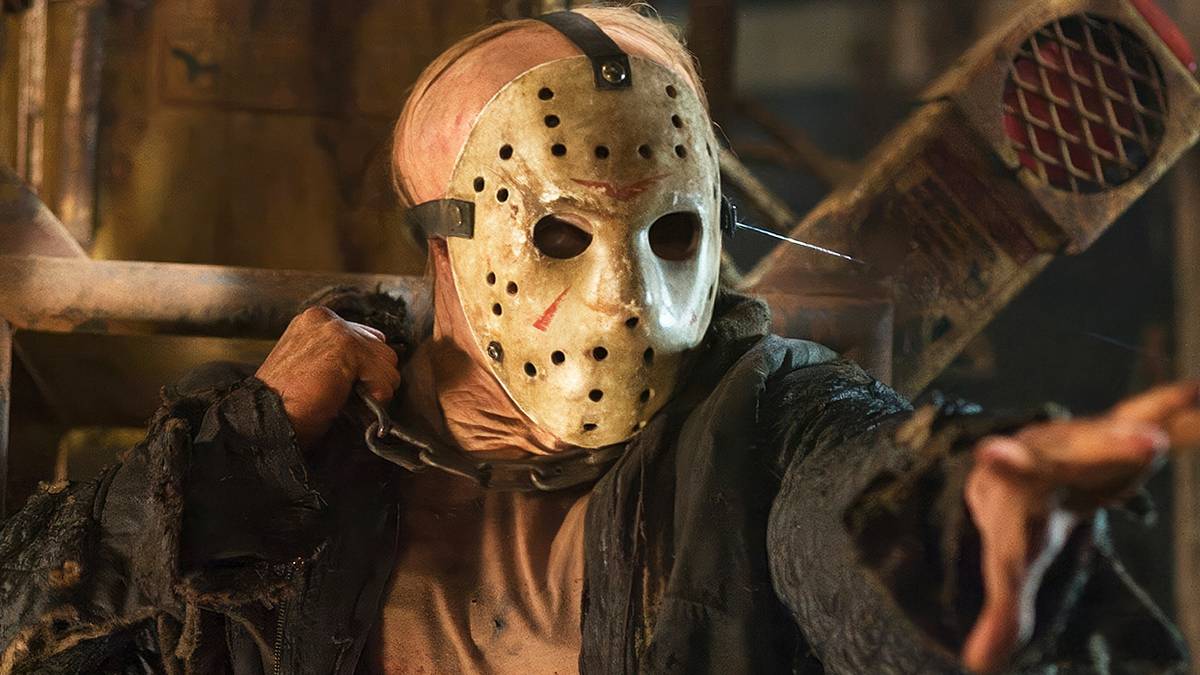
The 2026 San Diego Comic-Con hosted a compelling "Producers on Producing" panel, moderated by Collider's Steven Weintraub, featuring acclaimed producers Brad Fuller, Andrew Form, and Simon Kinberg. The trio offered a rare glimpse into the often unglamorous yet crucial work of producers, discussing the intricate processes of getting films greenlit, shot, and released. Their conversation covered career-defining projects, missed opportunities, and the ever-evolving landscape of the film industry.
A significant portion of the discussion revolved around the amorphous role of a producer. When faced with a promising script lacking a director, cast, or financing, the producers agreed on the critical first step: securing a director. As Brad Fuller explained, "the only way to evaluate it is to choose a director," because addressing "impossible sequences to shoot" falls squarely on the director's shoulders. Simon Kinberg concurred, noting that the director is also key to attracting cast members. The panel also shed light on the high-stakes environment of pitching a studio. Kinberg recalled a particularly stressful early pitch to Scott Stuber, then head of Universal, where his nervousness led to vomiting before the meeting, though he later pitched successfully to Stuber without incident.
The industry today, they asserted, is "totally different" from when they started. Andrew Form highlighted the prominence of DVDs in their early careers, a time before streaming became dominant. While more platforms exist now to sell movies, there are fewer avenues for theatrical releases, especially for mid-size adult dramas, romantic comedies, and comedies, which have largely been supplanted by franchise and genre films. The constant question producers face today is, "Is the movie theatrical?" This was a non-issue when they began, as every film was inherently considered a theatrical release. Technological advancements were also discussed, particularly the shift from practical "process trailers" for driving scenes to LED backgrounds. While these new technologies simplify production, Form expressed a personal dislike for LED backgrounds, believing they often look fake and detract from audience immersion.
The producers also shared stories of "the ones that got away." For Brad Fuller and Andrew Form, missing out on the opportunity to produce `Saw` after seeing its short film still "hurts." Simon Kinberg's "fresh wound" was `Project Hail Mary`, the book by Andy Weir, author of `The Martian` which Kinberg produced. Despite his deep connection to Weir's work, Kinberg lost the bid for `Project Hail Mary` to Amy Pascal, admitting he "hated her at the time" out of professional disappointment, though he later saw and loved the film.
Challenging moments on set are an inherent part of a producer's job. Andrew Form recounted a harrowing experience during a New York City shoot where the main talent called in sick at 5 AM for a massive outdoor scene. With crew already on the clock and trucks en route, Form and his team had to pivot rapidly, salvaging the day by moving the entire production to an indoor stage to shoot scenes with other available actors, a costly and stressful undertaking. Simon Kinberg shared his experience shooting the third act of Brett Ratner's `X-Men: The Last Stand`. The sequence, a huge nighttime outdoor battle, was hit by rain on the first night. Instead of waiting or building extensive cover, they committed to filming it in the rain, which led to six weeks of shooting at night with rain towers, drenching the cast and crew in freezing water. While visually cool in the film, it was an incredibly difficult shoot.
The panel delved into the "movie magic" behind specific scenes from their careers. Kinberg discussed the iconic Quicksilver "Time in a Bottle" sequence from `X-Men: Days of Future Past`. What began as a simple script line evolved through extensive collaboration: the previs (pre-visualization) team conceived ideas like Quicksilver running in a circle and suggested the song, director Bryan Singer added Quicksilver running along walls, and second unit director Brian Smrz contributed the idea of him messing with the guards. Kinberg emphasized how much of the sequence was shot by the second unit, highlighting the unsung heroes who contribute creatively beyond the main director. Fuller and Form presented a clip from `Anaconda`, specifically the scene where Jack Black is chased by a snake with a boar on his back. This set piece was conceived early in development and was crucial for establishing the film's tone as their first venture into comedy. They detailed the practical challenges of filming with a real-looking, heavy boar strapped to Jack Black in the Australian summer heat, with two crew members running behind him wielding a massive blue snake head.
Kinberg also spoke about `Deadpool`, calling it the film he is proudest of as a producer due to its arduous, decade-long journey to production. Despite Ryan Reynolds' commitment, Fox was initially hesitant about an R-rated superhero movie fearing it would tarnish the X-Men brand. The film was finally greenlit after a viral test footage clip leaked online, generating immense fan excitement. To fit the studio's $50 million budget, the production cleverly made one long action sequence appear as three distinct sequences spread non-linearly throughout the film. Its opening weekend gross of $133 million in America far exceeded expectations, proving the power of fan demand and creative ingenuity. Fuller and Form then discussed a scene from the `Amityville Horror` remake, featuring a six-year-old Chloë Grace Moretz on a 40-foot high roof. They explained the logistical nightmare of cabling her up, using a massive crane for close-ups, and building only a small portion of the roof on a parking lot, with the rest being filmed on the actual house. They admitted they wouldn't undertake such a risk with a child actor today due to industry changes.
Kinberg returned to `The Martian`, discussing a reshot ending featuring Matt Damon's final speech. He clarified that reshoots don't always signify a troubled film; in this case, the original ending lacked closure for the audience, and the added speech significantly improved test scores. He also recalled the challenge of finding a new director after Drew Goddard, who wrote the original script, left to direct a `Spider-Man` movie. Fuller and Form presented a clip from `A Quiet Place`, highlighting its opening scene where a child dies. They emphasized how this shocking moment immediately establishes the film's tone, demonstrates that no one is safe, and subtly introduces the unique sound design reflecting Millie Simmonds' character's hearing impairment. They confirmed that `A Quiet Place Part III` is currently in production.
Reflecting on `X-Men: Days of Future Past` as the most expensive X-Men film they had made, Kinberg explained that its climactic scene, where the two casts interact, was conceived from the outset as the movie's centerpiece. This core idea was instrumental in pitching the studio for the necessary budget, underscoring that producers are "always singing for your supper" and continually selling the value of their projects. When asked about realizing a film's potential during production, the producers unanimously agreed that true success is only known when the audience responds. Fuller stated, "You don't know until you watch your movie in front of the audience." Form shared the surprising audience reaction to `A Quiet Place` at South by Southwest, where the theater became completely silent for an hour, a testament to the film's immersive power.
Managing personalities is another critical aspect of producing. Fuller views himself as a "steward for the audience," while Form stresses early conversations to align the creative vision. Kinberg likened a producer's role to a "therapist," subtly guiding filmmakers to the best decisions. When casting, the producers consider not just talent, but also on-set compatibility, often calling references to learn about an actor's work ethic and temperament. Both Fuller and Kinberg confirmed having passed on actors after negative feedback. A "heartbreak" story for Fuller and Form was an unmade `Friday the 13th` movie, halted just four weeks before filming a "super hard R" reboot, with no clear reason ever given for the plug being pulled.
Discussing the challenges of pitching legacy IP versus original ideas, Fuller and Form found remakes like `Friday the 13th` initially easier due to built-in value. However, fan criticism for making "remake after remake" prompted them to pursue original concepts. This shift, combined with the low-budget success of films like `Paranormal Activity`, led Fuller to cold-email Jason Blum, resulting in their collaboration on `The Purge`, which was shot in just 18 days for $2.5 million. Kinberg agreed that any form of IP, even an unpublished manuscript like `The Martian`, makes pitching easier. On creative disagreements, Kinberg recalled `Mr. & Mrs. Smith`, where director Doug Liman ultimately cut out entire supporting roles (played by Jacqueline Bisset/Terence Stamp and later Angela Bassett/Keith David) after test screenings, a decision Kinberg initially opposed but recognized as correct for the film's focus on the lead couple. The strangest budget items, they noted, often involve the extensive perks and entourages of movie stars. Form also mentioned a specific budget line for "blood" in their horror films.
Regarding directors, Kinberg praised Ridley Scott as the most prepared, noting his superhuman stamina and focus on `The Martian`, working tirelessly even at 80 years old. Studio executives, they agreed, typically provide the longest notes, which can be either constructive or simply a means of justifying their positions. Fuller specifically lauded Apple's concise and effective notes for his upcoming film `Sponsor`. Looking ahead, Fuller and Form are currently filming `A Quiet Place Part III`. Fuller is also working on `Sponsor` for Apple, starring Jason Segel and John C. Reilly. Kinberg revealed his original script, `Here Comes the Flood`, is being made by Netflix, starring Denzel Washington, Rob Pattinson, and Daisy Edgar-Jones, directed by Fernando Meirelles. He spoke about the surreal experience of working with Denzel Washington, who brings immense creativity and improvisation to every take, even with a strong script already in hand.