Ekurhuleni Horror: South Africa Rocked by Tenth Woman's Body Discovery, President Ramaphosa to Address Grieving Nation
South African police have discovered a tenth body in Ekurhuleni in two months, deepening concerns over violence against women. This latest finding near a Tembisa cemetery follows a pattern of killings, with ongoing investigations and arrests. The tragic events highlight South Africa's persistent struggle with endemic gender-based violence.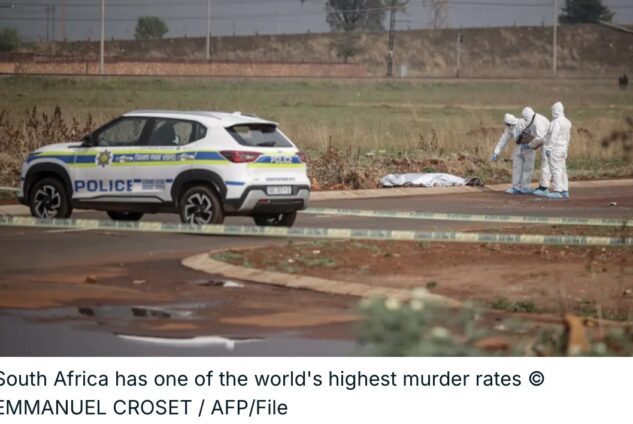
South African police have confirmed the discovery of a tenth body in Ekurhuleni, east of Johannesburg, within the last two months, intensifying national concerns over violence against women. The semi-naked body was found near a cemetery in the Tembisa township on Saturday, prompting immediate police presence from crime scene management and other relevant role players.
Provincial police chief Tommy Mthombeni stated that the victim appeared to have been stoned to death, with a post-mortem examination scheduled to officially determine the cause of death. He assured the public that highly capable investigators have been assigned to the case, vowing to bring those responsible for the killings to justice.
This latest discovery adds to a series of nine other cases in the municipality, where victims, mostly in their 20s and 30s, were found with some stripped of their clothes and showing signs of sexual assault. The grim pattern began on July 15 with the discovery of a 37-year-old woman, found naked and bound with cable ties. A suspect was arrested two days later in connection with that case.
Further arrests include two women, aged 31 and 38, who were charged on Monday in connection with the ninth victim’s death, which police suggest may have stemmed from a relationship-related matter. The police have issued a 400,000 rand ($25,000) reward for information leading to the arrest of the killer or killers, supplemented by an additional $31,000 offered by the Democratic Alliance, South Africa's second-largest political party.
The ongoing tragedies underscore the endemic nature of gender-based violence (GBV) in South Africa, a problem that persists despite years of government pledges and the declaration of GBV as a national disaster. Recent statistics from the South African government highlight the severity of the crisis, with the national GBV Command Centre receiving 6,782 distress calls between September 1 and 16, averaging 424 calls daily. This represents a significant 21 percent increase from the average of 350 calls per day recorded in August. South Africa, with a population of 62 million, continues to grapple with one of the world's highest murder rates, exceeding 60 killings per day on average.