Ukraine's Bold Promise: Germany Can Rely on Us for Deep-Strike Deterrence
A new European missile-defense initiative named Freyja, spearheaded by Ukraine's Fire Point, aims to create a modular, lower-cost system combining Ukrainian combat experience with European technology. This program, involving nine European countries, seeks to overcome bureaucratic hurdles and build a resilient defense ecosystem, with plans for German production of Ukraine's 'Flamingo' cruise missile to address Europe's deep strike gap.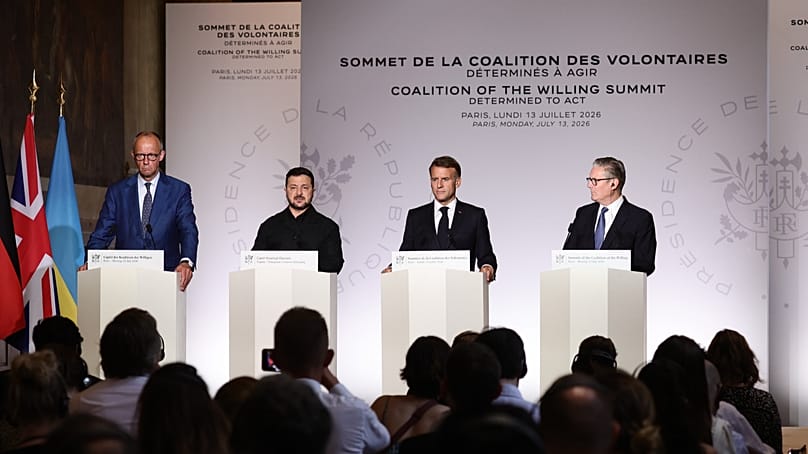
In a significant move for European defense, the Coalition of the Willing, comprising nine European countries and Ukraine, signed the Joint Declaration on the Establishment of the Integrated Anti-Ballistic Missile Coalition in Paris. This initiative, known as Freyja and named after the Norse goddess of war, love, and beauty, aims to establish a lower-cost, modular missile-defense system. It uniquely combines Ukraine's combat and wartime experience with advanced European technology and industrial capabilities, moving away from reliance on a single manufacturer towards a collaborative approach where different countries contribute individual components, such as interceptor missiles, radars, and command systems. This integrated European missile-defense architecture is designed to complement existing systems like the US Patriot air defense system.
Freyja, initially a concept put forward by Ukrainian defense company Fire Point just a year and a half ago, has rapidly evolved into a major European defense program. Fire Point, known for its long-range cruise missile FP-5 “Flamingo” used by Kyiv for deep strikes into Russia, saw its CEO and CTO, Iryna Terekh, express immense satisfaction with the initiative's progress. Terekh emphasized that the agreement represents a much-needed technological and doctrinal shift in European defense, stating that “security guarantees are written in steel and not in ink,” a principle she considers more vital than historical agreements like the Budapest memorandum.
Addressing the implementation timeline, Terekh highlighted the strong commitment and interest observed at the business-to-business level, suggesting that political leadership's primary role should be to remove bureaucratic obstacles that can hinder progress and inadvertently aid adversaries. She stressed that bureaucratic inefficiency poses a threat as significant as military aggression, advocating for political leaders to support technological development by streamlining processes.
Regarding the argument that Europe can afford to wait until conflict before ramping up defense production, Terekh countered by pointing out human psychological tendencies to avoid uncomfortable truths, especially when physically distant from a threat. She starkly illustrated the urgency by comparing missile travel times to Ukrainian, Polish, German, and French capitals, noting that the difference in arrival times is minimal. The core objective of Freyja is not to use threats as motivation but to build a resilient, comprehensive defense ecosystem that can effectively react to threats and outlast political cycles.
The development of Freyja was significantly influenced by the dwindling stocks of Patriot interceptors and other missiles. Terekh acknowledged the Patriot system's engineering brilliance but noted its design was not intended for the high consumption rates seen in Ukraine. Freyja aims to create a product specifically relevant to contemporary threat levels.
Cooperation between Fire Point and German company Diehl Defence is underway for producing the Flamingo cruise missile in Germany. This collaboration aims to leverage Ukrainian experience to enable Germany to produce cost-effective, mass-produced weapons. Terekh also discussed Germany's complex internal dynamics, where the