The Parallel Market Premium: The Daily Tax on Ordinary Nigerians That Nobody Calls a Tax
Nigeria's official and parallel exchange rates create a daily currency premium that quietly reduces the purchasing power of ordinary Nigerians, and that gap deserves to be treated as more than just a market statistic.

Chike needs dollars. He is not a speculator, currency trader or multinational executive. He needs the money because part of the stock for his small business is priced in dollars, and waiting for the naira to become more convenient is not an option when suppliers still expect payment.
As at Thursday, August 20, the official Nigerian Foreign Exchange Market (NFEM) rate was around ₦1,344.45 to the dollar, while the parallel market was reported at about ₦1,404, leaving a gap of roughly ₦60 on every dollar.
For Chike, that is not merely an exchange-rate statistic; it is money that disappears from his purchasing power before he has even bought the goods he needs.
The Price of Being Outside the Official Economy
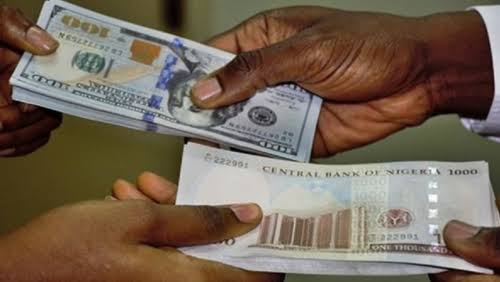
The Central Bank of Nigeria describes the NFEM rate as the official exchange rate for the day, derived from a volume-weighted average of transactions in the formal market.
But the existence of an official rate does not mean every Nigerian who needs foreign currency can simply walk into the economy and obtain dollars at that price.
When the official rate and the rate available to an ordinary customer diverge, the difference becomes an additional cost attached to almost everything that depends on foreign currency.
Consider Chike's situation. At an exchange rate of ₦1,344.45, $1,000 would theoretically cost about ₦1.34 million. At ₦1,404, the same $1,000 costs approximately ₦1.40 million. That is a difference of nearly ₦60,000 on a single transaction.
On $5,000, the gap rises to almost ₦300,000. Nobody sends Chike a bill labelled "currency premium," but the money still leaves his pocket.
This is why calling the premium a tax-like burden is useful, even though it is not literally a tax imposed by law.
A tax is an enforced cost that reduces what people have left to spend. The parallel-market premium can produce a similar effect for people who cannot access foreign exchange at the lower formal-market rate: it takes purchasing power away without appearing as a separate line on a receipt.
When Access to the Right Rate Becomes a Privilege
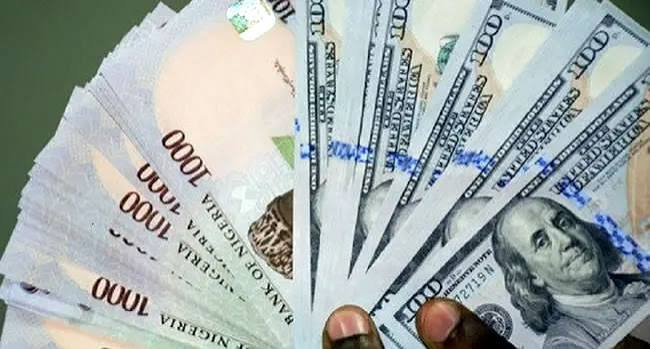
The uncomfortable question is not simply why there is a difference between the two rates. Foreign-exchange markets can legitimately produce different prices because of liquidity, transaction costs, demand, supply and risk.
The more important question is who is positioned to absorb that difference and who cannot.
For a large corporation with formal banking relationships, foreign-exchange requirements can be incorporated into financial planning, hedging, trade arrangements and formal market transactions.
For a small trader, freelancer or informal business owner, the options can be much narrower. Someone receiving foreign currency from family abroad may also experience the consequences of whichever conversion channel they use.
That means access to foreign exchange is not only a question of price. It can become a question of proximity to formal financial infrastructure.
Nigeria's currency reforms have sought to make the foreign-exchange market more transparent, sustainable and market-driven. The CBN itself notes that Nigeria has operated different exchange-rate regimes over time, including controlled, floating and managed-float systems.
Yet for ordinary Nigerians, the practical experience of currency pricing can still feel like living between two economies: the rate displayed by formal institutions and the rate demanded by the market where the transaction is actually possible.
And when the difference is multiplied across imports, education, travel, foreign subscriptions and other dollar-linked expenses, the premium does not remain a foreign-exchange problem. It eventually finds its way into the prices Nigerians pay.
Why We Call It "Market Forces" Instead of What It Feels Like

The strangest part is how quickly Nigerians have learned to accept this burden as normal.

If the government announced tomorrow that every Nigerian buying dollars must pay a five-percent foreign-exchange levy, there would be an immediate argument over who imposed it, why it was necessary and where the money was going.
But when a similar loss emerges through the difference between two exchange rates, the language changes. We call it the "black market."
That phrase can be technically accurate without being sufficient.
Markets respond to supply and demand, but markets also operate within institutions, regulations and unequal access. A small business owner who has no practical alternative to a more expensive source of dollars does not experience the exchange-rate gap as an abstract expression of market equilibrium.
They experience it as higher inventory costs, smaller margins and less money available to keep the business alive.
The same logic extends beyond Chike. A parent paying a dollar-linked expense, a Nigerian purchasing an overseas service, a freelancer converting foreign earnings or a small importer can all encounter a currency system in which the price of access depends partly on where and how they obtain the dollar.
This does not mean every naira lost to the parallel market is evidence of government extraction. Nor does it mean the official rate is automatically the rate every person should receive.
The point is more uncomfortable: when a persistent gap exists between the formal price of money and the price many ordinary people actually face, someone pays for that gap.
And that someone is often the person with the least ability to negotiate it away.
The Invisible Tax Is Still a Cost
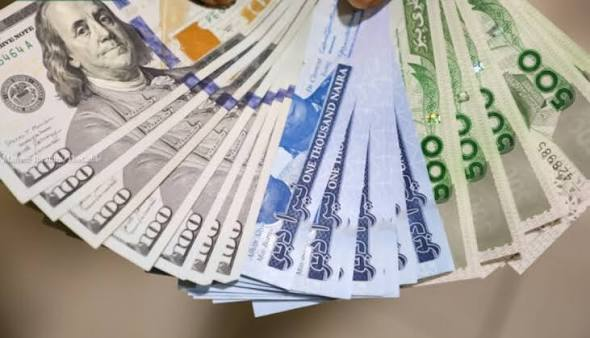
The parallel market premium is therefore more than another number Nigerians check whenever they wake up. It is a measure of the distance between monetary policy and everyday economic life.
For people with sufficient access to formal financial channels, the official rate can remain an institutional figure on a screen. For people like Chike, the street rate can determine whether an order is profitable, whether a business can restock, or whether the money in their account is enough to buy what it bought yesterday.
That is why the question should not simply be whether the parallel market rate is rising or falling. It should be why ordinary Nigerians continue to absorb the cost of a divided currency experience as though it were an unavoidable feature of life.
Nobody calls it a tax because nobody collects it directly. But a cost does not become less real simply because there is no receipt.