The Mau Mau Uprising: How it Shaped Kenya's path to Independence
The Mau Mau rebellion is a movement that will always be remembered for its fearless campaign against British colonial power. Fueled by the deep inequalities they faced as natives, the Kikuyu, along with other tribes, came together to fight for their land and freedom.
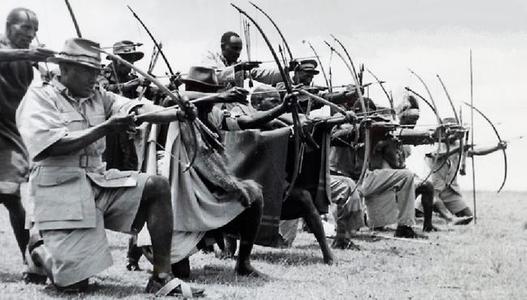
The Mau Mau uprising will be remembered as one of history’s most brutal and defining campaigns against colonial domination. This uprising was more than a rebellion, it was a fight for dignity, a cry for freedom from a people whose identity has been stripped under British rule.
But to understand why the Mau Mau movement erupted with such intensity, one must first understand how they lived before the advent of colonialism and how their basic rights were stripped of them, how they became slaves to strangers in their own land.
PRE COLONIAL AFRICA
Before the discovery of Sub-Saharan Africa, Kenya was home to a wide range of communities with distinct languages, traditions and livelihood. Three major ethnic groups existed then, the Cushites, Nilotes and the Bantu. The Cushites were herders and farmers who migrated from Northern Africa, the Nilotes were pastoralists and fishermen who came from the Nile valley while the Bantu who arrived much later and became the most populated settled in the coastal region where they farmed and traded.
Unlike the great empires of west Africa, Kenyan societies were largely decentralised governed by council of elders. The only notable exception was the Wanga Kingdom which was founded sometimes in the 16th Century by Nabongo Wanga which developed a centralised system with a king as it's head.
COLONIAL KENYA
The colonization of Kenya began after the British East company was granted a charter in 1888. When the company went bankrupt, the British government assumed control of Kenya viewing it as a strategic route to rich lands like Uganda as Kenya didn't have natural resources they could exploit.
To consolidate power, the colonial authorities enacted policies that forcibly took land from indigenous communities, introduced strict labor requirements, and imposed legislation that reduced native Kenyans to subjects in their own land.
History
Rewind the Stories that Made Africa, Africa
A Journey Through Time, Narrated with Insight.
One of the earliest mechanisms of control was the 1902 Hut tax. Native families were made to pay taxes for hut they owned, forcing them to seek wage labor to meet these obligations. Failure to pay resulted in fines and, often, forced labor on European farms. As the need for cheap labor increased, the British also implemented a poll tax and required men to work for sixty days a year for the government unless employed elsewhere. These measures, combined with the creation of native reserves on infertile lands, entrenched economic dependence and curtailed freedom of movement.
The 1913 land bill further entrenched inequality when it gave a 999-year lease to white settlers giving them the monopoly of fertile lands. To keep tight control over labor, the colonial administration introduced the Kipande system, forcing all Kenyan men to carry identity discs. This wasn’t just paperwork—it restricted movement, tracked their every step, and reinforced the reality that they no longer owned their own lives.
The European settlers on the other hand were privileged. They got access to the best of everything, roads, railways, subsidies, they weren't even taxed. All this happened while native farmers struggled against the hardships the British colonial rulers had created.

By the 1920s, anger and resentment continued to grow on the side of native Kenyans. At this time, the Europeans were few compared to the native Kenyans but they still controlled the fertile lands and resources, while the Indians acted as intermediaries.
Heavy taxes and forced labour kept families trapped and dependent to the colonial masters, flogging was a common thing for minor offenses, and abuse of employers by white settlers went unchallenged.
As the Chief Native Commissioner noted in 1925 about the Kitui Reserve, the colonial administration had built almost nothing to help the people who lived there, leaving them dependent, marginalized, and frustrated.
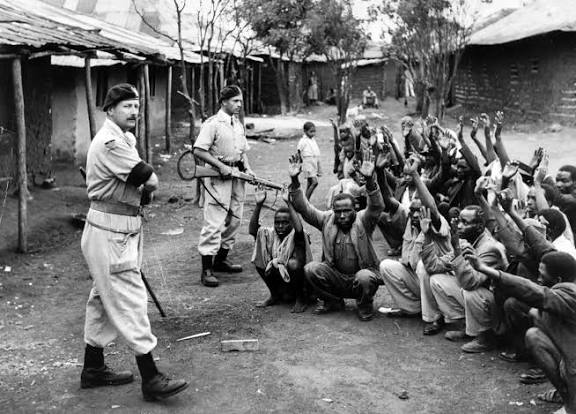
In essence, life under the colonial administration of Kenya was difficult and harsh, locals we're stripped of their own rights and privileges and subjugated to harsh labours and heavy taxes all these culminating in the Mau Mau uprising — a movement that rose to reclaim the life, land and respect that was taken from them.
History
Rewind the Stories that Made Africa, Africa
A Journey Through Time, Narrated with Insight.
THE MAU MAU UPRISING
The Mau Mau Uprising also known as the Kenyan emergency was a rebellion that fought against British colonial rule from 1952 to 1960. Primarily led by the Kikuyu people, and supported by Meru, Embu, Kamba, and Maasai fighters, the movement was formally organized as the Kenya Land and Freedom Army (KLFA).
For long, Kenyans had the worst of the worst from the British colonisers. Mau Mau rose as a revolutionary response to the oppression that their people have suffered for far too long.
The origin of the word Mau Mau is debatable. Some said it was a British label used to delegitimize the rebellion, others trace it to a Kikuyu phrase which was loosely translated to "let the foreigner go". Irrespective of its origin, however, the word became synonymous with fear, resistance and defiance.
Political failures, such as the inability of the Kenya African Union to push for meaningful reforms influenced young militant Kenyans to join the movement. Some of these militants were veterans and survivors of the World War II who had returned home without recognition or land, while their white counterparts were celebrated with medals of honours and paraded as saviours.
The cycle of violence by the Mau Mau began in October 1952 when the Mau Mau murdered a European lady in Thika and assassinated Senior Chief Waruhiu an ardent supporter of the colonial cause. These acts marked the transition from underground organization to open rebellion.
Mau Mau rebels depended heavily on guerrilla tactics like classic hit-and-run, midnight raids, ambushes and strategic strikes against loyalist leaders and settlers.
The British who hadn't taken them seriously initially as they believed they could surpass any kind of native threat finally responded with overwhelming force. On 20 October 1952, a state of emergency was proclaimed. Operation Jock Scott detained 180 suspected leaders, including Jomo Kenyatta, though several other militant leaders had escaped to the forests. Following this, British and settler forces applied punitive operations, including mass executions, detention, and collective punishment.
History
Rewind the Stories that Made Africa, Africa
A Journey Through Time, Narrated with Insight.
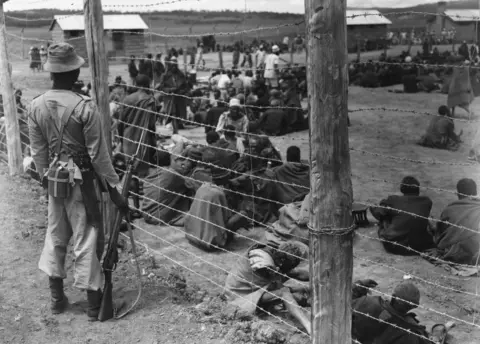
By 1956, British forces had largely suppressed Mau Mau through military campaigns, mass arrests, and forced relocation of over a million Kikuyu into fortified “protected villages”.
Unfortunately, on 21st October 1956, Field Marshal Dedan Kimathi was captured and this marked the defeat of the Mau Mau, and effectively ended the British military campaign, though resistance continued to linger till independence.
Post-rebellion data reports that suppressing the uprising cost Britain £55 million and resulted in at least 11,000 deaths among Mau Mau fighters and other forces, with some estimates higher, highlighting both the human and financial toll of the rebellion. While the Mau Mau exposed the deep inequalities of colonial rule and demonstrated the determination of ordinary Kenyans to fight for freedom, it remains debated whether the uprising directly led to Kenya’s independence or if independence was inevitable regardless.