The IMF’s Warning Isn’t Subtle: The World is One Escalation Away From Recession
As the IMF cuts global growth forecasts, rising oil prices and escalating Middle East tensions push the world closer to recession, with Africa already feeling the strain.
It is easy for you to conclude that a war happening on a continent beyond the Red Sea is not your business in your apartment in Lagos.
You are not in it. Not even the countries in the same continent as yours.
Although, you might not be in it, but you can feel the heat, even if you don’t know it yet.
That is roughly where Africa stands right now as the International Monetary Fund delivers one of its starkest economic warnings in recent memory and the continent is very much in the picture.
What the IMF Actually Said
At the IMF and World Bank Spring Meetings in Washington this week, the Fund released its April 2026 World Economic Outlook and it did not mince words.
Global growth for 2026 has been revised down to 3.1 percent, a figure that might sound abstract until you understand what is driving the decline.
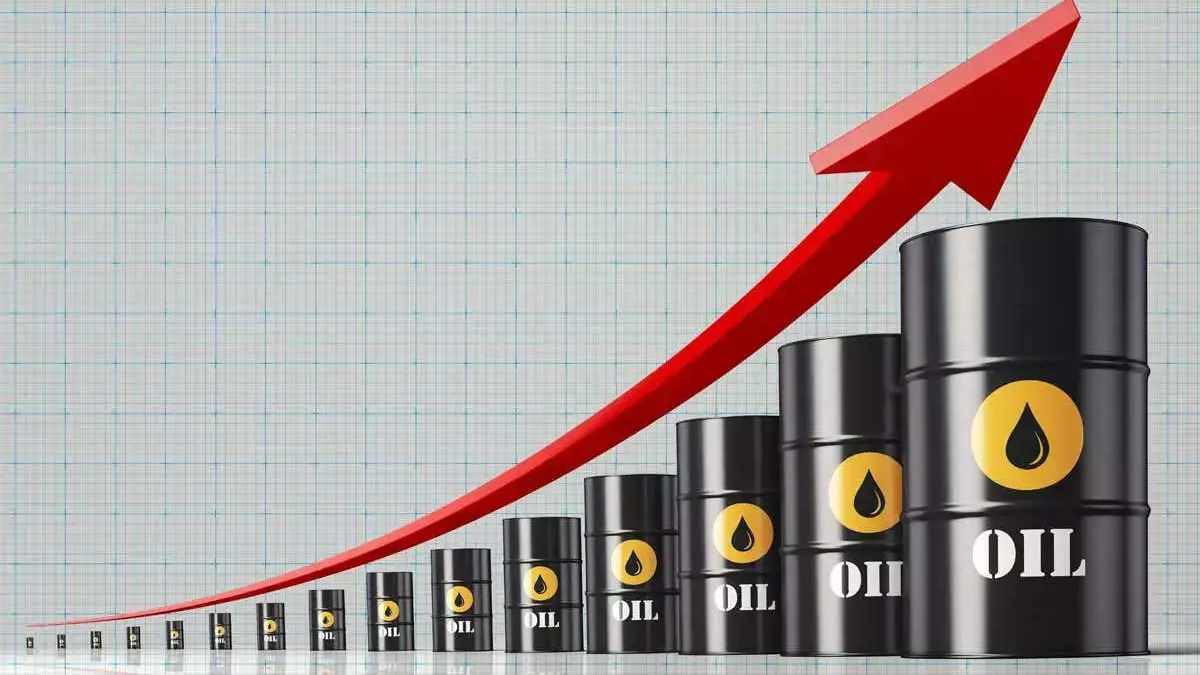
The Middle East conflict between the United States, Israel, and Iran has disrupted energy markets and sent oil prices surging to around $100 per barrel.
The IMF, recognising how unpredictable the situation is, laid out three scenarios for the global economy: a weaker scenario, a worse one and a severe one.
Even the most optimistic of these, which assumes the conflict is short-lived and damage to energy infrastructure is limited, still represents a significant downgrade from what the global economy was on course to achieve.
It is important to note that absent this war, the IMF said it would have actually upgraded its global growth forecast to 3.4 percent.
Technology investment was booming, interest rates were falling and things were looking up. The war reversed all of that.
The Three Scenarios and Why They Are Alarming
Under the reference scenario, global growth hits 3.1 percent with oil averaging $82 per barrel for the year. That is the good news.
Under the adverse scenario, a longer conflict keeping oil around $100 per barrel, global growth falls to 2.5 percent.
Under the severe scenario, where the conflict deepens significantly and financial markets begin to destabilise, growth collapses to just 2.0 percent.
The IMF described this as "a close call for a global recession," noting that global growth has only dipped below that level four times since 1980 which was during the 2008 financial crisis, during COVID-19 and twice before that.
Under this worst-case scenario, global inflation would exceed 6 percent.
The IMF's chief economist Pierre-Olivier Gourinchas said in his assessment that noting what is happening in the Gulf is potentially far more damaging than the tariff turbulence that dominated headlines last year.
Africa Is Not Watching From a Safe Distance
The IMF downgraded sub-Saharan Africa's growth forecast by 0.4 percentage points which is a larger decline than what was applied to most energy-importing advanced economies.
The region, which had entered 2025 on relatively solid footing, is now projected to grow at 4.3 percent in 2026, down from an earlier forecast of 4.6 percent.

The inflation picture is even more concerning.
Median inflation across sub-Saharan Africa is expected to jump from 3.4 percent in 2025 to 5 percent in 2026, driven by rising oil and fertiliser prices, potential fuel shortages, and tighter borrowing conditions. .
Nigeria specifically saw its 2026 growth forecast trimmed to 4.1 percent. The IMF acknowledged that higher global oil prices offer some cushion for an oil-exporting country like Nigeria, but pointed out that the rising cost of fuel, fertiliser and shipping will weigh heavily on non-oil sectors.
South Africa received the sharpest downgrade among major African economies, a cut to just 1.0 percent growth, a figure that raises serious questions about jobs and investment in the continent's most industrialised economy.
The Deeper Problem
This moment is unpredictable. Peace talks between the US and Iran failed over the weekend, the US has initiated a naval blockade of the Strait of Hormuz and the IMF is openly warning that domestic political strains and further geopolitical deterioration could turn this into the worst energy crisis in modern times.
Africa has been here before, absorbing shocks from crises it did not cause, from the 2008 financial collapse to COVID-19.
Each time, the continent's most vulnerable economies and populations bear a disproportionate share of the pain. The 2026 version of that story is already being written.
What This Means Going Forward
The IMF's warning is not simply about whether a recession happens or not. It is about the fragility of the current global moment.
For African policymakers, the message is to prepare for tighter fiscal conditions, rising import bills, and currency pressures that tend to follow energy shocks.
For everyday Africans, it is a reminder that the global economy is interconnected in ways that are rarely felt during the good times, but always felt during the bad ones.