Why You Look Different in Mirrors, Selfies and Real Life (Science Explained)
Why do you look different in mirrors, selfies, and real life? This science-backed breakdown explains facial asymmetry, camera distortion, and psychological bias, and why none of your images fully match how others actually see you.
As someone with an asymmetrical face, I have always hated how I look in pictures. It is like something hit my face so hard it decided to shift slightly to one side, and every camera in existence seems committed to documenting that shift in high definition.
For years, before I had the language for it, I kept noticing that I looked normal in mirrors, tolerable in selfies, and then completely different, almost unrecognizable, in photos taken by someone else with a back camera.
I also spent an embarrassing amount of time in deep-thought rabbit holes wondering: how do I actually look to other people? Which version of my face is the real one?
Turns out, there is a whole science to this. And it is more fascinating than it is depressing.
Why Your Mirror Reflection and Your Real Face Are Not the Same Thing
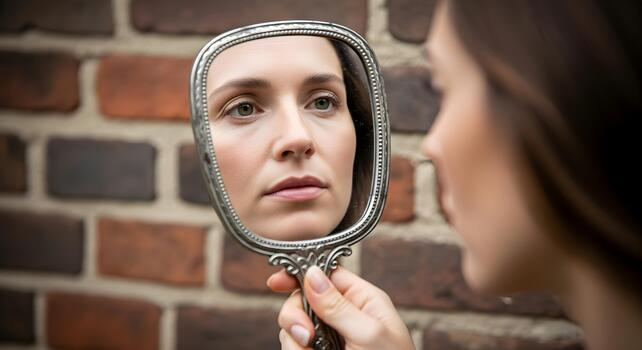
One to first understand is that your mirror image is a flipped version of your face. Every time you look in a mirror, you are seeing lateral inversion at work. Your left becomes right, right becomes left.
That slightly uneven brow, the way one cheek sits a little higher than the other? You have been seeing all of it backwards your whole life.
This matters because no human face is perfectly symmetrical. Research consistently shows that facial asymmetry is universal.
It is not a flaw, it is just the anatomy of many humans on earth. The mirror shows you the flipped version you have spent the most time with, and over time, your brain has quietly accepted it as your standard.
When a photograph shows your face in its true, non-reversed orientation, your brain registers something unfamiliar and unfamiliar very easily reads as wrong.
The Mere Exposure Effect: Why You'll Always Prefer Your Mirror Face
In 1977, psychologists Mita, Dermer, and Knight ran a study that gave language to something most people feel but can't explain. They showed participants two versions of their own face: the mirror image and the true photographic version.
Most people preferred their mirror image. Their close friends, however, preferred the photograph, the version they had always seen.
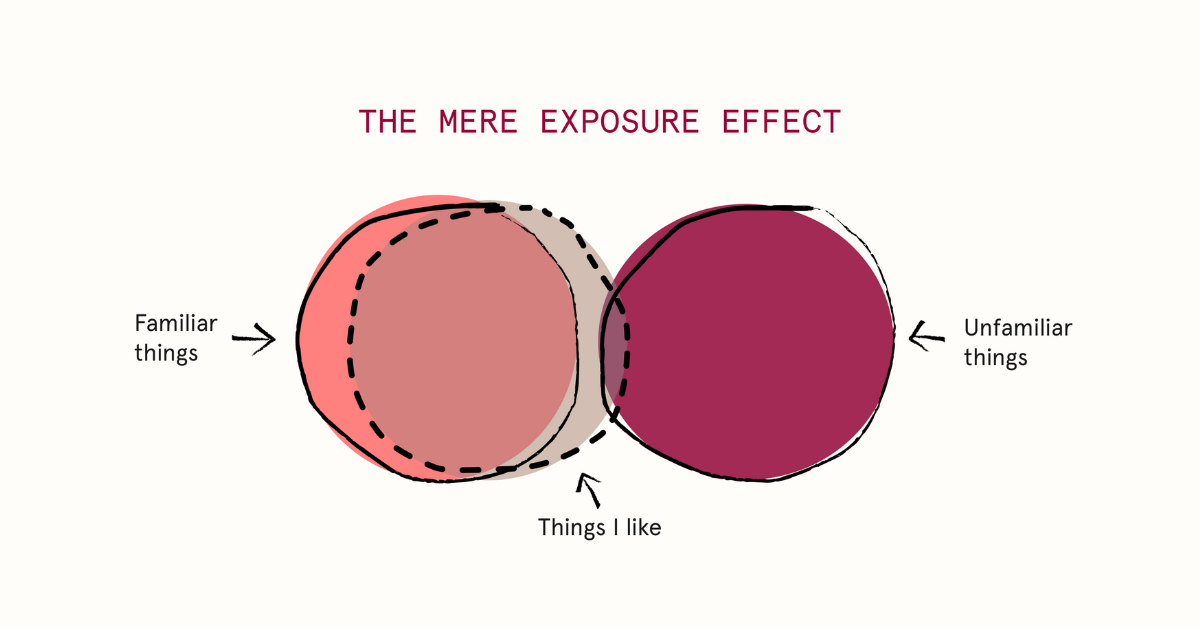
This is the mere exposure effect, first documented by psychologist Robert Zajonc in 1968. The concept is logical; we like what we are familiar with.
You have seen your mirror reflection every day of your life, so your brain has built a strong preference for it. When a photo shows your actual, non-reversed face, the way everyone else sees you, it feels off.
Not because you look bad, but because your brain is encountering a face it didn't rehearse for.
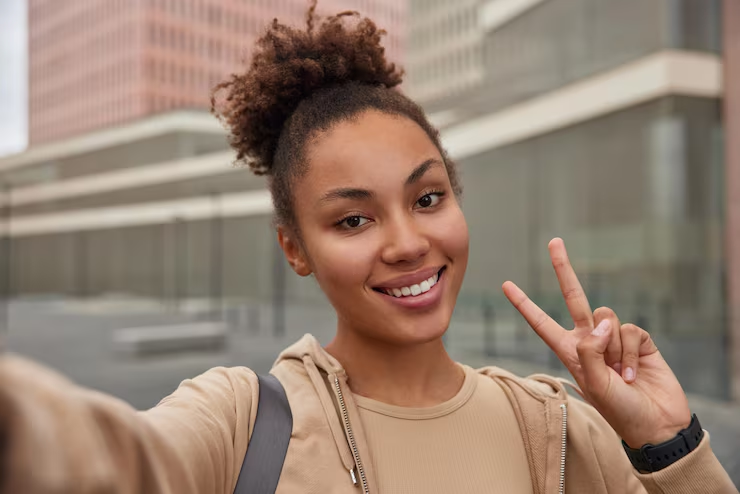
Why Selfie Camera Distortion Is Making Your Nose Look Bigger Than It Is
Front-facing cameras use wide-angle lenses with short focal lengths. The closer something is to a wide-angle lens, the more exaggerated it appears in the frame. Your nose, being the closest feature on your face to the camera, takes the biggest hit every single time.
A 2018 study published in JAMA Facial Plastic Surgery found that selfies taken at a typical arm's-length distance of about 12 inches made subjects' noses appear up to 30% wider than their actual size.
The ears, meanwhile, appeared smaller. This is basic lens geometry, not your face. It also explains why so many people seek rhinoplasty after years of selfie-induced insecurity, only to discover the problem was always the camera.
Why Photos Taken by Other People Feel Like Such a Betrayal
Back-camera photos, taken from a normal distance with a standard or slightly telephoto lens, are actually the most accurate representation of how other people see you, and that is precisely why they are so jarring.

In real life, your face is animated. You are moving, talking, making tiny micro-expressions that the human brain processes and softens in real time. A photograph freezes a single frame, often mid-expression, under imperfect lighting, from an angle you had never chosen for yourself.
It doesn't mean you look worse. It means photography is more unforgiving than real-time human perception.
Self-enhancement bias makes it worse. A 2008 study by Epley and Whitchurch found that people consistently identified attractiveness-enhanced versions of their own faces as their "true" face, meaning most of us walk around with a quietly idealized internal image of ourselves. A candid photo doesn't offer that same generosity.
Mirror vs. Camera vs. Real Life: Which One Is Actually You?
The back-camera photo, taken from a normal distance, is the closest approximation of how others see your face. Your mirror image is you, reversed. Your selfies are you, distorted by lens geometry.
None of them is lying — they are just different optical truths filtering the same face.
What complicates everything is that your brain has been quietly managing your self-image this whole time. It has been continually filling in gaps, favouring familiarity, smoothing out still frames. So the version that feels most you is often the least accurate.
The real you lives somewhere between all three: animated, three-dimensional, constantly moving which is experienced by everyone else in real time, but never quite captured in a single frame.
Your face is not the problem. Your frame of reference is.