The Domino Effect: How Small Overlooked Events Triggered Some of History’s Biggest Disasters
One tree branch. One ignored warning. One tiny flaw. History proves the biggest disasters often begin with the smallest mistakes. From Chernobyl to the Titanic, discover how little oversights led to big disasters
Introduction: When Little Things Become Catastrophic
History has a cruel way of reminding us that disasters are not always born from grand, obvious failures. Sometimes, the tiniest cracks, the ignored warnings, or the overlooked human mistakes set the stage for catastrophes that change entire nations.
A misplaced rivet can sink an “unsinkable” ship, a software glitch can collapse a power grid, and a forgotten safety drill can cost thousands of lives. What makes these stories so haunting is not just the scale of the tragedies, but the fact that many could have been prevented if only someone had paid closer attention.
Here are some of the most haunting times when the tiniest errors triggered world-shaking consequences.
1. The Titanic and the Ignored Ice Warnings
The sinking of the Titanic in 1912 remains one of history’s most infamous disasters. Much has been said about the ship’s speed, the shortage of lifeboats, and the hubris of branding it “unsinkable.” But what’s often overlooked are the ignored ice warnings that could have saved over 1,500 lives.
In the days leading up to April 14, Titanic’s wireless operators received at least seven warnings from nearby ships about heavy icebergs drifting into the Atlantic shipping lanes. Yet, most of these warnings never reached the captain.
Why? Because the operators were overwhelmed with handling passenger telegrams—luxury communications that first-class travellers insisted on sending.

Photo Credit: Pinterest
This small oversight—a failure to prioritize safety messages—meant that when the Titanic hit an iceberg at 11:40 pm, the crew was utterly unprepared. The ship’s design flaws, such as bulkheads that didn’t reach high enough to prevent flooding from spreading, only compounded the situation. In the end, a disaster of mythic proportions was set into motion by the neglect of something as mundane as radio protocol.
2. The 1986 Challenger Disaster: A Rubber Ring and Cold Weather
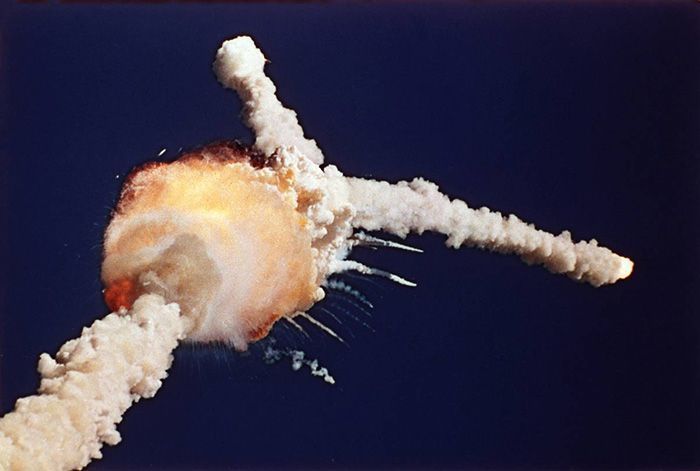
On January 28, 1986, the space shuttle Challenger disintegrated 73 seconds after liftoff, killing all seven crew members, including teacher Christa McAuliffe, who was meant to inspire a generation of students watching live. While the explosion looked dramatic, the cause was shockingly simple: a rubber O-ring that failed in the cold.
Engineers at Morton Thiokol, the contractor responsible for the shuttle’s solid rocket boosters, had raised concerns about the O-rings’ vulnerability to low temperatures.
On the morning of the launch, temperatures at Cape Canaveral were unusually cold—below freezing. The O-rings that sealed the joints of the rocket boosters had never been tested at such low conditions. Still, NASA managers, under pressure to meet deadlines and public expectations, pushed the launch forward.
History
Rewind the Stories that Made Africa, Africa
A Journey Through Time, Narrated with Insight.

Photo Credit: Pinterest
The result? The O-ring failed to properly seal, allowing hot gases to escape and ultimately tear apart the shuttle. The disaster was not due to an inevitable design flaw, but an overlooked warning and a culture of bureaucratic haste. One piece of rubber, dismissed as a minor risk, changed the trajectory of the U.S. space program forever.
3. The 2003 Northeast Blackout: A Tree That Shut Down Eight States
In August 2003, 55 million people across eight U.S. states and Ontario found themselves in darkness during one of the largest blackouts in history. At first glance, such a massive event sounds like it should have been caused by a terrorist attack or a major power plant explosion. In reality, it all started with something as ordinary as a tree touching a power line in Ohio.

The contact caused a local transmission line to trip offline. Normally, backup systems would reroute the load, but the control room’s alarm software failedand operators didn’t realize the cascading outages were underway. Within minutes, the domino effect overwhelmed the grid. Power plants shut down, substations tripped, and city after city plunged into darkness.

Photo Credit: Pinterest
READ MORE: The 2003 Blackout Explained: How a Single Failure Shut Down 8 States
The blackout led to at least 100 deaths, billions of dollars in economic losses, and widespread chaos. New York City residents were stranded in subways, water systems failed, and airports shut down. All of this chaos stemmed from one overlooked detail: an untrimmed tree and faulty monitoring software.
4. The Chernobyl Disaster: A Safety Test Gone Wrong
On April 26, 1986, the world witnessed one of the deadliest man-made disasters: the Chernobyl nuclear explosion. The meltdown released radioactive material that spread across Europe, displacing hundreds of thousands and leaving long-term health effects that persist today.
The disaster wasn’t caused by an earthquake or enemy attack but by a botched safety test. Operators at Reactor No. 4 wanted to simulate a power outage to see if the turbines could keep water pumps running until backup generators kicked in. But several critical mistakes were made:
Safety protocols were deliberately overridden.
The reactor’s unstable design was underestimated.
The test was run at night by staff with limited experience.

Photo Credit: Google (Wired)
The final straw came when control rods—intended to shut down the reactor—actually accelerated the reaction because of a design flaw at their graphite tips. In seconds, the reactor exploded.
What was supposed to be a routine test spiraled into the most devastating nuclear accident in history. Chernobyl illustrates how overconfidence and overlooked flaws in both human judgment and engineering can magnify small errors into world-altering events.
5. The Deepwater Horizon Oil Spill: Ignored Warning Signs at Sea
In April 2010, the Deepwater Horizon oil rig exploded in the Gulf of Mexico, killing 11 workers and causing the largest marine oil spill in history. For 87 days, oil gushed into the sea, releasing over 200 million gallons and devastating marine ecosystems.
The immediate cause was the failure of a blowout preventer—a massive safety device designed to seal the well in emergencies. But investigations revealed a chain of small, overlooked events:
Halliburton, the contractor, used a flawed cement mixture to seal the well, despite known risks.
Pressure tests revealed irregularities, but BP executives dismissed them to save time and money.
Warning signals hours before the explosion were ignored as “false alarms.”

Photo Credit: Pinterest
In short, the disaster was not a single catastrophic failure, but a series of ignored red flags—each small in isolation, but devastating when combined. The Deepwater Horizon tragedy underscores how human impatience, cost-cutting, and overlooked details can trigger global-scale consequences.
Conclusion: The Fragility of Systems and the Weight of Small Mistakes
History
Rewind the Stories that Made Africa, Africa
A Journey Through Time, Narrated with Insight.
From the Titanic’s overlooked messages to the Challenger’s ignored O-rings, from a tree in Ohio to a safety test in Chernobyl, these stories remind us that disasters are rarely caused by one dramatic failure. Instead, they often emerge from small, neglected details—warnings dismissed, flaws untested, procedures skipped.
The lesson is clear: attention to the little things matters. In aviation, space travel, energy, and even everyday life, the smallest signals can hold the key to preventing catastrophe. The tragedy is that hindsight always makes these overlooked events appear obvious. But in the moment, they blend into the background noise of daily operations—until it’s too late.
The fragility of human systems lies not in their complexity, but in the fact that one overlooked detail can tip the balance from safety to catastrophe. And so history repeats itself, reminding us again and again: sometimes it’s not the storms, earthquakes, or enemies that bring disaster—it’s the little things we choose to ignore.