From Sleeping On A Couch To Building One Of The Biggest Streetwear Brands: How Did Clint419 Build Corteiz?
From sleeping on his sister’s couch to building Corteiz into a global streetwear force, Clint419’s story is anything but ordinary. How did he do it?

Before Corteiz became the streetwear brand people camped out for, collaborated with Nike and Supreme, and wore from London to Lagos, its founder was sleeping on his sister’s couch.
Clint Ogbenna, better known as Clint419, was 20, in his third year at university, and fresh out of Nigeria after attending his grandmother’s burial when his family was hit with an eviction notice.
They had a week to leave.
He ended up sleeping in the living room of his sisters’ flatshare in Stamford Hill, London. For about six to eight weeks, the living room stopped functioning as a living room because that was where Clint slept.
Somewhere in the middle of all that uncertainty, he started building a clothing brand.
That brand was Corteiz.
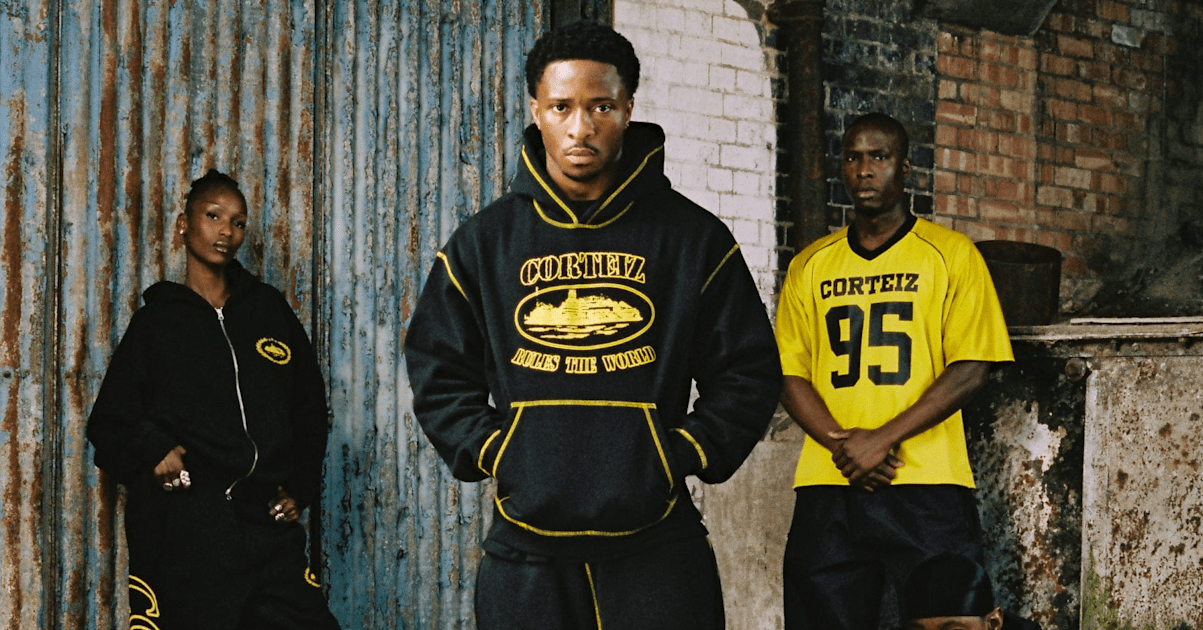
Today, Corteiz is one of the most recognisable names in British streetwear. Its Alcatraz logo has appeared on clothes worn by musicians and footballers, while collaborations with Nike have pushed the brand far beyond the London streets where it began.
But the interesting part of Clint’s story is not simply that he became successful.
It is how he built a brand people wanted to chase.
How Did Corteiz Start From a Sofa?
Corteiz was founded in 2017 and began selling garments in 2018. Clint did not come from the traditional fashion world, and he was not trying to build another polished luxury label.
In fact, when he spoke to The New York Times, he recalled that he did not even know what Supreme was in 2014.
His parents were Nigerian immigrants who moved to London in the 1980s. Clint grew up in west and northwest London as the youngest of three children and the only son.
Fashion was not some childhood destiny waiting for him.
Corteiz started more organically.
Clint was interested in clothes, culture and the world around him, but he also understood something that many brands struggle to grasp: people do not automatically care about a product simply because it exists.
Soinstead of spending all his energy trying to make Corteiz look bigger than it was, he made people curious about it.
The brand's Instagram account was private, and its releases were limited. Its events were often announced with little information, and customers had to pay attention if they wanted to know what was happening.
And that changed the relationship between the brand and its audience.
Patronizing the brand didn’t seem like shopping; it was more like hunting.
Why Did People Start Chasing Corteiz?

Corteiz understood scarcity very well.
But the clever part was that Clint did not make the clothes difficult to get and stop there. He turned getting the clothes into an experience.
One of the clearest examples came in 2022, when Corteiz announced a cargo-trouser exchange in London.
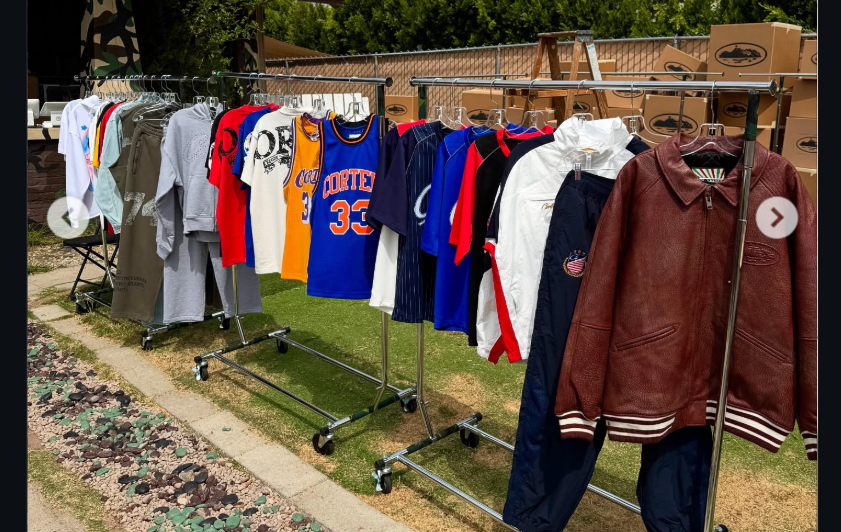
People were invited to bring clothes from other popular brands and exchange them for Corteiz cargos for just 99 pence.
The result was exactly the kind of chaos the brand had become known for.
Hundreds of people turned up.
And, naturally, everybody talked about it.
This became one of the strongest parts of the Corteiz playbook. A product launch did not have to feel like a product launch. It could be a stunt, a gathering or something people would post about before they even owned the product.
Corteiz also built a strong sense of belonging around itself.
The name itself comes from the phrase Corteiz Rules The World, while its Alcatraz logo became closely associated with the brand's rebellious identity.
The brand was not presenting itself as an outsider looking into London culture.
It was coming from the middle of it.
Music, football, street culture and fashion all became part of the Corteiz universe. British rappers wore the clothes. Footballers wore them. Young Londoners turned up to drops and events.
That gave the brand something an advertising budget cannot easily manufacture: cultural credibility.
Clint was not simply selling London-inspired clothing to the world.
He was selling the feeling of being part of London.
How Did Nike Go From sending a Cease-and-Desist to Working With Him?
This is definitely the funniest part of the entire Corteiz story.
Nike once had a problem with Clint.
In 2020, the sportswear giant sent Corteiz a cease-and-desist notice over trademark infringement.
For a young brand still finding its feet, that could have been the end of the story.
Instead, Corteiz kept growing. A few years later, Nike was no longer telling Clint to stop; It was asking him to collaborate.
In 2023, Corteiz announced its Nike collaboration after projecting the Corteiz logo onto Nike's London flagship on Oxford Street.
The collaboration produced Nike Air Max 95s and later other footwear, turning what had once been a legal confrontation into a business relationship.
It was a major moment because it showed just how far Corteiz had travelled.
If you can’t beat them, join them.
What Did Clint Actually Build?
It would be easy to tell Clint's story as a neat rise-from-nothing tale.
Young Nigerian-British entrepreneur, difficult beginning, clothing brand, nike collaboration, and global success, but the more interesting achievement is what he built around the clothes.
He built demand.
Corteiz made people wait for drops. It made them monitor social media. It made them travel across London for releases. It made them wonder what the next stunt would be.

That strategy became particularly powerful because Clint kept the brand relatively close to its roots even as its audience became international.
Rather than copying the formula of established American streetwear brands, he wanted Corteiz to export a distinctly London identity.
In a 2026 profile, Clint spoke about brands such as Supreme and Aimé Leon Dore exporting New York energy around the world. His ambition was to do something similar with London.
That became one of Corteiz's biggest advantages.
The brand had a place, a community,and it had a story that could not simply be copied by putting an Alcatraz logo on a T-shirt.
By 2024, Corteiz had moved into a 25,000-square-foot warehouse and office space. Clint told The New York Times that a poor-performing drop could generate around 5,000 to 6,000 orders, while a strong one could exceed 10,000.
That is a completely different scale from the young man sleeping on his sister's couch.
But the core idea has remained surprisingly consistent.
Make people care.
Make them curious.
Give them something they want to be part of.