Nigeria's 18 Cities in the 2026 Global Cities Index: What Oxford Economics' Ranking Says About the Urban Economy
Oxford Economics ranks 18 Nigerian cities in its 2026 Global Cities Index. See where Lagos, Abuja, Kano and others rank and what it means.
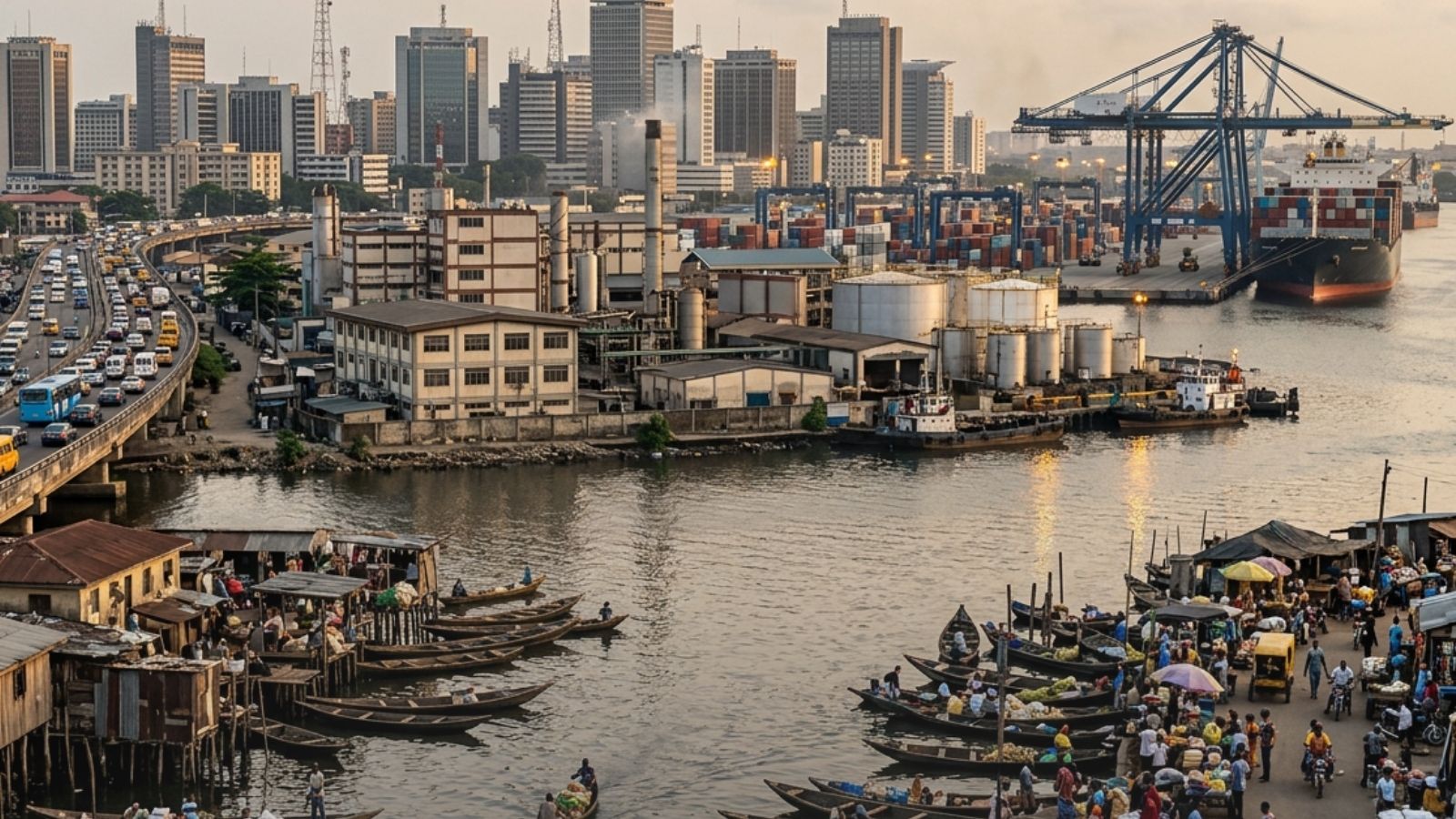
Lagos ranks 485th out of 1,000 cities in the 2026 Oxford Economics Global Cities Index. It stands as the best placing of any Nigerian city.
Seventeen others follow it down the table, and most of them are situated near the bottom. The spread says a lot about how Nigeria's urban economy is built.
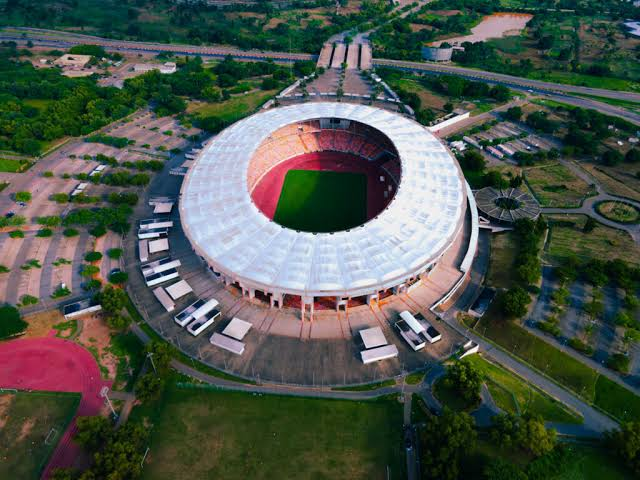
Nigeria's Global Cities Index Ranking: Where All 18 Cities Stand
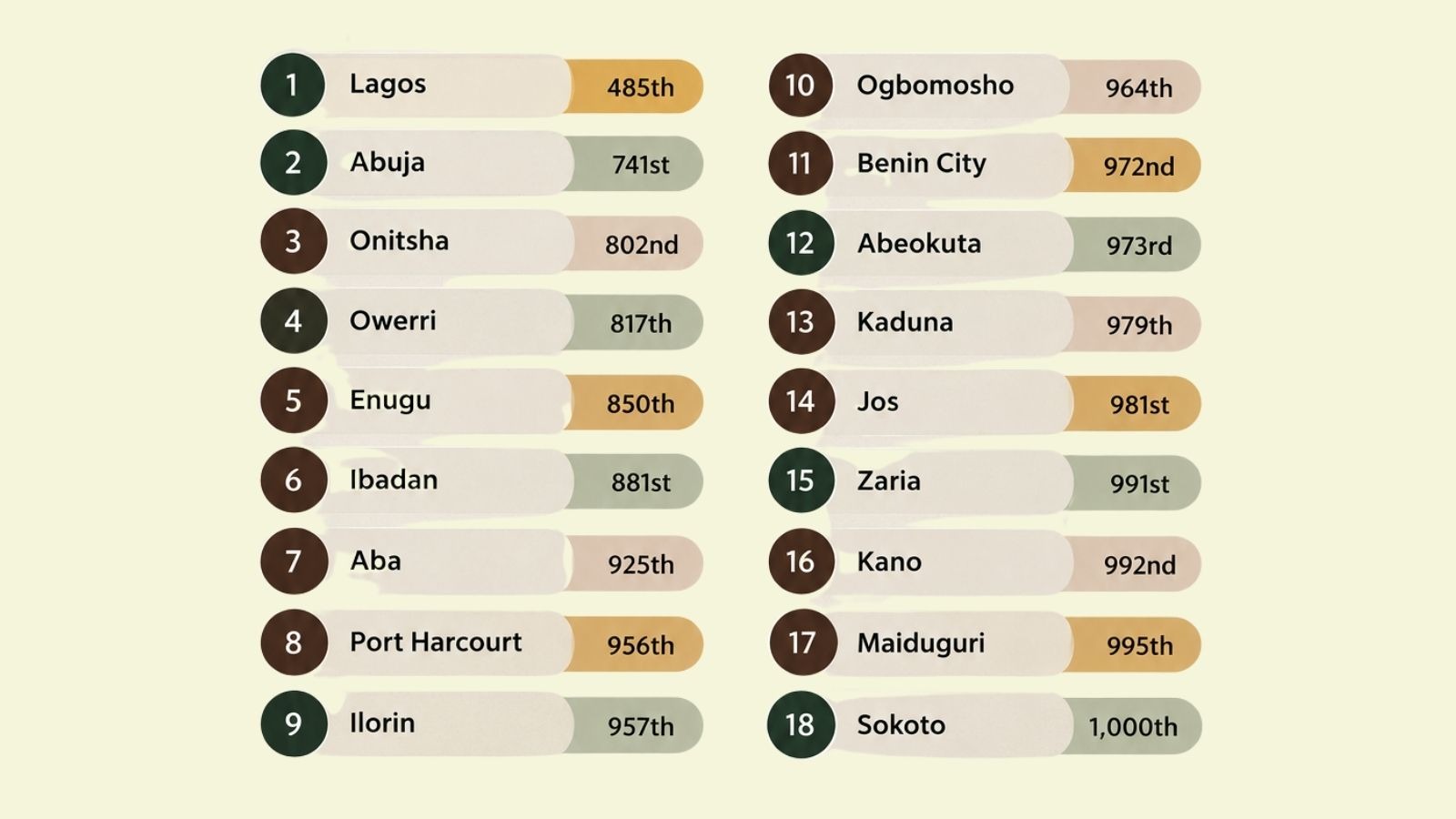
Lagos leads at 485th, followed by Abuja at 741st. The full list is:
How the Oxford Economics Global Cities Index Works
The index ranks the world's 1,000 largest cities using27 indicators across five categories and they include: Economics, Human Capital, Quality of Life, Environment and Governance. Each indicator is scored from 0 to 100 and combined into a category score and an overall score.
Economics carries the most weight at 30%. Human Capital and Quality of Life count for 25% each, while Environment and Governance count for 10% each.
The Economics category looks at GDP size, GDP growth, economic stability, GDP per person, employment growth and economic diversity. A city needs a large economy, but it also needs a stable, diversified one where growth reaches residents.
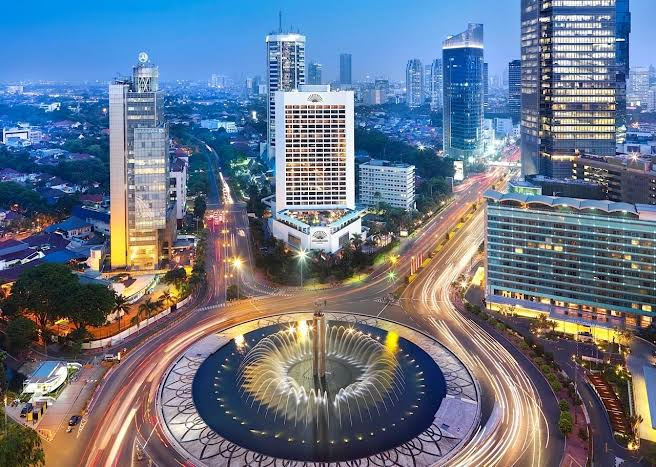
Lagos Ranking: Africa's Biggest City Still Sits Below Cairo, Accra and Nairobi
Lagos is classed as a developing megacity, a group of very large urban areas with over 10 million residents, alongside Cairo and Dhaka. Oxford Economics says these cities carry huge, young workforces with the potential to deliver a demographic dividend.
At 485th, Lagos is 15th among African cities. Cairo leads at 255th, followed by Accra at 302nd, Nairobi at 327th and Johannesburg at 392nd. Lagos also sits behind Kampala and Dakar.
So the continent's largest city by population is not its strongest urban economy by this measure, because size is only one input.
Why Most Nigerian Cities Rank Near the Bottom
Eleven of the 18 Nigerian cities, from Port Harcourt at 956th down to Sokoto at 1,000th, sit in the bottom 50 of the 1,000. Kano, one of the country's most populous cities, ranks 992nd.
The index gives an explanation. Governance is scored at national level, so every Nigerian city receives the same governance score, and it counts for 10% of the total.

Quality of Life and Environment, which look at things like crime, air quality, emissions and climate risk, together carry another 35%. Cities that rely on informal economies, strained infrastructure and heavy climate exposure struggle to score well on those indicators, however large their populations are.
What the Ranking Means for Nigeria's Economic Standing
The first lesson is concentration. Nigeria's urban economy leans heavily on Lagos, and it shows in the 256 places drop from Lagos to Abuja. Few Nigerian cities provide a second or third engine of growth.
The second is that the country's weak governance score affects every city at once. No Nigerian city can fully escape it, however well its state government performs. National reforms on security, stability and the business environment lift the whole list. City-level fixes only go part of the way.
The third is that the ranking is forward-looking. Oxford Economics builds it on its own city forecasts rather than historical data alone. This, therefore, shows the direction of travel as well as the current position.
Investors use that kind of benchmark to decide where to site operations, and a position near the bottom can make capital look elsewhere.
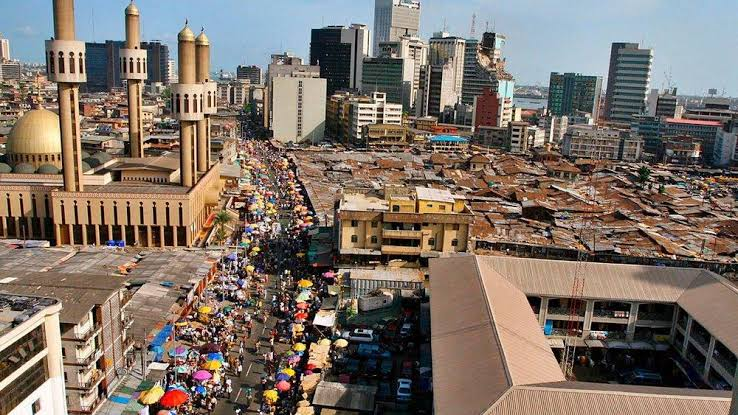
Nigeria's Urban Growth Potential: The Case for Optimism
Nigeria has more cities on the list than most African countries which reflects a large and growing urban population. Six Nigerian cities are also projected to be among Africa's 30 fastest-growing by 2050, including Onitsha, Kano, Ibadan and Abuja.
Growth on that scale can lift rankings if jobs, infrastructure and services keep pace with the people.
The index also rewards diversification and employment growth. Cities like Abuja, Onitsha and Ibadan, which already rank above most of their peers, are the natural candidates to build on that.
The Conclusion on Nigeria's Cities
The 2026 Global Cities Index shows a country with many urban centres but one clear economic anchor. Lagos holds its ground among Africa's biggest cities without leading them, and most other Nigerian cities are held back by national governance, living conditions and environmental pressure.
For Nigeria to climb, it needs more than a strong Lagos. It needs a second tier of cities that score well on stability, jobs and quality of life.