The Chinese Are Coming for Nigeria’s Retail Market, But Are Nigerian Traders Really the Victims?
Chinese businesses are entering Nigeria’s retail market, angering traders and dividing consumers. But is the real problem China, or how Nigerians do business?
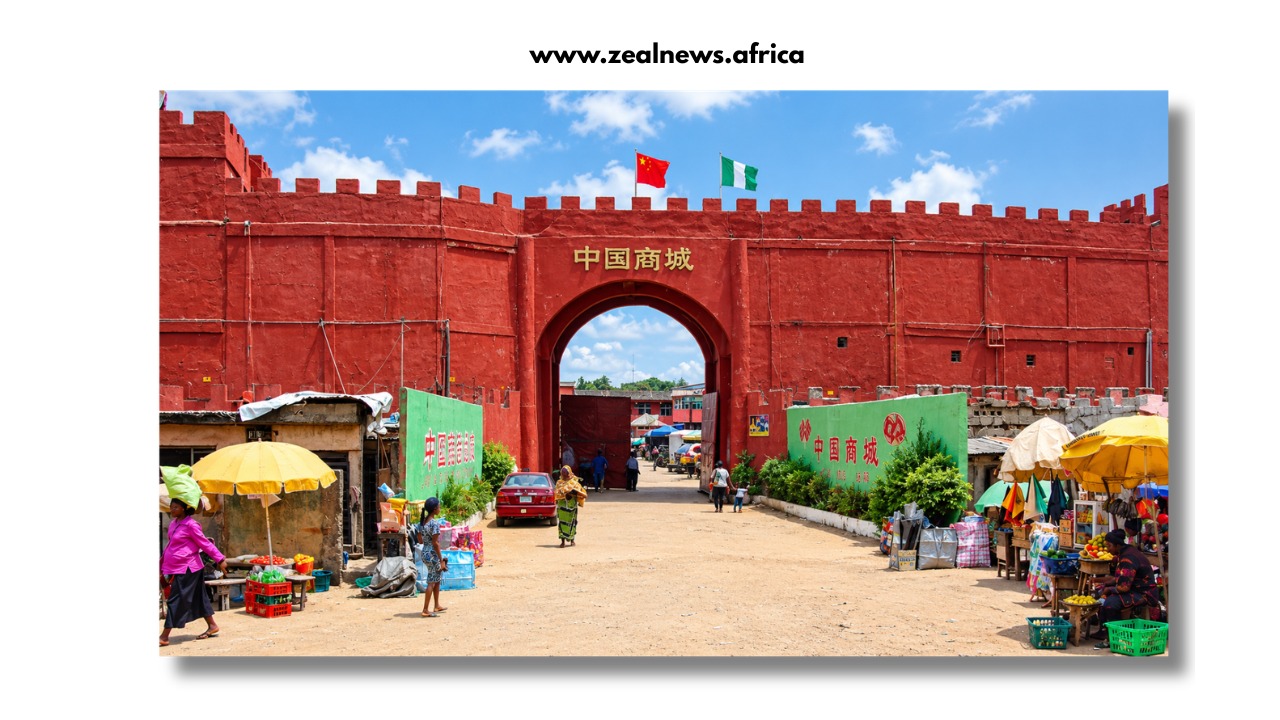
“CHINESE MUST GO!”
That was what some Nigerian traders were shouting this week at the Lagos International Trade Fair Complex.
They came out with placards, complaining that Chinese businesses were taking their customers and destroying their businesses.
Their argument was simple: Chinese companies came to Nigeria to manufacture and supply goods, but they are now entering the same retail market where Nigerians make their living.
And honestly, when you hear Nigerian traders shouting that Chinese people are stealing their customers, your first reaction might be, “How did we even get here?”
For years, the arrangement was straightforward.
A Chinese manufacturer produced goods in China. A Nigerian trader travelled to China, bought those goods, shipped them to Nigeria, and sold them to Nigerians.
They all made money as the Nigerian consumer bought the product.
Everybody had their lane, but now, the Chinese manufacturers are asking a very simple question:
If Nigerians are already buying billions of dollars worth of our products, why do we need the Nigerian middleman?
So they are increasingly moving closer to the Nigerian consumer.
And that’s where the trouble starts.
Because the moment the manufacturer enters the same market as the person who has been buying from him, the Nigerian trader suddenly has a very serious problem.
He is competing against his own supplier.
But there is another side of this story that Nigerians need to talk about.

Why Are Nigerian Traders So Angry With The Chinese?
The protests are real. Traders at the Lagos Trade Fair Complex accused Chinese businesses of moving into retail and selling directly to customers at prices Nigerian traders cannot compete with.
Some protesters even carried placards saying “Chinese must go.”
And from a business perspective, you can understand why they are angry.
Imagine travelling from Lagos to China, spending money to buy goods, paying for shipping, customs, transportation and everything else involved in getting those goods into Nigeria.

Then you arrive at your shop and discover that the Chinese company you bought from has opened a shop right beside you.
And because they control the production and supply chain, they can potentially sell at a price you cannot match.
You have travelled halfway across the world to become a middleman between a manufacturer and your own customer, only for the manufacturer to walk into your market and compete with you.
But here is where I have a problem with the way Nigerians are discussing this.
Some people are talking as though every Nigerian trader is an innocent victim and every Chinese business is an evil mastermind that woke up one morning and decided to destroy Nigerian businesses.
Please.
Let us be serious.
For years, Nigerians themselves have been looking for ways to bypass Nigerian retailers and import directly from China.
We now have 1688, Temu, Pinduoduo e.t.c
There are Nigerians teaching other Nigerians how to order directly from Chinese suppliers because the same product being sold here can sometimes be bought much cheaper closer to the source.
And this has exposed something we do not like talking about.
Some Nigerian businesses have become too comfortable making money from the fact that consumers do not know what things actually cost.
Before somebody comes for my head, profit is not greed.
A business owner is supposed to make money. If you buy something for ₦8,000 and sell it for ₦10,000, that ₦2,000 is not automatically profit. There is shipping, customs, transportation, rent, market levies, exchange rates, damaged goods and plenty of other costs.
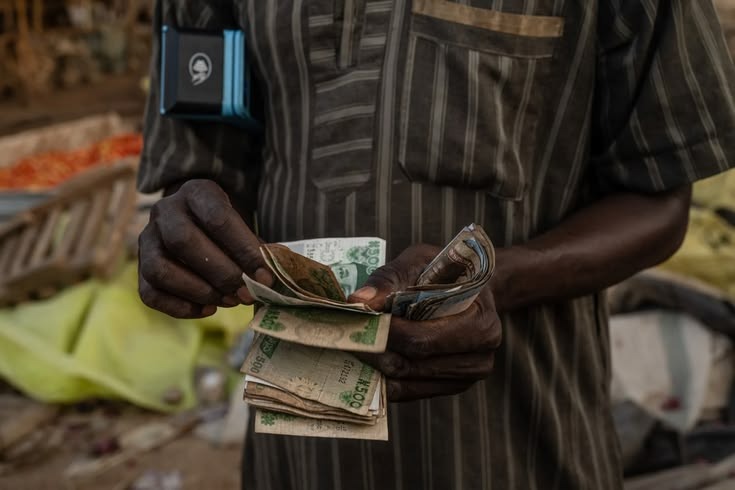
But that does not mean every ridiculous markup can be explained with “shipping fee” and “dollar rate.”
The problem is when businesses begin relying on the customer not knowing what the product costs elsewhere.
Now Nigerians are finding out.
And once customers discover that they can buy something directly from China for much less, they start asking questions.
Why am I paying ₦30,000 for this?
Why is someone selling it for ₦18,000?
Why did the same thing cost much less in 1688?
Human beings become very interested in economics when the money being discussed belongs to them.
What Happens When The Manufacturer Becomes The Retailer?
This is where the Chinese expansion into Nigeria's retail market becomes much bigger than one group of traders being angry at another.
Millions of Nigerians earn money from importing, distributing and selling products. If Chinese manufacturers bypass Nigerian wholesalers and retailers, they are not just changing where Nigerians buy their phone chargers and kitchen appliances.
They are changing who gets to make money from those products.
For years, the supply chain looked something like this:
Chinese manufacturer → Nigerian importer → Nigerian wholesaler → Nigerian retailer → Nigerian consumer.
Every person in that chain needs to make money.
Now imagine:
Chinese manufacturer → Nigerian consumer.
Several layers disappear.
For the consumer, that can mean cheaper prices.
For the Nigerian trader, it can mean losing the customer completely.
That is the economic problem government has to deal with.
If Chinese businesses can produce and sell goods more cheaply, restricting them may protect some Nigerian businesses in the short term, but consumers could end up paying more.
At the same time, allowing foreign manufacturers to dominate retail creates another problem.
It could lead to severe economic vulnerabilities, including the decline of local industries, job losses, and increased supply chain dependence.
When foreign entities control both production and retail channels, it fundamentally alters the domestic economic landscape.
If Nigerian businesses are pushed out because they cannot compete with companies that control production from the beginning of the supply chain, Nigeria could end up with cheaper products today and a weaker local business ecosystem tomorrow.
China already plays a huge role in Nigeria's import market. China exported about $24.9 billion worth of goods to Nigeria in 2025. In the first half of 2026, Nigeria imported ₦11.01 trillion worth of goods from China, representing 39.27% of Nigeria's total imports during that period.
So this is no longer about a few Chinese people opening shops in Lagos.
China is already deeply embedded in Nigeria's supply chain.
The real question is how much further that relationship should go.
Should Chinese companies manufacture in Nigeria? Yes, provided they follow Nigerian laws and contribute to the economy.
Should they bring capital, technology and jobs? That can benefit Nigeria.
But should a foreign manufacturer control production, wholesale and retail while Nigerian businesses are pushed out of the same market?
That is where regulation should come in, not because Chinese businesses are Chinese, but because competition needs rules.
What Does Nigeria Do Now?
Kenya is already dealing with a similar argument.
Earlier this month, President William Ruto directed authorities to take action against foreigners operating certain small-scale businesses, arguing that petty trade should be protected for Kenyan citizens while Kenya remains open to larger foreign investment.
The Kenyan government later clarified that it was not imposing a blanket ban on foreigners doing small businesses, but that foreigners must comply with immigration, work-permit, registration and licensing requirements.

Nigeria may eventually have to have the same conversation.
Bring your money, build factories, employ people, create products, invest, but do not enter a country and completely overwhelm the smallest businesses trying to survive.
At the same time, Nigerian businesses have some work to do too.
We cannot complain about foreign competition while refusing to improve our own businesses.
If your biggest competitive advantage is that your customer does not know where you bought the product, the internet has already started destroying your business model.
If a Chinese seller can provide the same product more cheaply, the Nigerian trader needs another reason for the customer to buy from them.
Better customer service.
Better packaging.
Better quality.
Faster delivery.
After-sales support.
A stronger Nigerian brand.
And maybe, just maybe, reasonable profit.
Because the Nigerian consumer is not your enemy.
The Nigerian consumer is also trying to survive.
The trader wants to protect their business.
The Chinese company wants to make money.
The consumer wants affordable products.
The government wants investment, jobs and economic growth.
All four interests exist at the same time.
So shouting “Chinese must go” does not solve the problem.
Neither does telling Nigerian traders to shut up and accept competition.
And pretending every Nigerian trader is greedy is also lazy. There are hardworking traders dealing with terrible infrastructure, expensive logistics and unstable exchange rates.
But pretending every Nigerian trader is completely innocent is equally dishonest.
Some businesses have charged what they could get away with because customers had no easy way to check.
Maybe that's why many consumers want them to stay. Many claim Nigerian traders have been cheating them for so long.
“A bale of t-shirts is #15,000 naira from the Chinese and my own people sell to me for 85,000. The Chinese must stay!!!”
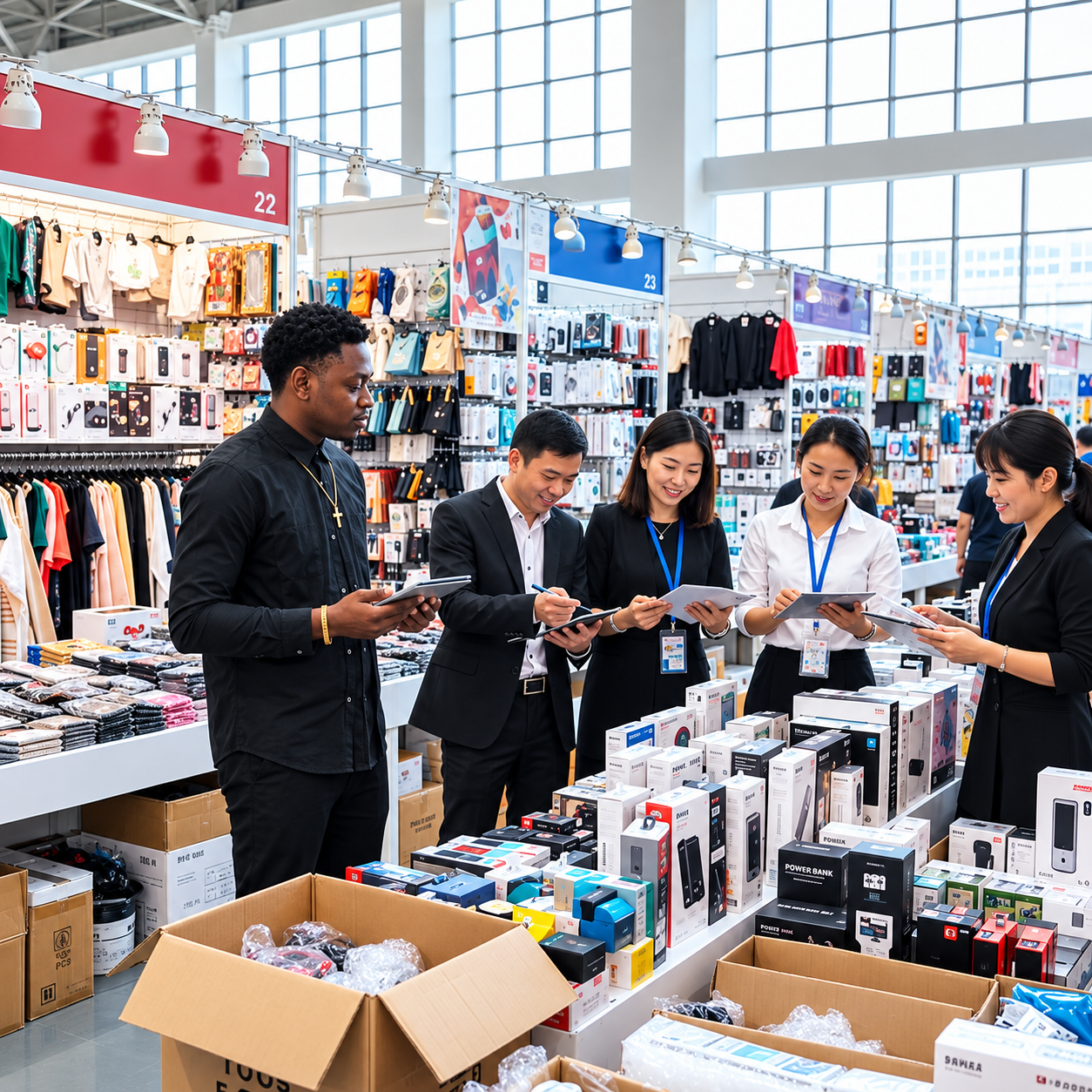
And now the Chinese are not simply entering Nigeria's retail market.
Maybe they are forcing Nigerians to confront a question we have avoided for years: what happens to our businesses when the customer can finally see the source, compare the prices and choose for themselves?
That is the real fight.
Not Chinese versus Nigerians.
Not traders versus consumers.
It is a fight between an old way of doing business and a new one.
And Nigerian businesses will have to decide whether they want protection from competition or the capacity to compete when the customer finally knows exactly what their money is paying for.