The 4B Movement: Everything You Need to Know About The 4B Movement
The 4B movement is redefining power through refusal: no marriage, no childbirth, no dating, no sex. Born in South Korea and echoing globally, it reveals what happens when women step away from systems that demand everything and return too little.
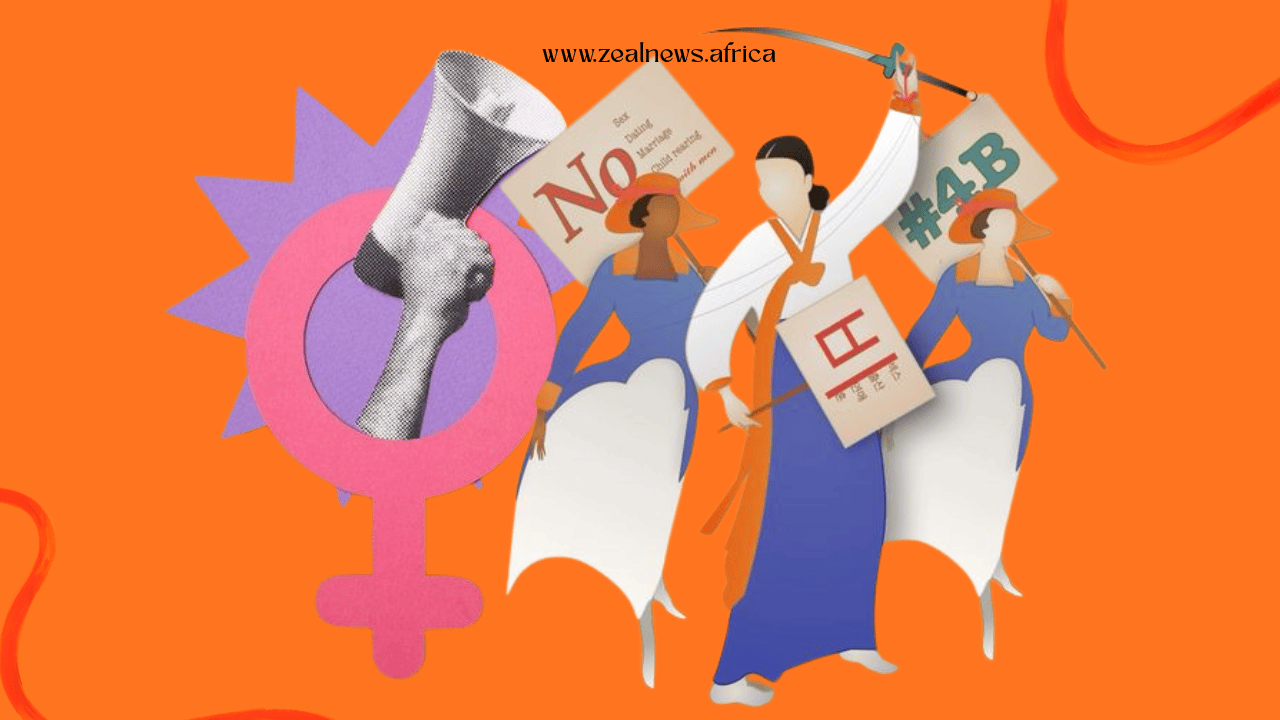
Picture a government so desperate for babies that it draws a map; pink, colour-coded, district by district, tracking every woman of reproductive age in the country. Not her ambitions. Not her income. Not her education level.
Just her womb. Its location. Its potential. When South Korea did exactly that in 2016, women responded with a fury that reverberated across the country: "my womb is not national property," they declared. "A woman is not a baby-making machine."
That fury did not dissipate. It organised. It named itself. And it became one of the most radical feminist movements of the 21st century, one whose reverberations are now being felt from Seoul to Lagos to Nairobi.
What 4B Actually Is
The 4B Movement emerged in South Korea around 2019, born from years of compounding rage; a spy-cam epidemic that saw thousands of women secretly filmed in public spaces and sold online, devastating femicide rates.
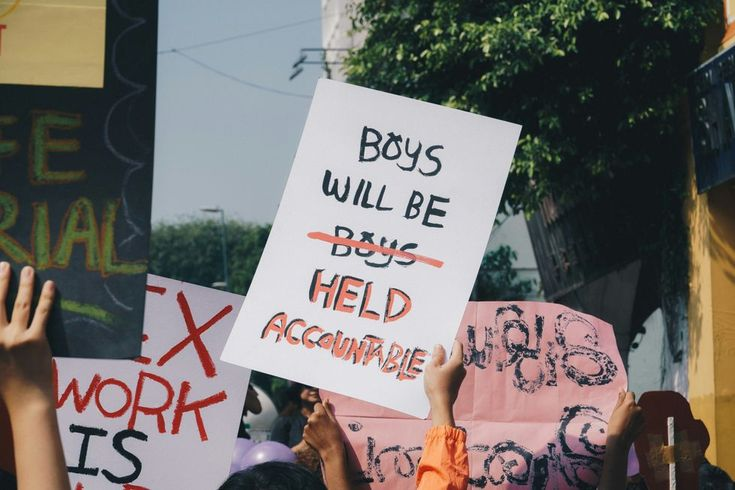
The name comes from four Korean words beginning with the prefix bi, meaning "no." The four refusals: bihon — no marriage; bichulsan — no childbirth; biyeonae — no dating; bisekseu — no sexual relationships with men.
Together they form a total, deliberate withdrawal from a social contract millions of South Korean women decided was extracting everything from them while offering very little in return.
It is crucial to understand that 4B is not about rejecting men for the sake of it, it is about rebalancing power in a world where power is skewed against women.
The movement has no leaders, no headquarters, no official website. It lives in online communities, in quiet personal decisions, and increasingly, in demographic data.
The Numbers That Panicked a Government
The data that followed is extraordinary. South Korea's Total Fertility Rate hit 0.72 in 2023; the lowest ever recorded anywhere in the world, making it the only OECD country with a fertility rate below 1.0, and triggering what officials described as "a sense of national crisis."
The replacement rate needed to sustain a stable population is 2.1 children per woman. South Korea is producing barely a third of that. Population projections show a demographic structure researchers describe as a "cobra head" shape, with an estimated median age of 56 years by 2044, an economy crushed under the weight of elderly dependents with too few working-age people to carry them.
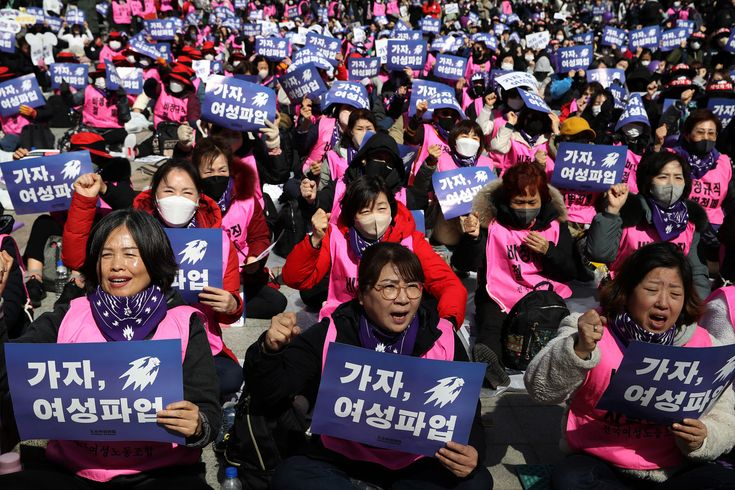
The Bank of Korea projected that the collapse could push the country into a permanent recession by the 2040s, with economic contraction possible as early as 2041.
The government's response has been staggering in scale, and staggering in its failure. Over the past 16 years, South Korea has spent more than $270 billion on childbirth incentives, cash bonuses, subsidised housing, childcare support, extended parental leave.
In June 2024, it formally declared a "Population National Crisis" and created an entirely new government body — the Ministry for Population Strategy and Planning — dedicated solely to reversing the collapse. One proposal even floated exempting men from mandatory military service if they fathered three children before 30. None of it has moved the needle meaningfully.
Because here is what the government keeps missing: South Korea ranks worst in the entire OECD for the gender wage gap, with women earning 29.3 percent less than men, almost triple the OECD average. Only 17.5 percent of managers in Korea are women, far below the OECD average of 30 to 40 percent. Women built the education.
Social Insight
Navigate the Rhythms of African Communities
Bold Conversations. Real Impact. True Narratives.
They built the careers. And then they looked at what marriage and motherhood would cost them, financially, professionally, personally. and said no. Not out of selfishness. Out of arithmetic.
Now Place That Refusal on African Soil
The 4B movement went global after the 2024 US presidential election, when American women discovered it on social media and claimed it as their own political language. But the continent watching most quietly, and most meaningfully, is Africa.
African women are asking the same question Korean women asked. They are just asking it in a context where the cost of refusal is far higher and the infrastructure for survival far thinner.
To understand why 4B cannot simply transplant itself into African soil, you must understand what womanhood on this continent has historically meant, and to whom it has belonged. In most African cultures, a woman's identity is not primarily individual.
It is relational and communal. She is someone's daughter. Then someone's wife. Then someone's mother. The lobola, bride price, and dowry systems across sub-Saharan Africa are not merely tradition, they are economic frameworks that literally price a woman's worth and transfer her from one family's custody to another's.

A woman who refuses marriage in many African communities is not making a personal choice. She is refusing a communal contract, one that involves her parents, her extended family, her village, her church or mosque.
The social consequences are not mild disapproval. They are ostracism, disinheritance, and in some contexts, genuine danger. And unlike South Korea, where an educated woman with a salary can functionally survive outside of marriage, across much of sub-Saharan Africa, a woman without a husband is often a woman without a safety net, not by personal failing but by structural design.
But African Women Are Already Moving
Here is what the global conversation consistently gets wrong: African women are not passive. They never have been.
There are millions of African women already living the spirit of 4B, without the hashtag, without the Korean vocabulary, without any international media coverage. Women quietly deciding not to remarry after divorce or widowhood.
Women in Lagos, Nairobi, and Johannesburg buying property in their own names, building businesses, declining the marriages their families keep arranging. Women who have decided "I will not settle" in a context where settling was supposed to be the only available option.
The japa generation of young Nigerian women leaving for the UK, Canada, and Europe are in many cases making a version of this choice, voting with their feet against a social contract that was never designed with their flourishing in mind. They are not citing 4B. But the logic is the same.