Stargazing Secrets: The Ancient Mystery Behind Wishing on Falling Stars
Often mistaken for 'shooting stars', meteors are pieces of space rock that ignite upon entering Earth's atmosphere. This phenomenon has inspired a centuries-old tradition of making wishes, rooted in ancient beliefs and popularized by the philosopher Ptolemy's theories, and later, Disney.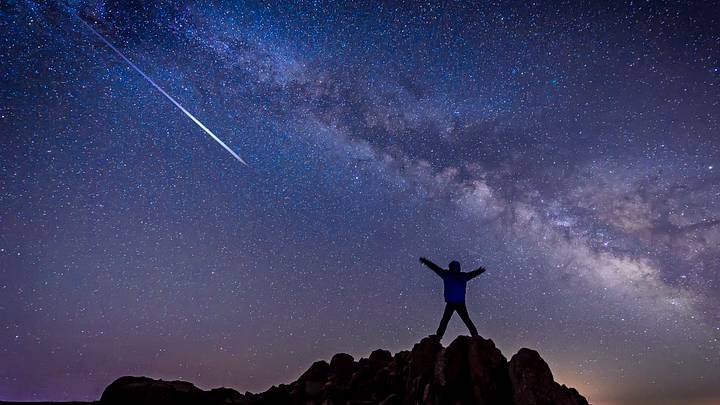
The celestial spectacle commonly known as a shooting star is, technically speaking, not a star at all but rather a meteor. These fascinating objects are defined by the Cambridge Dictionary as "a piece of rock from space that produces a bright light as it travels through the Earth's atmosphere." Their characteristic 'shooting' appearance is a result of them igniting upon entry into our planet's atmosphere.
Beyond their scientific explanation, shooting stars hold a significant place in pop culture, particularly associated with the tradition of making wishes. The origins of this wistful custom stretch back many centuries, deeply rooted in ancient cultural beliefs concerning the stars.
Ancient Egyptians, for instance, placed immense significance on the celestial realm, believing that a person's soul ascended to the stars after death, from where it would shine down upon those still living on Earth. This cultural reverence laid a foundation for attributing deeper meaning to celestial events.
A pivotal figure in formalizing the belief in the additional significance of shooting stars was the ancient philosopher Ptolemy. Active in Egypt during the second century AD and of both Greek and Roman heritage, Ptolemy theorized that the appearance of shooting stars in the sky signaled that the gods were actively looking down from heaven to observe human beings on Earth. Consequently, he believed that since the gods were already attentive to Earth during these celestial occurrences, they were more likely to hear and grant wishes made by humans at such times, compared to other moments when their attention might be elsewhere.
This powerful idea, stemming from a theory nearly two millennia old, ultimately gave birth to a tradition that continues to this day. The concept of "wishing on a star" gained further prominence and was firmly cemented in the 20th century, largely due to the widespread popularity of the song "When You Wish Upon a Star" from the beloved Disney film, Pinocchio. Furthermore, shooting stars have consistently inspired contemporary artists, leaving an enduring mark on creative works.