She100: Tito Ovia, the Health-Tech Pioneer Digitising Africa's Hospitals
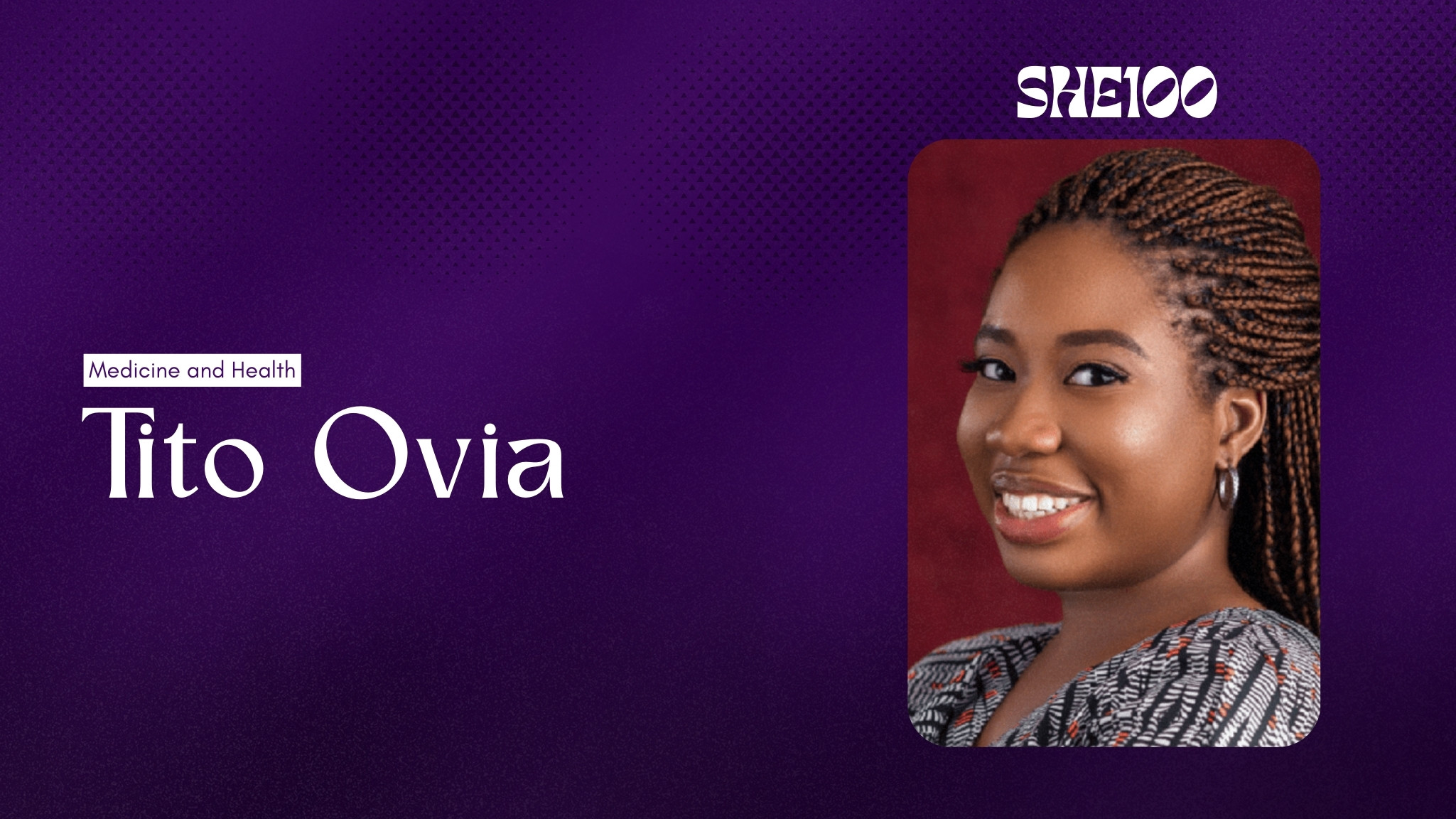
Meet Tito Ovia, the health-tech entrepreneur behind Helium Health who is helping digitise hospitals across Africa and reimagine how healthcare data can transform patient care and access across the continent.
We all know how the healthcare system is in this country and in many other parts of Africa.
Let’s paint a mental picture quickly.
A doctor in a public hospital in Akwa Ibom searches for a patient's file. Not the way you would use your search bar button on your favourite site. Not on a screen.
She is sifting through stacks of paper, opening cabinets, hoping nothing got misfiled, misplaced or rained on.
This is not a scene from the 1980s. For many hospitals across Africa, this was, and in some places still is, everyday reality.
Tito Ovia looked at that reality and decided it was unacceptable.
More Than a Last Name
Born in 1994 to one of Nigeria's most recognisable business families, her father is Zenith Bank founder,Jim Ovia, Tito could have relaxed and enjoyed wealth.
Instead, she studied Biomedical Sciences at the University of Manchester, came back home and dove headfirst into the unglamorous end of Nigerian healthcare: data, systems, and the infrastructure that nobody talks about until it fails someone.

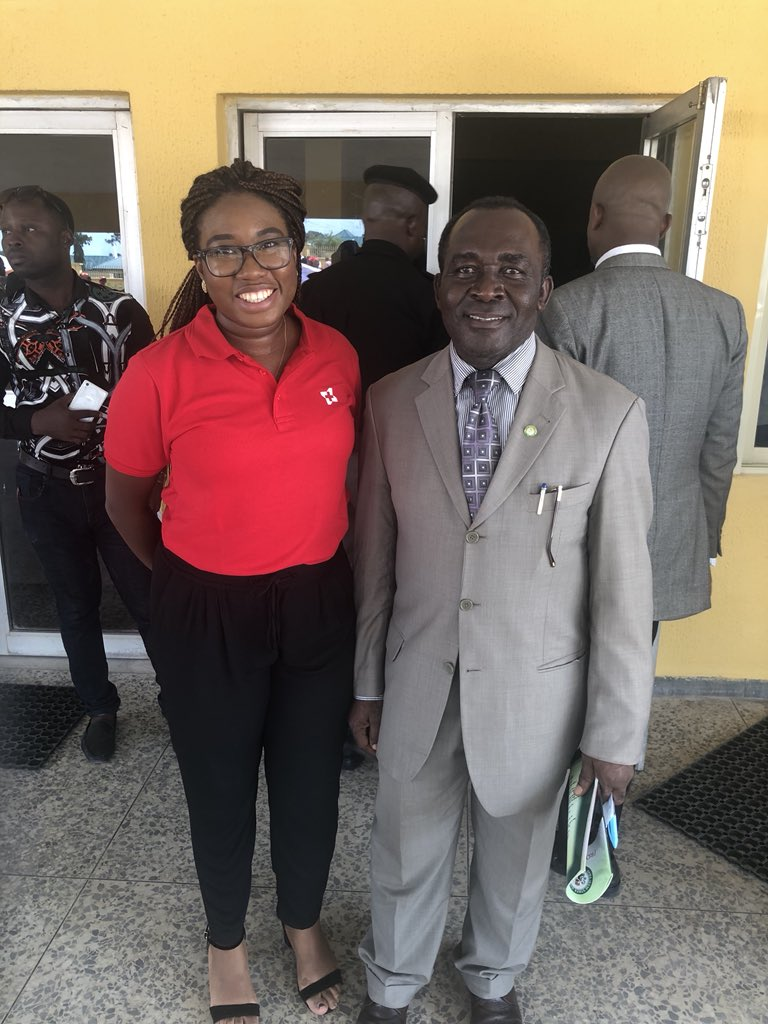
Her turning point came during her NYSC service where she worked as an assistant project manager at the Lagos State AIDS Control Agency.
The job was eye-opening in the worst way. Without proper data systems, it was nearly impossible to track whether money spent on HIV/AIDS prevention was actually making a difference.
The records were a mess, the gaps were enormous and the implications were situations of life-and-death.
But, she didn’t file that discovery at the back of her brain; she, like every innovator out there, built a company around it.
Building the Operating System for African Healthcare
In 2016, Tito co-founded Helium Healthalongside Adegoke Olubusi and Dimeji Sofowora. Their mission and vision was direct: use technology and data to fix healthcare delivery across Africa.

They started with electronic medical records and hospital management software, the kind of tools that seem basic until you realise how many hospitals were running entirely on paper.
It will simplify the impact Helium Health has and will continue to wrought by saying they just digitise records.
Helium Health gave healthcare providers a full operating system, covering everything from patient management to billing, telemedicine and financing for clinics that couldn't afford to upgrade on their own.

As Head of Public Sector Growth, Tito's lane has always been the harder part.
She was in charge of convincing governments, health ministries and public institutions to actually change how they operate. And she has delivered.

One landmark achievement was leading Helium Health's partnership with the Akwa Ibom State Government to digitise hospital processes across state-run facilities.
Getting a government to replace paper with software is not a small thing.
It requires patience, persistence and the kind of conviction that doesn't waver when the usual bureaucracy built into the Nigerian system pushes back.
The Numbers Don't Lie
That conviction has powered results that speak for themselves.
Helium Health now operates in seven African countries which includes Nigeria, Ghana, Liberia, Senegal, Cameroon, Uganda, and Kenya and supports over 7,000 medical professionals and facilitating more than 300,000 patient visits every single month.

The company got into Y Combinator in 2017, raised $10 million in a Series A round in 2020 backed by Tencent and Global Ventures and followed that with a $30 million Series B in 2023.
Total funding to date sits at over $42 million. It is, without question, the leading healthcare technology provider in West Africa.
The Bigger Vision
For Tito, the vision is bigger than software.
She has spoken about what she sees as Africa's version of the fintech revolution, a moment where healthcare data, properly collected and properly used, could allow the continent to close up the decades of inequality.

When your hospitals know what is happening in real time, when patient histories travel with the patient instead of getting lost on a bus trip, when a clinic in a small town can access financing and telemedicine tools that were previously out of reach, that is not just efficiency. That is equity.
Showing Up When It Counts
Being a female founder in tech has not been without its own challenges.
She has been open about what that looks like — fighting external forces that undermine you while simultaneously battling your own imposter syndrome.
She has pointed out that the numbers are brutal; only a sliver of venture funding goes to Black founders, and even less to Black women.
She had said it plainly so other founders can go in prepared.
And when the streets of Nigeria needed her, she showed up there too.

In 2020, Tito was a founding member of theFeminist Coalition, the group of Nigerian women in their 20s and 30s who mobilised support for the #EndSARS protests with staggering efficiency, raising nearly N150 million in two weeks and channelling it into legal aid, emergency healthcare and security for protesters.
A Woman Worth Celebrating
That is Tito Ovia, really.
She keeps showing up to things that matter and finding out they demand more of her than she expected. Then she delivers anyway.
As we celebrate the women building the infrastructure that holds communities together, often without the fanfare they deserve, Tito belongs at the centre of that conversation.

Not because of her last name or her Forbes 30 Under 30 plaque, but because she looked at a broken system, found the right people, built the right tools and refused to stop.
Across seven countries and hundreds of thousands of patient visits a month, that refusal is quietly saving lives.