Semenya Slams IOC's 'Disrespectful' Gender Tests, Igniting Global Debate!
Two-time Olympic champion Caster Semenya has strongly denounced the IOC's reinstatement of gender verification tests for the 2028 Los Angeles Games, calling it a "disrespect for women." The new policy, which bans transgender and many intersex athletes, revives a controversial practice despite its past abandonment due to scientific concerns and athlete pressure. Semenya also expressed disappointment in IOC President Kirsty Coventry's leadership in this decision.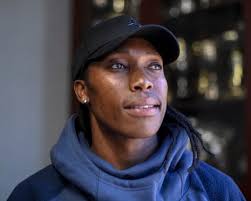
Caster Semenya, the South African two‑time Olympic 800m champion, said on Sunday that the reinstatement by the International Olympic Committee of sex verification tests for the 2028 Los Angeles Games was “a disrespect for women”.
The hyperandrogenic former athlete also expressed disappointment that the measure was taken under the leadership of the new IOC president, Kirsty Coventry of Zimbabwe.
“For me, personally, for her being a woman coming from Africa, knowing how African women or women in the global south are affected by that, of course, it causes harm,” Semenya said during a Cape Town press conference on the sidelines of a sporting competition.
On Thursday the IOC reinstated genetic testing to determine female sex, starting with the 2028 Olympics, in effect banning transgender athletes and a large number of intersex athletes from women’s sports.
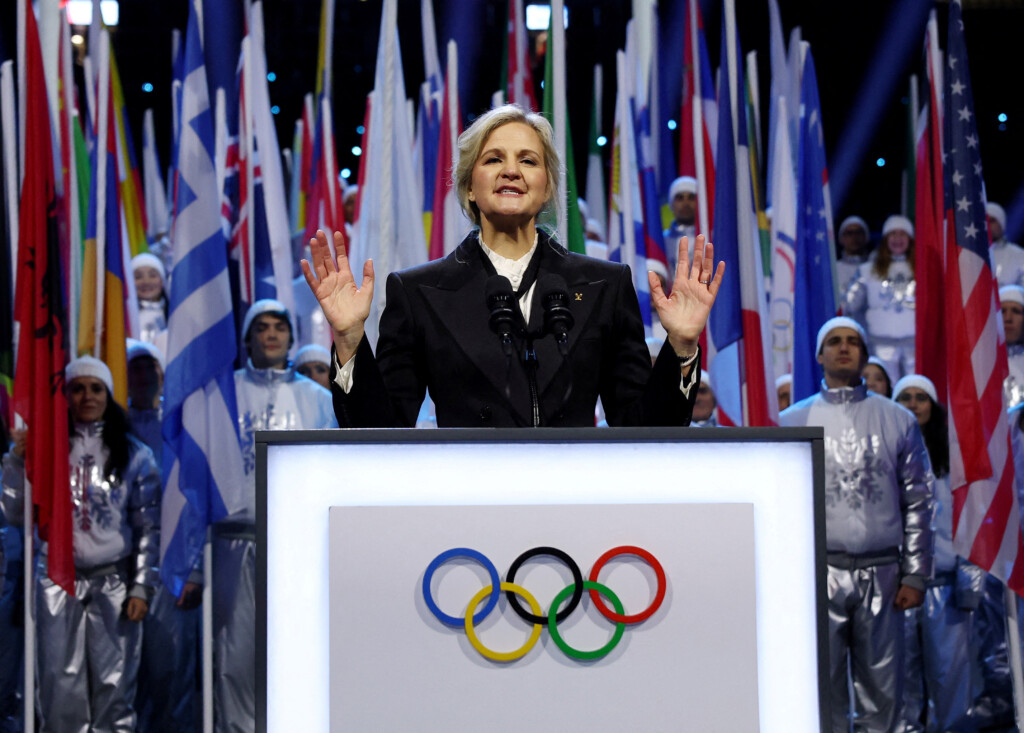
The IOC announced a controversial new rule on Thursday: starting with the 2028 Olympics, all female athletes must take a genetic test to prove they are “biological females.”
This means many transgender and intersex athletes will no longer be allowed to compete in women’s events, and the test checks for the SRY gene and can be done once using saliva, a cheek swab, or blood.
The IOC tried similar tests before, from 1968 to 1996, but stopped in 1999 after scientists and athletes said they weren’t accurate or fair.
Olympic champion Caster Semenya, who faced past gender tests, said, “It came as a failure. And that’s why it was dropped,” pointing to the ongoing controversy over these rules.
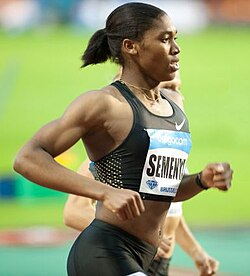
Caster Semenya has been a leading figure in the fight for athletes with naturally high testosterone and since winning her first 800m world title in 2009, she has fought both on the track and in court to defend her rights.
The new rule will also affect athletes with DSD (Differences of Sex Development), a rare condition where a person’s body may have a mix of male and female traits. Semenya, who has XY chromosomes, is the most well-known DSD athlete today.
The rule also has political implications. It could reduce tension between the IOC and former President Donald Trump, who banned transgender athletes from women’s sports.
Some sports already have similar rules, while others let transgender women compete if they lower their testosterone levels.
The impetus for the IOC's reintroduction of these stringent eligibility criteria appears to stem, in part, from recent controversies.
Notably, the women's boxing competition at the 2024 Paris Olympics was embroiled in a gender row involving Algerian fighter Imane Khelif and Lin Yu-ting of Taiwan.
Both boxers had been excluded from the International Boxing Association's (IBA) 2023 world championships after failing eligibility tests.
Despite this, the IOC permitted them to compete at the Paris Games, citing them as victims of "a sudden and arbitrary decision by the IBA."
Both Khelif and Yu-ting subsequently went on to win gold medals in Paris, intensifying the debate and leading to the IOC's definitive stance on gender verification.