Pope Warns AI Warfare Could End in Human Annihilation
Pope Leo XIV, during a historic visit to Rome's La Sapienza University, decried the global investment in AI and high-tech weaponry, warning of a "spiral of annihilation" and calling for peace in conflict zones like the Middle East and Ukraine. His address highlighted increased military spending at the cost of education and healthcare, emphasizing the need for responsible AI development to preserve human accountability. The Pope also met with Palestinian students from Gaza, whose stories underscore the human toll of conflict.Pope Leo XIV delivered a powerful address at Rome's La Sapienza University, marking the first papal visit to the campus since Pope Benedict XVI's planned speech was called off in 2008 due to protests.
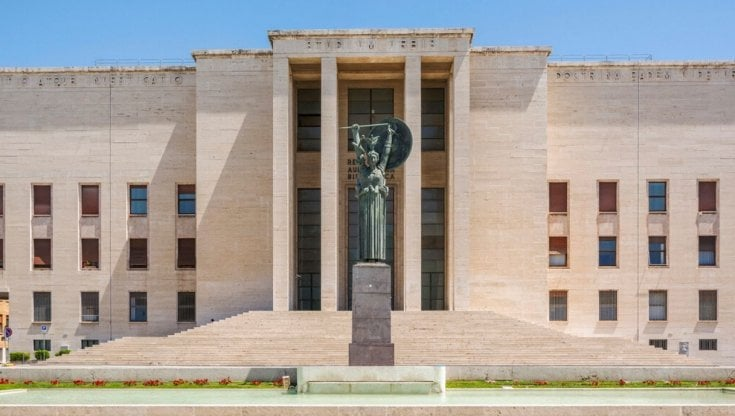
The American pontiff received a warm welcome on Thursday, notably from some of Sapienza’s newest students: young Palestinians who recently arrived in Italy through a "humanitarian corridor" from Gaza, eager to continue their studies at the prestigious university, which was founded by Pope Boniface VIII in 1303.
During his speech, Pope Leo XIV strongly condemnedthe global surge in investments in artificial intelligence and high-tech weaponry, warning that such developments were pushing the world into a "spiral of annihilation."
He used the platform to issue an urgent call for peace in the Middle East and Ukraine, emphasizing the devastating consequences of modern conflict.
The Pope met with some of the Gaza students during a brief greeting at the campus chapel and again following his address in the university's main lecture hall.
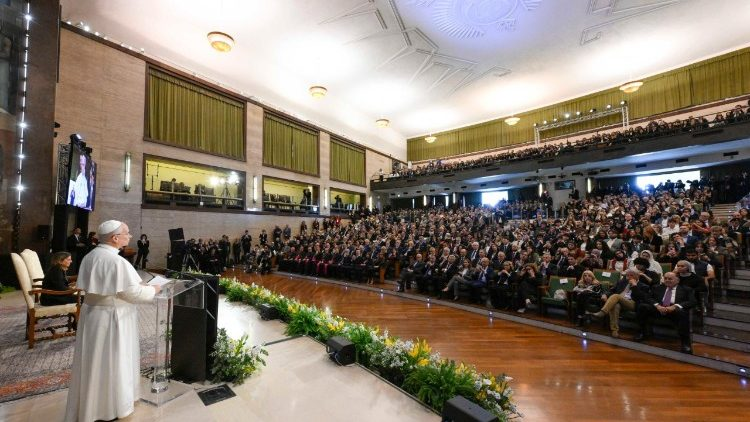
The Italian government, in collaboration with Catholic organizations, has been instrumental in bringing hundreds of Palestinians to Italy for both academic pursuits and medical care since the Israeli war against Hamas in Gaza commenced in 2023.
Pope Leo XIV further denounced the dramatic increase in military spending witnessed this year, particularly across Europe.
He argued that these expenditures were coming at the expense of crucial sectors like education and healthcare, while simultaneously "enriching elites who care nothing for the common good."
He underscored the necessity for improved monitoring of how AI is developed and deployed in both military and civilian contexts. This oversight, he stressed, is vital "so that it does not absolve humans of responsibility for their choices and does not exacerbate the tragedy of conflicts."
He starkly illustrated his concerns by stating, "What is happening in Ukraine, in Gaza and the Palestinian territories, in Lebanon, and in Iran illustrates the inhuman evolution of the relationship between war and new technologies in a spiral of annihilation."
The pontiff asserted that education and research must pivot in a contrasting direction, one that prioritizes and values life – "the lives of peoples who cry out for peace and justice!"
Pope Leo XIV has consistently identified artificial intelligence as one of the most critical issues confronting humanity, especially its implications in warfare and daily life.
These profound themes are expected to be explored more extensively in his forthcoming first encyclical, anticipated in the coming weeks.
Among the Gazan students who met Pope Leo was Nada Rahim Jouda, 19, who had arrived in Italy just two days prior. Still adjusting to her new life studying business science in Rome, she described the city as "like heaven for me."
She contrasted Rome’s vibrant green landscapes with the "gray and troubles everywhere and miserable people in the streets" of her homeland.
Despite her newfound hope and opportunity, Jouda remains deeply concerned for her family left behind in Gaza: her mother, who is recovering from leukemia and was unable to receive consistent care or check-ups during the conflict, and her younger sisters, aged 17 and 13.
Over the course of the war, her family was forced to relocate four times. Bearing the weight of their reliance, she poignantly shared, "They all rely on me. I’m the only hope that they have."