Security Boost: Senate Expands Police Funding, Overhauls Trust Fund
Nigeria's Senate has passed a bill for its second reading, seeking to repeal and re-enact the Nigeria Police Trust Fund Act to establish multiple and sustainable funding sources for the Nigeria Police Force. This initiative aims to address chronic underfunding, enhance operational capacity, and improve officer welfare to combat the nation's rising insecurity. The proposed legislation includes increasing the Federation Account allocation and diversifying funding streams, with further discussions on accountability and state policing expected during public hearings.
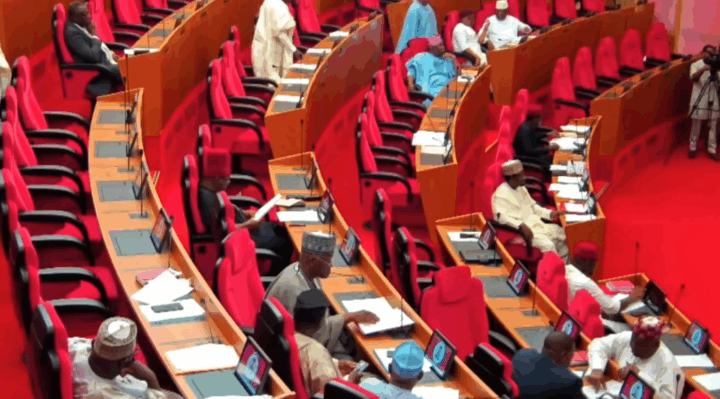
Nigeria’s Senate has advanced a significant legislative effort aimed at overhauling the funding mechanism for the nation's police force. A bill seeking to repeal and re-enact the Nigeria Police Trust Fund (Establishment) Act, 2025 (SB.1031) has successfully passed its second reading during a recent plenary session, following a majority voice vote.
Sponsored as an executive bill by Senate Leader Opeyemi Bamidele, the proposed legislation is now with the Senate Committees on Police for further legislative action, including a public hearing and a report back within two weeks.
The core objective of this new bill is to establish multiple and more sustainable funding sources for the Nigeria Police Force (NPF), thereby ensuring its operational independence and enhancing its capacity to address the nation's growing security challenges.
The bill proposes boosting police funding from 0.5% to 1% of the Federation Account It also includes support from taxes, government grants, international partners, and private sector contributions creating a more diversified funding system.
The original Nigeria Police Trust Fund (NPTF) was established in 2019 through the Nigeria Police Trust Fund Act, intended as a special intervention to combat the chronic underfunding of the NPF. This fund was initially designed to operate for six years, primarily supported by 0.5% of the Federation Account’s total revenue, alongside grants and donations.
Its creation was a direct response to widespread criticism regarding the poor state of policing in Nigeria, characterized by inadequate personnel, outdated equipment, poor welfare packages, weak investigative capabilities, and insufficient operational logistics. Security experts have consistently linked these issues to the police force's limited effectiveness in tackling prevalent insecurity, including terrorism, banditry, kidnapping, and cybercrime.
The NPTF has helped provide patrol vehicles, communication tools, training, and rehab of police barracks. But concerns remain about whether funding is enough for Nigeria’s rising security challenges.
With about 300,000 officers for over 200 million people, Nigeria still falls far below the UN standard of 1 officer per 400 citizens showing a major manpower gap.
In his presentation of the bill, Senator Bamidele underscored Nigeria’s pervasive insecurity, citing insurgency, banditry, kidnapping, armed robbery, cybercrime, and communal unrest as major threats that have placed immense pressure on the police.
He said the police are struggling with poor funding, outdated equipment, bad infrastructure, and weak welfare all affecting morale and performance.
The bill aims to strengthen the NPTF with steady funding, better tools, improved welfare, and more modern, accountable policing aligned with global standards.
The bill prioritizes modern security tools, digital surveillance, forensic tech, and rehabilitation of police facilities.
It also focuses on training, capacity building, and better welfare for officers. If passed, it could improve intelligence, emergency response, and overall police efficiency. A governing board including retired police officers, key ministries, and private sector reps will oversee the fund to ensure accountability.
During Senate debate, many lawmakers supported the bill to strengthen police funding. Abba Moro said poor equipment is weakening the fight against kidnapping, while Barau Jibrin called the bill crucial for national security. But Ibrahim Dankwambo warned the proposed 1% deduction could face legal issues and raised concerns about its link to state police discussions.
Buhari Abdulfatai added that funding alone isn’t enough lack of tools and manpower remains a major problem.
Responding to these concerns, Senate President Godswill Akpabio assured that the upcoming public hearing would thoroughly address issues such as accountability for past Police Trust Fund expenditures, alternative funding options, and the framework’s potential to accommodate future state policing structures. He also directed the Senate Committee on Police Affairs, chaired by Sen. Ahmed Mallam-Madori, to provide a report on how past trust fund allocations were utilized, before reporting back to the plenary in two weeks.

The bill, if passed, holds the potential to significantly reshape Nigeria’s policing architecture by providing a more predictable, diversified, and robust financial framework for law enforcement, while also necessitating crucial discussions on accountability, transparency, and long-term security governance.