Saving Nigeria’s Soul in Photographs: The Young Archivists Racing Against Time
As Nigeria’s old photo studios decay, a new generation of archivists and curators are digitizing memories preserving portraits, negatives, and visual heritage before they disappear forever.
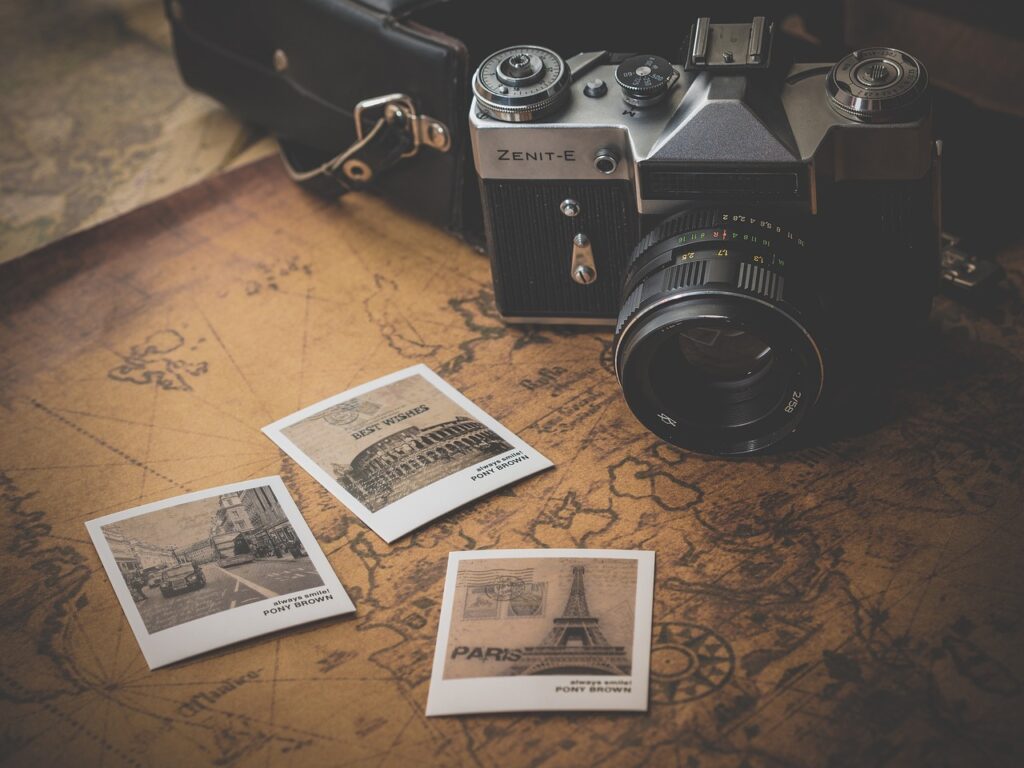
Across Lagos, dusty negatives sleep in forgotten boxes, fading in the heat. In Ibadan, family albums lie hidden in trunks, their images curling at the edges. Yet, across Nigeria, a quiet revolution is underway led not by politicians or tech giants, but by archivists. They are rescuing the nation’s visual memory one photograph at a time, ensuring that stories of joy, fashion, defiance, and community are not swallowed by time.
The Guardians of a Vanishing Past
In a world obsessed with what’s next, a handful of Nigerians are fighting to remember what came before. At the heart of this movement is the Lagos Studio Archives, a project founded by visual artist Karl Ohiri and curator Riikka Kassinen. What started as an attempt to rescue discarded film negatives from shuttered photo studios has evolved into a living time capsule of Lagos life from the 1970s to today.
Inside these images are stories of weddings, school graduations, church ceremonies, and fashion trends. The project’s curators discovered that many studios were tossing out negatives as the digital age took over. Ohiri began collecting them, scanning, cleaning, and cataloguing what could be saved. “Every image,” he said in an interview, “is a memory and every memory matters.”
The Digital Revival
Another force in this cultural renaissance is the Nigerian Nostalgia Project, an online collective where Nigerians contribute family photos and old ephemera to document life before the 1990s. The submissions range from black-and-white classroom portraits to images of 1960s city buses, 1970s hairstyles, and vintage weddings. The archive now contains thousands of contributions from both Nigerians at home and across the diaspora.
The idea is simple: if institutions won’t save these images, the people will. Each upload becomes a piece of a collective national memory. In a country where oral history once dominated, this digital crowd-sourcing of visual heritage is revolutionary; a blend of nostalgia, technology, and activism.
Government Steps In: The NCMM Digital Museum
For years, Nigeria’s heritage institutions struggled to modernize. That began to change when the National Commission for Museums and Monuments (NCMM) launched its Digital Museum project in collaboration with IHS Nigeria. The platform allows users to explore scanned artifacts, ancient sculptures, and cultural relics from anywhere in the world; a 3D, interactive glimpse into Nigeria’s diverse past.
This initiative reflects a larger realization: memory is national infrastructure. The Digital Museum ensures that future generations can experience Nigeria’s tangible history without leaving their phones. “We are merging technology and tradition,” said the NCMM Director-General at the launch, “because a nation that forgets its past forgets itself.”
From Negatives to Narratives
At the Lagos Studio Archives, each roll of film tells its own story. You see men in bell-bottom suits, women with towering headwraps, children clutching school certificates, fragments of lives preserved in emulsion. What makes these images powerful is not only their aesthetics, but their normalcy. They depict Nigerians simply being long before social media turned self-image into performance.
Many of these photographs are displayed at exhibitions like the LagosPhoto Festival, where curators highlight how analog portraiture captured the optimism of a nation finding its post-independence identity. In one striking image, a woman stands in a hand-painted studio backdrop of a Mercedes Benz; a symbol of aspiration in 1970s Lagos. In another, a young couple leans together, their smiles confident and unforced. These photographs remind viewers that history is not just about kings or wars, but about everyday life.
Memory as Resistance
To archive is to resist forgetting. Across Africa, cultural memory suffered under colonialism and neglect. Many early photographs of Nigerians taken by colonial officers and missionaries still sit in European institutions. That’s why local archivists see their work as an act of reclaiming narrative power. By digitizing family albums and studio portraits, they’re saying: we will tell our own story, in our own light.
This idea resonates with historian Dr. Peju Layiwola of the University of Lagos, who has long championed the restitution of looted Benin artifacts. She argues that visual archives are equally vital. “Every photograph,” she says, “is a form of sovereignty. It captures how we wanted to be seen — not how others chose to depict us.”
The Diaspora Connection
Beyond Nigeria, these archives are finding eager audiences among the diaspora. Nigerians in London, Houston, and Toronto scour their family albums to contribute missing pieces of the puzzle. Through online platforms and exhibitions, the diaspora is reconnecting with home in profoundly emotional ways.
The Digital Diaspora Family Reunion, a U.S.-based initiative that connects global African families through photo sharing, has partnered with local African curators to highlight shared histories. Meanwhile, Ghana’s Year of Return campaign inspired similar interest in digital archiving, proving that preserving heritage is also a way of healing displacement. For many abroad, rediscovering an old Nigerian passport photo or studio portrait is an intimate act of homecoming.
Challenges on the Road to Preservation
Yet, saving Nigeria’s visual heritage is not without obstacles. Many private studios still store negatives in poor conditions , exposed to heat, humidity, and dust. Some are lost to flooding or discarded when space runs out. Even where scanning is possible, there are questions of consent, copyright, and context. Who owns a photo taken in 1962; the subject, the studio, or the archivist?
Culture
Read Between the Lines of African Society
Your Gateway to Africa's Untold Cultural Narratives.
Groups like the African Archives Initiative are developing ethical frameworks for digitization, emphasizing consent, proper credit, and community benefit. “Archives are not just data,” one member notes. “They are the emotional property of families and nations.” Responsible curation means avoiding exploitation and ensuring images are used for education, not sensationalism.
Funding remains another major barrier. Many grassroots projects rely on volunteers or small grants, while analog restoration equipment is costly. Without stable support, even the most passionate archivists struggle to scale their impact. That’s why hybrid models, combining community energy with institutional support are becoming the new standard.
Grassroots Meets Innovation
A great example of this hybrid model is ASIRI Magazine, which has run campaigns to digitize rare Nigerian images and share them across social media. ASIRI bridges storytelling and scholarship, making heritage feel alive to younger audiences. Its collaborations with the Lagos Studio Archives and independent historians have sparked viral conversations about everything from vintage fashion to political movements.
Technology, too, is stepping in. Nigerian innovators are developing new ways to preserve heritage through mobile scanning apps and cloud storage. Startups like AfriScan, launched in Lagos in 2024, are exploring AI tagging for historical images, creating digital maps that cluster photos by date and location. It’s heritage work with a Silicon Valley twist, where innovation meets memory.
Why It Matters
Why save old photographs when the world is rushing forward? Because they remind us that modernity didn’t start with skyscrapers or smartphones. It started in the quiet moments captured on film: a tailor posing proudly outside his shop, a schoolteacher smiling in her uniform, a band rehearsing in a dusty hall.

These are the faces of a Nigeria that dreamed, struggled, and thrived long before hashtags and filters. Preserving these images means preserving the dignity of the ordinary. It means giving future generations a mirror that reflects where they came from, and perhaps, where they’re going.
As curator Karl Ohiri puts it, “Photography is not just art. It’s proof that we existed, that our lives had light.”
The Future of Remembering
The task ahead is monumental, but the energy is contagious. Schools are beginning to include visual heritage in art curriculums. Museums are digitizing at scale. And young Nigerians are realizing that their grandparents’ photo albums are national treasures, not clutter.
The next decade will determine whether Nigeria’s photographic past survives. If it does, it will be because of these archivists, the quiet heroes with scanners, patience, and belief in the power of memory.
Because in the end, nations don’t die when their people perish. They die when they forget.