Osun Election Heats Up: Political Tensions Soar as Guber Poll Approaches

Osun State is bracing for a tense governorship election on August 15, 2026, marked by allegations of intimidation, political violence, and institutional interference. Key candidates—incumbent Governor Ademola Adeleke (Accord), Bola Oyebamiji (APC), and Dr. Najeem Salaam (ADC)—are presenting their visions amidst security deployments and last-minute electoral adjustments.
Pelumi Ilesanmi
Pelumi IlesanmiLocal3 hours ago5 minute read
Key Points
Political parties in Osun State have raised serious concerns about intimidation, electoral violence, and the alleged misuse of state institutions by the ruling party ahead of the governorship election.
The Independent National Electoral Commission (INEC) is making preparations for the election, including ballot reprinting, while security forces have intensified measures and banned quasi-security groups from election duties.
Gubernatorial candidates from Accord Party, APC, and ADC have presented their visions and achievements, amidst significant defections of prominent PDP members to the APC, potentially altering political dynamics.
Osun Election Heats Up: Political Tensions Soar as Guber Poll Approaches

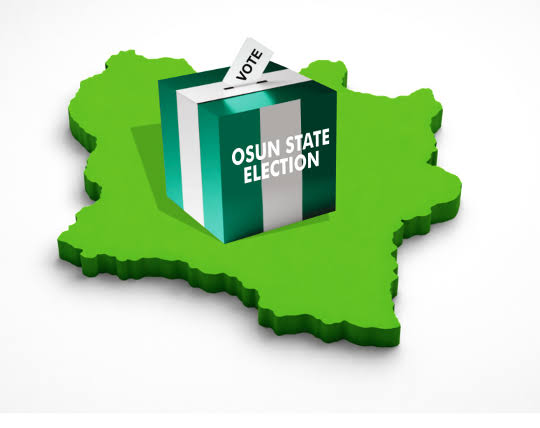
The political landscape of Osun State is marked by intense activity and significant tension as the governorship election, scheduled for Saturday, August 15, 2026, draws near. This crucial election is seen as a critical test for Nigeria's democratic institutions, with various political parties and stakeholders vocalizing their concerns, strategies, and visions for the state.

Amidst the preparations, the African Democratic Congress (ADC) has voiced strong concerns over alleged plans to arrest its National Secretary, Rauf Aregbesola, accusing the current administration of intimidation, harassment, and misuse of state institutions against the opposition. Similarly, the Accord Party has appealed to the European Union (EU) for urgent diplomatic intervention, citing rising political tension, electoral violence, and the alleged deployment of state institutions and security agencies to undermine political competition. The party claimed that at least 29 people had lost their lives, many sustained gunshot injuries, and over 60 of its members were detained. These concerns were amplified by Governor Ademola Adeleke, who also alleged police partisanship and complicity with political thugs, leading to injuries and arrests of his party members. The Economic and Financial Crimes Commission (EFCC) also faced scrutiny for placing a 'Post No Debit' (PND) on the Osun State Government's bank account just days before the election, an action widely perceived as politically motivated to disadvantage the incumbent.

A notable point of contention revolves around Senator Francis Fadahunsi, who reportedly made inflammatory remarks urging attacks on Accord Party supporters. Opposition leader Timi Frank demanded his immediate suspension and arrest, a call echoed by the Accord Party which sought his prosecution for inciting violence. The Osun State Police Command has since summoned Senator Fadahunsi to clarify his statements.

On the electoral front, the Independent National Electoral Commission (INEC) has confirmed the inclusion of Dr. Francis Olugbenga Ajala, the Social Democratic Party (SDP) candidate, and his running mate on the ballot following a Federal High Court ruling. This necessitates the reprinting of ballot papers, increasing the total number of participating political parties to fifteen. INEC has assured the public of its commitment to facilitating a free, fair, and credible election. To enhance voter understanding, Yiaga Africa has urged journalists to educate voters on new electoral innovations, such as the electronic uploading of results via the Bimodal Voter Accreditation System (BVAS) and the accessibility of the Election Result Viewing Portal (IReV).

Security measures have been intensified by the Inspector-General of Police (IGP) Olatunji Disu, who banned the Western Nigeria Security Network (Amotekun) and other quasi-security groups from election duties. He also reiterated the prohibition of armed escorts for political figures at polling units, warning against electoral offenses like ballot snatching and voter intimidation. A Deputy Inspector-General of Police, Ishyaku Mohammed, has been deployed to coordinate security operations, supported by Assistant Inspectors-General and Commissioners of Police across the state's senatorial districts.

The incumbent Governor, Ademola Adeleke, running on the Accord Party platform, highlighted his administration's achievements over nearly four years. These include the construction and rehabilitation of 350 kilometers of roads, three flyover bridges, and 200 primary healthcare centers. He also pointed to significant strides in workers' welfare, having paid over two-thirds of inherited half salaries and N80 billion in pension debt. Furthermore, his administration successfully reduced Osun State's domestic debt by N69.18 billion, moving the state from the ninth to the 18th most indebted state. Governor Adeleke dismissed criticisms of his dancing persona, stating that his focus on governance remains unwavering. He expressed confidence in his re-election, urging citizens to vote and protect their ballots.

Bola Oyebamiji, the All Progressives Congress (APC) candidate, presented an economic agenda focused on prioritizing agriculture, education, and healthcare. Drawing on his background in investment banking, he pledged to attract capital and investors, address the significant deficit of 28,000 teachers, and improve healthcare infrastructure, including the acquisition of essential diagnostic equipment. Oyebamiji committed to running a transparent and accountable government, ensuring equitable resource allocation and professional public infrastructure delivery.

Dr. Najeem Salaam, the ADC candidate, outlined his vision, promising to create 20,000 youth jobs within his first 100 days, ensure 24-hour electricity, and provide N1 billion for women empowerment. He committed to free primary and secondary education, reduced university tuition fees, and free healthcare for children and pregnant women. Salaam also pledged to revive past social intervention programs like O’YES, O’MEALS, and O’REAP, and to empower farmers with necessary tools and support.

The political dynamics in Osun have shifted significantly, with former prominent Peoples Democratic Party (PDP) chieftains, including ex-Governor Olagunsoye Oyinlola and former SSG Fatai Akinbade, defecting to the APC. This move, seen as weakening Governor Adeleke's coalition, is compared by analysts to the scenario that led to Rauf Aregbesola's victory in 2014. The APC has also welcomed back former PDP aspirant Omoba Dotun Babayemi and loyalists of Ogbeni Rauf Aregbesola, further consolidating its position. APC chieftain Joe Igbokwe confidently declared Osun State as APC territory, citing political dynamics and President Bola Tinubu’s native status.

Amidst the competitive rhetoric, calls for peace and credible elections have been prominent. APC chieftain Olatunbosun Oyintiloye urged political actors to embrace peace, tolerance, and responsible engagement. Writer Abiodun Komolafe emphasized the need for visionary leadership focused on economic development, including upscaling small businesses and investing in key sectors. Columnist Onikepo Braithwaite highlighted the importance of actions lending credibility to elections, criticizing politically motivated interventions and underscoring the necessity of fairness, restraint, and transparency from institutions like the EFCC and electoral bodies. As the election approaches, all stakeholders are urged to ensure a peaceful, transparent, and credible process, essential for strengthening public confidence in Nigeria's democracy.

Loading...