Nollywood Star Desmond Elliot's Political Hopes Dented, Challenges Surulere Primary Outcome
Desmond Elliot, representing Surulere Constituency I, lost his bid for a fourth term in the Lagos State House of Assembly after being defeated by Barakat Odunuga-Bakare in the APC primary. The defeat, influenced by Elliot's strained relationship with Femi Gbajabiamila over an impeachment attempt against Speaker Obasa, has led Elliot to reject the results and appeal the process. This outcome highlights the critical role of party structure and loyalty in Lagos APC politics.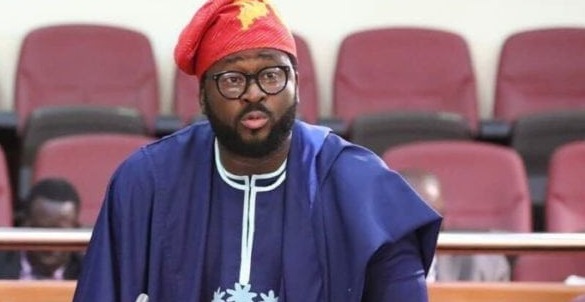
Desmond Elliot, the incumbent lawmaker representing Surulere Constituency I in the Lagos State House of Assembly, has lost his bid for a fourth term, failing to secure the All Progressives Congress (APC) ticket in the primary election. The primary, held on Wednesday, saw Elliot defeated by Barakat Odunuga-Bakare, who was strongly backed by Femi Gbajabiamila, Chief of Staff (CoS) to President Bola Tinubu.
Odunuga-Bakare garnered a significant 11,385 votes across the constituency's wards, while Elliot managed only 270 votes. The disparity was evident in various ward results: Odunuga-Bakare polled 1,956 votes against Elliot’s 10 at Owolewa Open Field, 1,805 votes against Elliot’s six in Iponri/Eric Moore ward, and 2,191 votes against Elliot’s 82 in Akinhanmi/Cole ward. She also recorded 523 votes at Gbaja Stadium ward, where Elliot secured no votes, and floored him in Yaba/Ojuelegba ward with 980 votes against Elliot’s three. Elliot only managed a slight lead in Shitta/Ogunlana ward, polling 270 votes against Odunuga-Bakare's 169 votes.
Elliot's political standing reportedly suffered due to his role in an earlier impeachment attempt against Mudashiru Obasa, the Speaker of the Lagos State House of Assembly. Femi Gbajabiamila, Elliot's estranged political godfather, publicly stated that he nearly lost his position in the presidency because of Elliot’s involvement in the Obasa impeachment saga. Gbajabiamila, who previously served as Speaker of the House of Representatives, revealed he had instructed Elliot to publicly disassociate himself from the plot, a directive Elliot failed to obey. Elliot, however, claimed he believed the impeachment plot had President Tinubu's backing and expressed surprise at Gbajabiamila's comments.
Despite the wide margin of defeat, Elliot has rejected the primary election results, vowing to appeal the outcome through the party’s internal mechanism. He stated that he did not pull out of the race but rather instructed his supporters and agents to withdraw from participating in the primary due to alleged violence and intimidation. Elliot asserted that “the only person who can ask me to step down is the party,” emphasizing his commitment to serve the people and his role as a “party person.” He cited “proven video evidence of violence” against his supporters, alleging that many were disenfranchised and intimidated, with claims of fake cards hindering their participation.
The political dynamics in Lagos APC heavily favor loyalty and alignment with established power blocs. The general sentiment within the party was that lawmakers perceived to have contributed to the crisis surrounding Obasa’s attempted removal would struggle for re-election. President Tinubu, prioritizing stability in his political base, intervened to restore the status quo. Elliot’s emotional reaction when Mojisola Meranda stepped down for Obasa’s return was interpreted by some within the party as disapproval of Tinubu's directive, further weakening his position.
Even while campaigning with Tinubu-branded materials and pledging loyalty, Elliot faced the challenge of Gbajabiamila's open endorsement of Odunuga-Bakare. In Lagos APC politics, Gbajabiamila holds undisputed political authority in Surulere, and his stance is practically inseparable from Tinubu's broader political thinking. Elliot's argument that a fourth term would position him for principal office and attract more projects to Surulere was questioned, as Gbajabiamila, as Chief of Staff to the President and a former Speaker of the House of Representatives, already holds significant power to influence development in the constituency.
The political landscape in Lagos APC underscores that victory is often determined by alignment with the dominant political structure, rather than mere popularity or ambition. History, as exemplified by cases like Hakeem Masha, who faced long-term political isolation after defying party directives, serves as a cautionary tale. Masha's challenge of his primary loss ultimately led to his disappearance from mainstream Lagos politics, while his opponent, Wasiu Eshilokun, thrived. In contrast, former Governor Akinwunmi Ambode, who gracefully accepted defeat in the governorship primary, eventually became a member of the influential Governance Advisory Council (GAC), highlighting the benefits of loyalty and adherence to party decisions. Elliot is advised to learn from these precedents, as resistance to entrenched party directives often leads to severe political consequences.