Nigeria Wants Students To Learn Chinese - What Does This Mean?
Explore the benefits, risks, and lessons from Africa’s Chinese language policies, as Nigeria adds Mandarin to its schools— is this an opportunity or dependency in disguise?

The Nigerian government has announced plans to introduce Chinese language studies into the national education system, making Mandarin part of the syllabus across various levels of basic education. This development immediately sparks a pressing question: is this a step toward cultural empowerment, or the beginning of a new form of colonization?
The initiative is being championed by the Ministry of Education as part of a bilateral agreement with China, with full implementation expected to begin in the 2025/2026 academic session. Since the announcement, reactions have poured in across social media and public discourse, as Nigerians weigh what this decision truly means for the wider population.
Is this a case of cultural dependency, an economic necessity, or a creeping form of foreign influence? With a country that boasts over 250 indigenous languages, many of which are already endangered, critics wonder whether Nigeria should be prioritizing the preservation of its own linguistic heritage rather than introducing another foreign language.
The Policy Move: Why Chinese, Why Now?
According to Businnesday.ng, the Nigerian government officially added Mandarin to the secondary school curriculum on September 18, 2025. The policy is aimed at expanding linguistic and cultural ties with China. Yet, the move comes despite a glaring challenge — Nigeria currently lacks enough qualified Chinese language teachers to carry out the program effectively. Still, the plan means that students from diverse academic backgrounds will soon begin learning to read, write, and speak Mandarin.
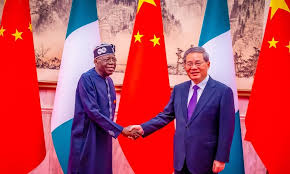
Photo credit: Google image
Nigeria and China have shared a long-standing partnership, one that reflects Beijing’s broader strategy across Africa and other parts of the world. From aid to loans, infrastructure projects to diplomatic engagements, China has heavily invested in building ties with developing nations. Nigeria, as Africa’s largest economy, has been at the center of this outreach.
This partnership spans across sectors of the Nigerian economy. For instance, in January 2025, Nigeria secured a $254.76 million loan from the China Development Bank (CDB) for the Kano–Kaduna Railway Project, alongside other loans recently approved by the Federal Executive Council. Some notable collaborations include:
Flood Relief (August 2025): China provided $1 million in aid to support Nigeria’s flood disaster response under a signed Exchange of Notes.
Electricity Distribution Upgrade (October 2023): Nigeria signed a $463 million agreement with Chinese firms CCECC and TBEA Energy for upgrades under the Presidential Power Initiative.
Belt and Road Initiative Projects (October 2023): At the 3rd BRI Forum, China committed to completing major railway projects, including the Abuja–Kano and Port Harcourt–Maiduguri lines.
These examples show that Nigeria and China’s relationship is not new; it has been steadily deepening over the years. But this raises the crucial debate: should the introduction of Mandarin be framed as part of healthy economic and diplomatic cooperation, or is it a subtle form of creeping dependency? Is Nigeria positioning itself for global competitiveness, or is it edging closer to overreliance on foreign nations like China, with uncertain consequences for the country’s future?
Nigeria–China Ties: Beyond the Classroom
The relationship between Nigeria and China extends far beyond classrooms or the recent language policy. Bilateral relations between the Federal Republic of Nigeria and the People’s Republic of China were officially established on February 10, 1971, just over a decade after Nigeria gained independence from Britain. Since then, ties have steadily deepened, with bilateral trade and strategic cooperation growing significantly. Today, China stands as one of Nigeria’s most important trading and export partners.
Culture
Read Between the Lines of African Society
Your Gateway to Africa's Untold Cultural Narratives.
Over the years, the Chinese government has played a key role in Nigeria’s development, providing loans, offsetting debts, and supporting infrastructural growth. This mirrors China’s broader role across Africa, where Beijing has positioned itself as a critical financier of major projects under its Belt and Road Initiative. For Nigeria, this has meant new railways, energy projects, and flood relief support — but also an increasing reliance on external aid and loans.
This dependency raises an uncomfortable question: are African governments, including Nigeria’s, becoming overly dependent on foreign assistance rather than building sustainable, homegrown solutions? To critics, the introduction of Mandarin into Nigerian classrooms looks less like cultural exchange and more like another layer of influence, a subtle form of colonization under the banner of diplomacy.
Opportunities for Students and the Economy
Amidst the debates surrounding cultural dependency and political influence, it is important to ask:what potential benefits could this new policy hold for the average Nigerian?
The introduction of Mandarin in Nigerian secondary schools presents clear opportunities, particularly for students who may wish to pursue further studies in China. Currently, Nigerians relocating to China are required to undergo a one-year compulsory language program before they can fully integrate into academic or professional spaces. Early exposure to Mandarin in Nigeria could eliminate this barrier, making it easier for students to access scholarships, gain admission into Chinese universities, and compete more effectively for global opportunities.


Photo credit: Superprof - Google image
From an economic standpoint, the benefits extend beyond education. Mandarin proficiency could enhance employability, opening doors to multinational corporations, trade ventures, and diplomatic roles that require cross-cultural communication skills. With China being Nigeria’s largest trading partner, the ability to bridge language and cultural gaps could position Nigerian graduates as valuable assets in sectors ranging from business and technology to international relations.
While skepticism remains about issues of dependency and foreign influence, Nigerians could also view this policy through a broader, forward-looking lens. For those able to fully leverage the language, Mandarin may become not just a classroom subject, but a passport to limitless opportunities in academia, trade, and global networking.
The Critics: Cultural Imperialism or Smart Diplomacy?
For years, Nigerians have expressed growing concern about the erosion of indigenous languages and cultural identity. With over 250 languages across the country, many are already endangered. In most schools, English — the colonial lingua franca — dominates, while local dialects are often neglected or completely absent from the curriculum. Critics argue that this lack of prioritization has weakened Nigeria’s cultural roots, leaving younger generations increasingly detached from their heritage.
Against this backdrop, the introduction of Mandarin into Nigeria’s education system has stirred heated debate. For some, the policy represents more than just cultural exchange; it signals China’s expanding influence over African economies and societies. The question lingers: are African nations truly making independent decisions, or are they pawns in a global marketplace dominated by world powers?

Photo credit: Google image
These concerns extend beyond language. If China’s loans, infrastructural projects, and now language programs are steadily weaving Nigeria into its orbit, critics ask whether this is genuine partnership or a subtle form of modern-day colonization. Should Africans be wary of creeping dependency masked as cooperation?
While some see the move as smart diplomacy, a pragmatic step to secure stronger trade and educational opportunities, others insist that the Nigerian government must pause and reflect. Is this policy empowering the nation’s youth with tools for global competitiveness, or binding Nigeria even tighter to China’s strategic interests?
Lessons From Other Countries
Culture
Read Between the Lines of African Society
Your Gateway to Africa's Untold Cultural Narratives.
Nigeria is not the first African nation to introduce Chinese language programs into its education system. Across the continent, countries like Kenya, South Africa, and Ethiopia have already rolled out Mandarin-learning initiatives, often in collaboration with Chinese cultural centers and universities. In many cases, these programs have gained traction, opening doors for students to access scholarships, study opportunities, and business ties with China.
For example, Kenya has integrated Mandarin into several secondary schools through a partnership with Confucius Institutes. Ethiopia, one of China’s closest partners in Africa, has gone even further, embedding Chinese language and cultural studies into its university system. These cases show that, under the right structure, Mandarin can become a tool for empowering youth with global opportunities.
Yet, such policies have not been without resistance. Critics in these countries have raised concerns similar to those now echoing in Nigeria: the fear of cultural erosion, dependency on China, and whether such initiatives prioritize foreign interests over local needs. The debate often centers on whether African governments are using these language programs strategically or simply yielding to external pressure.
Nigeria can draw key lessons from these experiences. Success depends not only on introducing Mandarin but also on balancing it with a deliberate effort to preserve indigenous languages, strengthen local education systems, and ensure that partnerships with China serve Nigeria’s long-term interests rather than external agendas.
Conclusion: A Language of the Future or a Symbol of Dependency?
At the heart of this debate lies a pressing question: is Nigeria equipping its youth for global relevance, or quietly opening the door to cultural dependency?
While it is important to question and scrutinize foreign involvement in our education system, it is equally necessary to remain open to the opportunities such interactions may offer. Mandarin in Nigerian schools could become more than just an academic subject, it could shape how the next generation navigates global markets, secures international scholarships, and builds careers in a world where China’s influence continues to grow.
Yet, this policy is not only about language. It represents a deeper struggle, the balance of power between preserving Nigeria’s cultural heritage and engaging with the demands of an interconnected world. If approached wisely, it could empower Nigerian students with new tools for success. If handled carelessly, it risks accelerating cultural erosion and deepening dependency on external powers.
Mandarin in Nigerian schools, then, is less about the words students will speak and more about the choices Nigeria makes in defining its future.