Nigeria's Democracy Day 2026: The Six-Year Tenure Proposal and What History Says About It
As Nigeria marks Democracy Day 2026, debate grows over a proposed six-year single tenure for presidents and governors. Explore Nigeria's democratic history and African case studies from Ghana, Botswana, Rwanda, and Uganda.

Twenty-seven years ago, a country that had known more military boots than ballot boxes handed power to a civilian government. On May 29, 1999, Olusegun Obasanjo was sworn in as President of Nigeria, ending sixteen years of authoritarian rule and beginning what would become Nigeria's longest uninterrupted civilian stretch.
That date was once Nigeria's Democracy Day. Then, in 2018, the Buhari administration moved the date to June 12.
The shift honoured the 1993 presidential election, widely regarded as the freest and fairest in Nigeria's history, in which results indicated a decisive victory for M.K.O Abiola of the Social Democratic Party over Bashir Tofa of the NRC. M.K.O Abiola was never declared the winner.
General Ibrahim Babangida annulled the polls, citing irregularities, plunging the country into years of political unrest. Abiola was arrested in 1994 after declaring himself the rightful president and died in custody on July 7, 1998, under circumstances that remain controversial.
His sacrifice became the country's democratic foundation. In recognition of this, Buhari officially designated June 12 as Nigeria's new Democracy Day in 2018, replacing May 29.
So as Nigeria marks Democracy Day 2026, there is a fitting irony in the conversation dominating its legislature-sphere. There is a proposal to restructure the very tenure system that democracy is built on.
Nigeria's Six-Year Single-Term Tenure Bill: What Is Senate Leader Bamidele Proposing?
Senate Leader Opeyemi Bamidele has disclosed plans to sponsor a bill seeking to introduce a single six-year tenure for presidents and governors. This is a move, he argues, would allow elected leaders to focus more on governance and less on re-election politics.
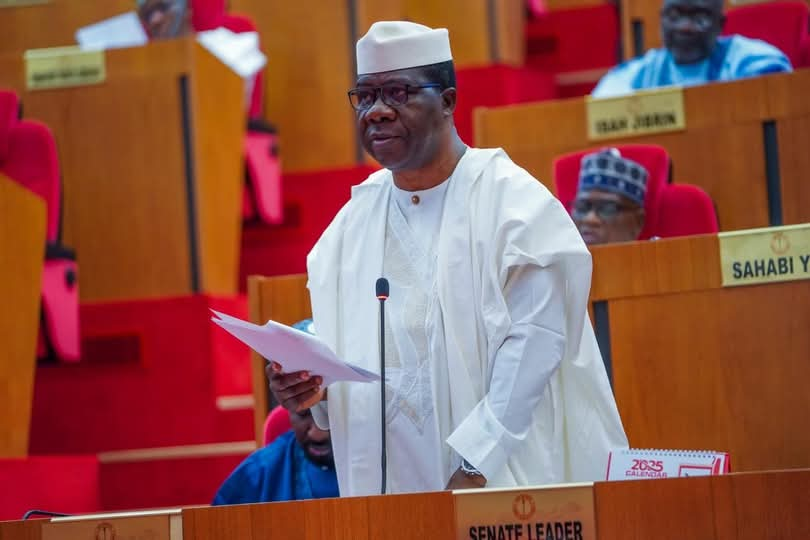
"If you know you are there for six years, only one tenure, you put in your best from day one. You know this is the only chance that you have," Bamidele said.
The legislation, slated for introduction when the next Senate is inaugurated following the 2027 general elections, would replace the current arrangement that allows elected presidents and governors to serve a maximum of two four-year terms.
This proposal is not a novel idea. There have been calls for single-term restructuring which have circulated since 1999, with each democratic transition exposing the same complaint: the first term becomes a campaign for the second.
What makes the 2026 iteration notable is the timing. Many Nigerians are already fed up with the current government, which still intends to contest in 2027, so a lot of people are very skeptical about this single six-year tenure bill. It feels like the timing is too convenient.
Beyond the everyday frustrations with the government, when a democracy starts questioning the very foundations it was built on, that says a lot and not in a good way.
Nigeria's Four-Year Democratic Record: Growth Interrupted or Growth Misdirected?
The most honest interrogation of the six-year tenure argument traces back to 1999.
Obasanjo's administration focused on economic reforms and restoring Nigeria's global image, securing debt relief that saw Nigeria cancel over $18 billion in external debtthrough negotiations with the Paris Club.
He also liberalised telecommunications and unlocked one of the country's most transformative economic expansions. His first year recorded GDP growth of 3.9% with inflation at 6.9%. This is a modest growth level but with a strong foundation laid.
Jonathan's years were overflowing with oil revenues, with GDP growth peaking at around 8%, largely driven by high global crude oil prices that exceeded $100 per barrel. Yet the structural economy beneath the oil boom remained fragile. Security collapsed under the weight of Boko Haram's insurgency and the wealth did not redistribute.

Buhari's tenure faced severe economic storms. The nation’s growth dropped to 2.79% with inflation skyrocketing to an average of 15.68%, unemployment climbing to 12% and foreign direct investment fell from $3.06 billion to $1.04 billion.
He completed infrastructure projects like the Second Niger Bridge and rail expansions, but they arrived late in his tenure, which itself validates the pro-extension argument: structural transformation requires time that four-year cycles rarely guarantee.
Under Tinubu, key policy decisions such as the removal of fuel subsidy and foreign exchange reforms were presented as necessary structural adjustments aimed at long-term economic stability, but triggered immediate economic hardship, inflationary pressures and an increased cost of living.
Whether these policies would pay the expected dividends will only be known years beyond his current term. This is where the legitimate argument for longer tenures comes to light, because in reality, policy consequences do not respect electoral calendars.
However, the failures across these administrations were not just failures of time. They were failures of political will, institutional weakness, and systemic corruption — problems that six years would inherit unchanged.
The African Counter-Argument: Four-Year Rotation as Democratic Discipline — Ghana and Botswana
Ghana operates a four-year, two-term presidential system and has become West Africa's most cited model of democratic governance. Since transitioning to multiparty democracy in 1992, the country has experienced numerous transfers of power, including the first-ever defeat of a sitting president in 2016.
The country has held peaceful elections, strengthened institutions and recorded GDP growth of 4.2% in 2023, driven by mining, agriculture and services. Regular electoral competition has anchored accountability.
Botswana has experienced spectacular economic development since independence is explained by good governance, accountability, and programmatic policies rather than extended tenure.
The IMF recorded Botswana's GDP growth at 5.8% in 2023 which is a result of its stable political environment, sound governance and prudent economic policies. Its leaders change but its institutions still hold.
The Ghana-Botswana model argues that it is not the length of a leader's tenure that determines national progress, rather, it is the quality and independence of the systems they govern through.
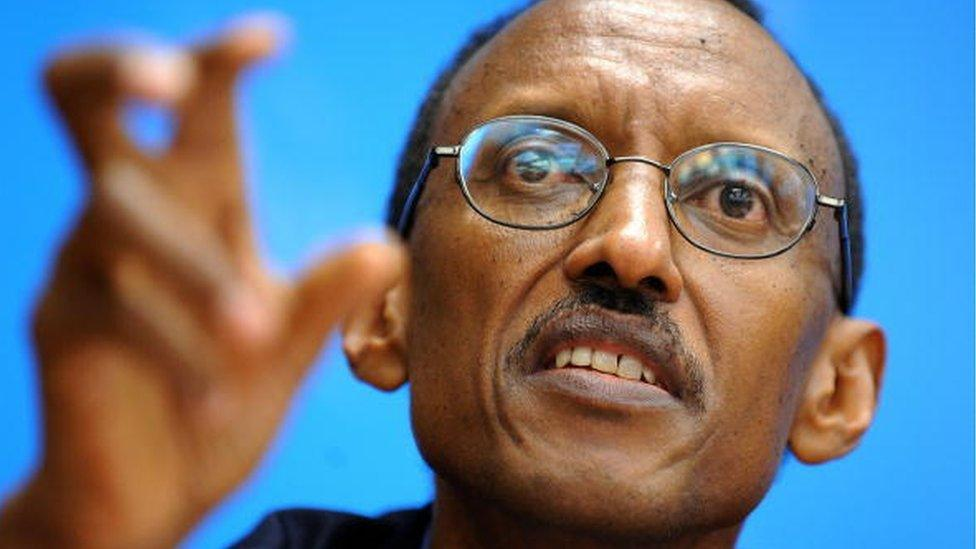
When One Leader Stays: Rwanda's Kagame and the Authoritarian Development Trap
Then there is the counterpoint that tenure-extension advocates lean on most heavily: Rwanda.
Under Paul Kagame's leadership, Rwanda has experienced an average annual GDP growth rate of around 7% over two decades, with poverty rates dropping from 77% in 2001 to around 38% in 2020, and near-universal primary school enrolment achieved alongside substantial improvements in healthcare.
Kagame has governed since 2000. The results, on paper, are extraordinary.
But Rwanda's case is also a warning. Human rights groups classify Kagame as an authoritarian leader who curtails press and political freedom.
While extended tenure has coincided with growth, it has also enabled the suppression of opposition, restricted civic space and centralised power in ways that make the Rwandan model impossible to replicate in a pluralistic democracy of 220 million people with 36 governors and a federal structure as complex as Nigeria's.
Uganda's Museveni goes further to show onlookers that decades in power produced entrenchment, as opposed to the Rwandan miracle.
Tenure Length vs. Institutional Strength: What the Evidence Actually Says
The academic debate on presidential term length and democratic outcomes in Africa is contested but instructive.
Studies supporting longer single terms argue that policy continuity reduces the cost of political transition, that electoral cycles distort investment planning and that long-term infrastructure projects require consistent executive commitment.
These arguments have traction in contexts where institutions are weak and dependent on presidential direction.
The opposing evidence shows shorter terms with robust accountability mechanisms incentivise performance, protect against power consolidation, and maintain the democratic contract between citizens and the state.
Where institutions are strong as in Ghana, leadership rotation strengthens, not weakens, governance.
Where they are weak, as in Cameroon or Zimbabwe, longer tenure becomes a vehicle for entrenchment not development.
Nigeria sits in the difficult middle. Its institutions are nominally present but functionally compromised. The proposal to extend tenure without first strengthening those institutions risks creating a longer runway for the same dysfunction.
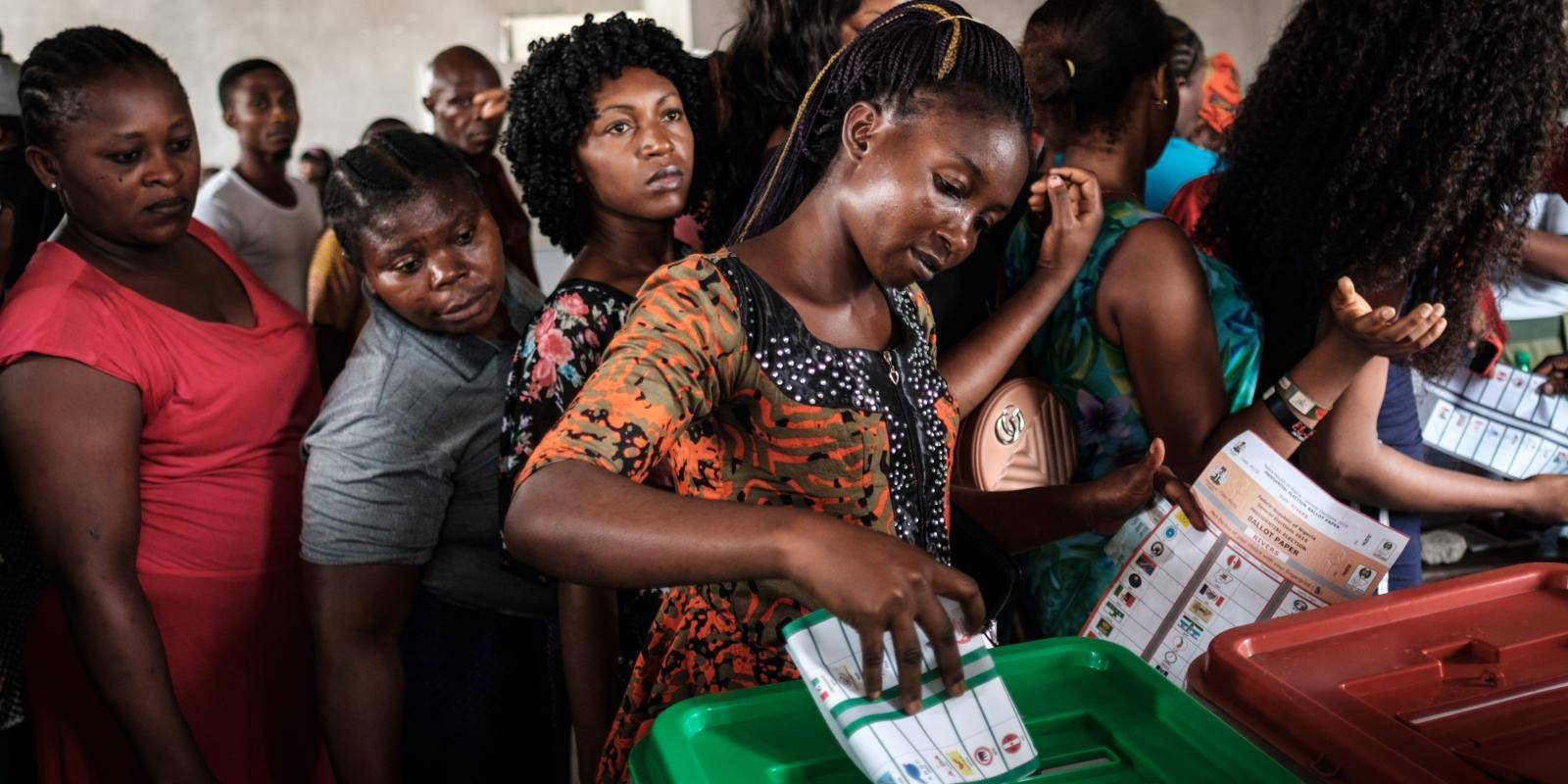
Democracy Day 2026: The Real Question Nigeria Must Answer
Twenty-seven years after Nigeria returned to democratic governance, the country's democracy stands as both a remarkable achievement and a sobering paradox.
Surviving military rule was the starting condition. The six-year tenure debate is worth having but only if it is honest about what tenure restructuring cannot fix. It cannot fix the INEC credibility crisis or the executive impunity, budget padding or the decay of public service delivery.
It cannot substitute for the institutional reforms that would make any tenure length whether four years or six, meaningful.
Ghana and Botswana prove that four-year cycles are not inherently hostile to development. Rwanda proves that extended tenure can accelerate growth while hollowing out democracy. Nigeria's own record proves that the man in power matters less than the system constraining him.
If Bamidele's bill is the beginning of a genuine constitutional conversation about incentive structures in Nigerian governance, it is welcome. But if six years becomes the answer before the diagnosis is complete, Democracy Day 2027 may look exactly like this one — the same debates, different tenure, same results.