Elon Musk Says Money May Not Matter in 10 Years. Who Will Own the Future?
Elon Musk says AI and robots could make money far less important within 10 years. But who will own the technology and who gets to share in the abundance it creates?
Most of us know what it means to run out of money before the month runs out.
You start calculating. Transport, food, rent, school fees, data and maybe that small amount you promised to send to someone at home. Suddenly, every expense has to justify itself.
Now imagine being told that, in just 10 years, money may not matter much anymore.
That is what Elon Musk thinks could happen.
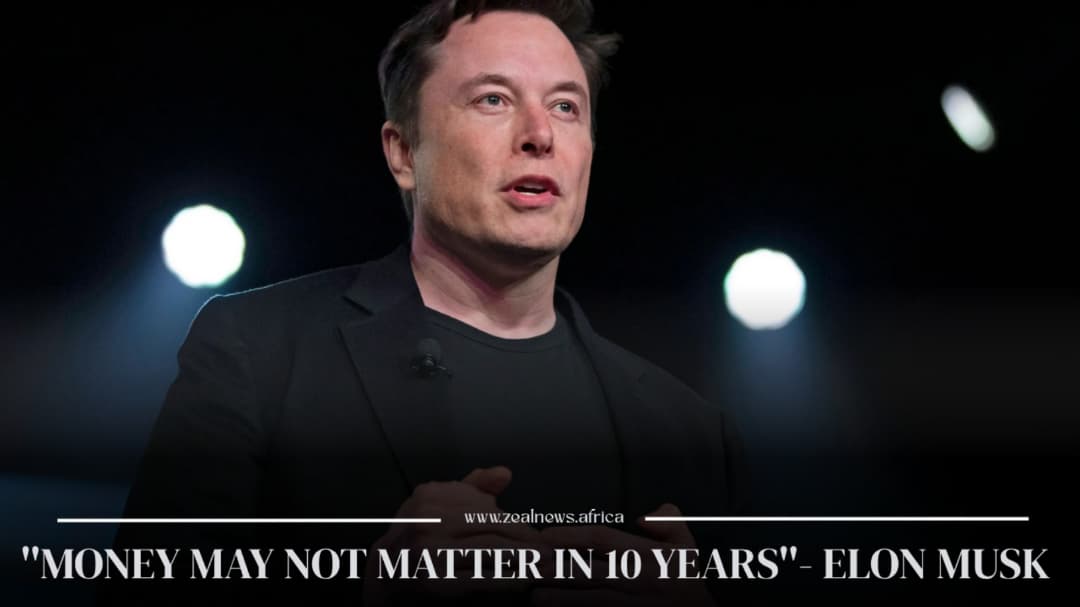
Speaking to The Economist on July 23, Musk argued that advances in artificial intelligence and robotics could eventually produce more goods and services than humans could possibly consume. If machines can provide almost everything we need, he asked, what would we still need money for?
He believes this could lead to what he calls "universal high income".
For someone living in Nigeria, where income can determine whether there is food in the house, a child stays in school or a hospital bill gets paid, the idea is difficult to picture.
But Musk is not saying the naira, dollar or pound will simply disappear. He is imagining a world where machines become so productive that having a job is no longer the only way to earn the money needed to live.
What happens when machines can do more of the work?
Think about the way life works now.
We work, we earn, and we use that money to pay for what we need.
Musk sees a future where AI handles more tasks that currently require human thinking, while robots take on more physical work. Together, they could produce things faster and in quantities no group of human workers could ever manage.
If that happens, fewer people may need traditional jobs to live comfortably, while the wealth created by those machines could be spread widely enough for people to enjoy a high standard of living.
Whether the world actually gets there is another matter.
TheInternational Labour Organisation's research shows that generative AI is already changing the tasks people perform and the way work is organised. Its long-term effect on employment and productivity, however, remains uncertain. In many occupations, AI is more likely to change or assist human work than simply wipe out entire jobs.
And even if Musk is right, the machines will still belong to someone.
Who gets to share in the wealth?
That matters because producing wealth and having access to it are two different things.

TheInternational Monetary Fund has warned that AI could widen economic gaps between countries. Advanced economies are better positioned to adopt the technology and capture its gains. Within those countries, people who own the technology, have the money to invest in it or possess the skills to work with it may also gain the most.
Nigeria cannot afford to look at that possibility from a distance.
Millions of young Nigerians are entering a labour market that already struggles to create enough opportunities. If machines become capable of doing much of the work people depend on for income, what happens to those jobs is only one part of the problem. Where the technology is owned may matter just as much.
If we end up using AI systems built elsewhere, running on infrastructure controlled elsewhere and paying for services owned elsewhere, we may benefit from the technology without having much say in the wealth it creates.
TheWorld Bank has pointed to connectivity, computing capacity, data, skills and digital infrastructure as some of the things developing countries need to participate in the AI economy. For Nigeria, that means the ambition cannot stop at becoming good users of AI.
We need to think about what we can build, what we can own and what we can keep.
Because if Musk's prediction comes true, the biggest divide may not be between people who have money and people who don't.
It may be between those who own the machines and those who depend on them.