Naira Crisis Deepens: Atiku Warns of Figures Without Worth
Former Vice President Atiku Abubakar has accused President Bola Tinubu's administration of creating a "money illusion" by celebrating rising naira revenues amidst severe currency depreciation and inflation. He argues that increased nominal figures do not translate to real economic value or improved living standards, citing declining purchasing power and persistent state indebtedness. Atiku stressed that true economic progress must be measured by its tangible impact on infrastructure, debt, public services, and citizens' quality of life.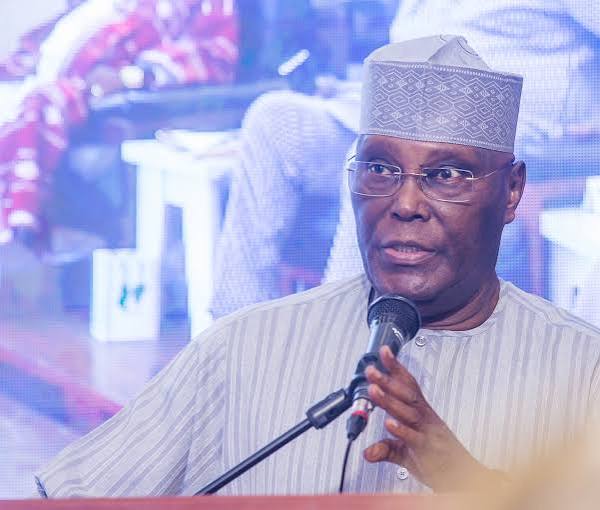
Former Vice President Atiku Abubakar has leveled strong accusations against President Bola Tinubu's administration, asserting that it is perpetuating an illusion of economic prosperity. Atiku contends that the government is celebrating rising naira-denominated revenues while the average Nigerian grapples with severe currency depreciation, soaring inflation, diminished purchasing power, and an escalating public debt burden.
In a statement released through his Senior Special Assistant on Public Communication, Phrank Shaibu, Atiku argued that the Federal Account Allocation Committee (FAAC) figures, frequently highlighted by the government, fail to accurately reflect increased economic value or an improvement in the living standards of citizens. He stressed the imperative to assess monthly allocations against the backdrop of the naira's dwindling value and the relentless increase in the cost of essential goods and services.
Atiku underscored the stark reality with a 'brutal' arithmetic comparison of FAAC distributions between 2019 and 2025. He noted that FAAC distributions in 2019 totaled approximately ₦7.85 trillion, equivalent to about $25.6 billion at the prevailing exchange rate. By 2025, while the nominal figure had surged to approximately ₦21.9 trillion, its real value in dollar terms had plummeted to only about $14.6 billion. This, Atiku explained, signifies that despite a near-tripling of nominal naira allocation, its corresponding dollar value had fallen by over 40 percent. "That is not an economic miracle. That is money illusion," he declared, criticizing the notion that battering the currency and allowing inflation to ravage purchasing power could be presented as evidence of national enrichment.
The former Vice President highlighted that this same 'money illusion' was evident in the earnings of Nigerian workers, citing the minimum wage as a prime example. He detailed that the ₦30,000 minimum wage introduced in 2019 held a dollar equivalent of approximately $83 at the time. By May 2023, its dollar value had declined to about $65, and with the current ₦70,000 minimum wage, at an exchange rate of approximately ₦1,320 to the dollar, its worth further depreciated to roughly $53. This comparison, Atiku elaborated, perfectly illustrates the administration's 'money illusion': a scenario where nominal income increases while its actual purchasing power diminishes. "The figure in your hand is bigger, but the value in your pocket is smaller," he said, emphasizing that workers, despite earning more naira, struggle to afford basic necessities like food, transportation, electricity, medicine, and housing.
Atiku also raised concerns regarding the persistent indebtedness of state governments, despite what he described as unprecedented FAAC revenues. Citing a September 2026 report based on Debt Management Office data, he pointed out that 12 states, whose governors are nearing the end of their terms, collectively carried a debt burden of approximately ₦5.3 trillion, comprising about ₦2.16 trillion in domestic debt and $2.33 billion in foreign obligations. These figures, he argued, necessitate scrutiny into how increased government revenues are being deployed. "If the states are swimming in unprecedented revenues, why are they still drowning in debt?" he questioned.
Atiku strongly advocated that increased revenue should ultimately be gauged by its tangible impact on critical areas such as infrastructure development, debt repayment, enhancement of public services, and the overall improvement of citizens' standard of living, rather than merely by the size of government allocations. "Revenue is not an achievement merely because it enters a government account," he stated. "The achievement is what that revenue buys, what debts it settles, what infrastructure it delivers and how much better it makes the lives of the people."
Furthermore, he criticized what he perceived as a selective application of fiscal discipline. Atiku called for greater scrutiny of government expenditure, tax concessions, import waivers, revenue exemptions, duplicated projects, abandoned projects, and other potential areas of waste. He argued that it is incongruous to defend concessions for the powerful and tolerate government waste, only to suddenly champion fiscal discipline when ordinary Nigerians seek relief from unbearable living costs. Atiku concluded by stating that Nigerians assess the economy through their daily experiences, not through government revenue statements or official statistics. "Nigerians do not eat FAAC figures. They do not pay school fees with percentages. They do not buy medicine with press conferences," he remarked.
He maintained that the central question for the government should be whether Nigerians are genuinely better off, notwithstanding the increase in nominal government revenues and wages. The true measure of economic progress, he suggested, should encompass affordable transportation, reduced food price pressures, manageable energy costs, stronger purchasing power, and incomes sufficient to meet basic household needs. Concluding his critique, Atiku asserted that unless the government could demonstrably show how increased allocations have translated into improved living standards, tangible debt reduction, and enhanced purchasing power, the celebration of rising FAAC figures would remain, in his words, "more naira on paper, less value in reality."