Moon Mysteries That the Artemis Missions Could Finally Solve, And Why Humanity Is Racing Back To The Moon
NASA’s Artemis missions aim to return humans to the Moon, solve long-standing lunar mysteries, and establish a foundation for future space exploration.
The moon is not just a barren rock orbiting Earth. The Artemis missions could answer the great unknowns that the satellite holds.
For decades, the Moon appeared to humanity as a closed chapter, a destination conquered during the Cold War, and then quietly abandoned as attention shifted to Earth-orbit missions and deep-space ambitions.
But all of that perception is changing rapidly with the mission to the Moon with the recent NASA’s Artemis program, and this is not just another successful space mission.
The mission that has been executed represents a renewed scientific race, a technological proving ground, and a gateway to deeper space exploration.
Half a century after the last human footsteps marked the lunar surface, the world once again successfully went back there, not for symbolic achievement alone, but to answer questions that could reshape our understanding of space, Earth, and the future of human exploration.
From Apollo to Artemis: The First Moon Race and the Return
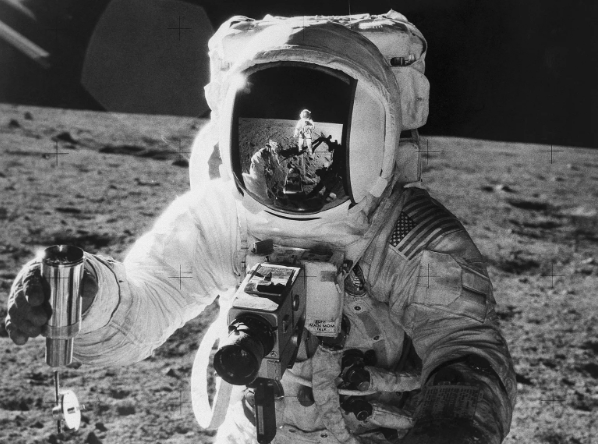
The first human journey to the Moon began during one of the most intense geopolitical rivalries in history.
In 1969, NASA’s Apollo 11 mission successfully landed astronauts on the lunar surface, marking one of humanity’s greatest technological achievements. The mission symbolized innovation, scientific progress, and national ambition.
Following Apollo 11, several Apollo missions continued exploring the Moon, collecting samples and installing scientific instruments.
However, by 1972, the Apollo program ended, and human exploration of the Moon stopped. For decades, robotic missions replaced human exploration, and the Moon gradually faded from the center of space ambitions.
Yet the Moon has never stopped being scientifically valuable. As technology advanced, orbiting satellites and robotic probes began revealing new information, water ice, complex geology, and unexplained anomalies that reignited scientific curiosity.
The Moon was not just seen as a barren rock; it grew over time to become a scientific puzzle waiting to be solved, as human curiosity knew no bounds.
This renewed interest led to the Artemis program, NASA’s modern lunar initiative designed not only to return humans to the Moon but also to get a full pictorial representation of the whole lunar surface.
Unlike the Apollo missions, Artemis is designed as a sustained exploration effort, laying the groundwork for future lunar bases and deeper space missions.
The Artemis missions mark the beginning of a new space race, not just between nations, but between technological ambitions and scientific discovery.
The success of early Artemis missions has already demonstrated progress toward sustainable lunar exploration, setting the stage for a future where humans once again walk on the Moon, this time with long-term goals.
Artemis Missions and the Crew Leading the New Lunar Era
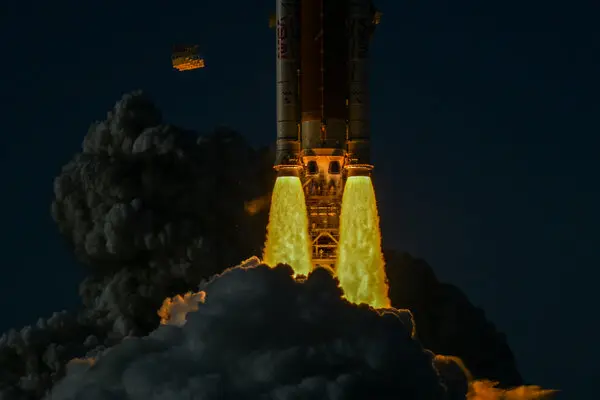
The Artemis program is and is still being structured as a multi-phase mission aimed at gradually expanding human presence on and around the Moon.
Artemis I in 2022 successfully tested the Orion spacecraft and Space Launch System in an uncrewed mission, validating the technology required for future human flights.
Artemis II represents the first crewed mission in the program. The four astronauts selected for this historic journey include Victor Glover (an African-American) became the first person of color, Christina Koch the first woman, Canadian Space Agency astronaut Jeremy Hansen, the first non-U.S. citizen, and commander Reid Wiseman the oldest person to travel beyond low Earth orbit and around the Moon.
During their lunar flyby, the crew set the record for human distance from Earth, 252,756 miles (406,771 km), breaking Apollo 13's record of 248,655 miles (400,171 km).


Their mission will take them around the Moon, marking humanity’s first crewed lunar voyage since the Apollo era.
Artemis III is planned to be the second crewed mission of the NASA-led Artemis lunar exploration program, with a targeted launch in mid-2027, and is expected to land astronauts on the Moon, targeting the lunar south pole, a region believed to contain water ice and valuable resources.
This mission aims to achieve something unprecedented: returning humans to the lunar surface while preparing for long-term exploration.
Beyond Artemis III, Artemis IV and later missions are designed to build infrastructure such as lunar habitats, research stations, and orbital platforms. These developments will allow scientists to conduct sustained research and gather more comprehensive data than ever before.
The Artemis program is important not only because it returns humans to the Moon, but because it transforms the Moon into a permanent scientific outpost. This shift marks the beginning of a new phase of exploration, one where the Moon becomes both a destination and a stepping stone to Mars and beyond.
The Moon’s Hidden Mysteries and Why It Matters Today
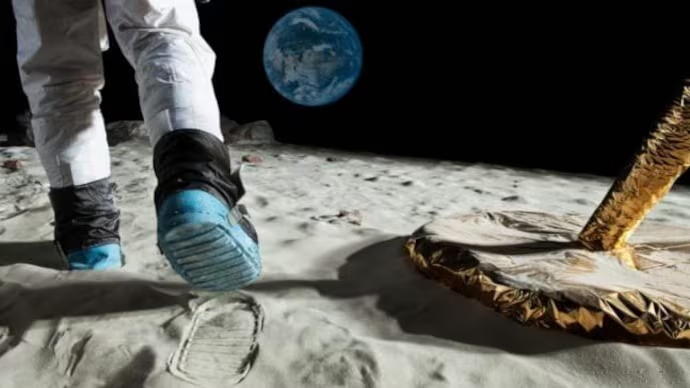
Despite decades of study, the Moon still holds major scientific mysteries. One of the biggest questions is the Moon’s origin.
Scientists believe it formed after a Mars-sized object collided with Earth billions of years ago. However, this theory relies heavily on limited samples that were said to be collected during the Apollo missions.
Artemis missions and the future programs could provide new rock samples and deeper geological data to confirm or challenge existing theories. The Moon’s internal structure is also poorly understood. Previous data from Apollo missions were limited to specific regions.
A sustained presence on the Moon would allow scientists to install modern seismometers across multiple areas, providing a clearer understanding of the Moon’s core, mantle, and geological evolution.
The Moon’s far side also presents a puzzle, that was why the recent Artemis program went around the Moon. Unlike the smoother near side, the far side is rugged and uneven. Scientists have not fully understood why this asymmetry exists.
Another mystery involves the Moon’s magnetic field. Some lunar rocks show evidence that the Moon once had a powerful magnetic field.
This contradicts current assumptions about the Moon’s size and cooling history. Future Artemis missions could gather new samples to better understand when and how this magnetic field existed.
These mysteries highlight why the Moon remains one of the most important scientific destinations in modern space exploration.
Artemis and the Future of Lunar Discovery
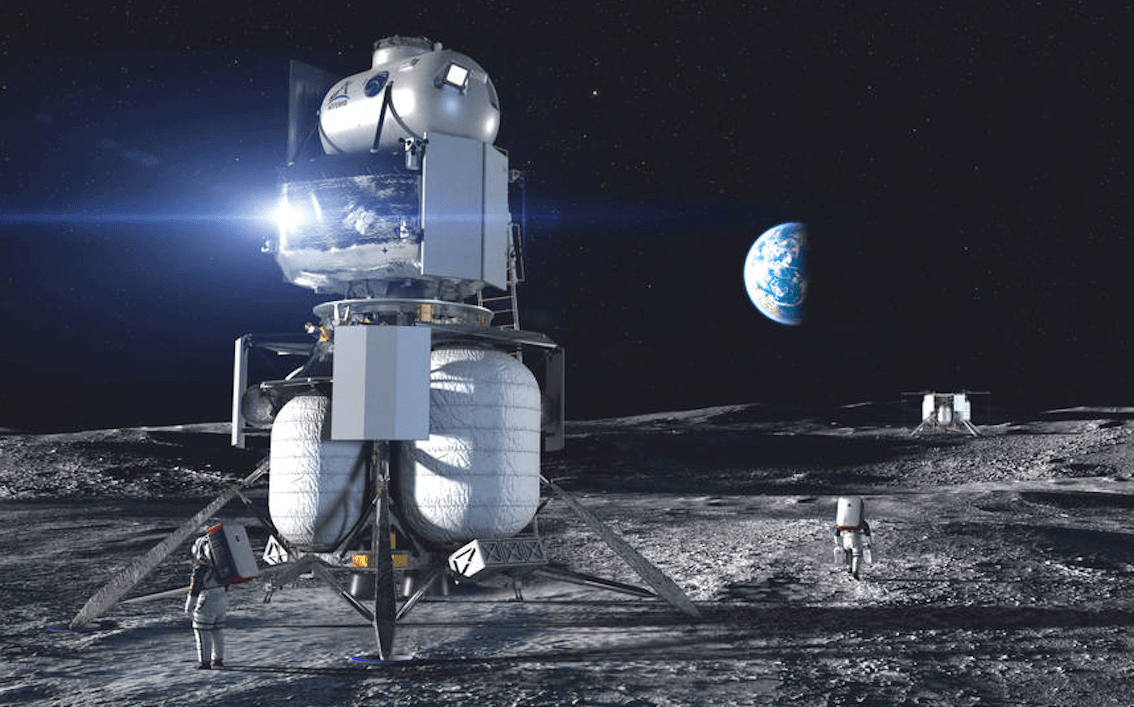
The Artemis program represents more than a return to the Moon; it represents a shift in how humanity approaches space exploration.
The Apollo missions proved humans could reach the Moon. Artemis aims to prove that humans can stay, study, and build there.
What makes Artemis particularly significant is its scientific ambition. The Moon is no longer seen as a final destination but as a laboratory for understanding planetary formation, resource utilization, and long-term human survival beyond Earth. Each Artemis mission brings humanity closer to solving mysteries that have persisted for decades. The potential discoveries could reshape scientific understanding.
Confirming the Moon’s origin could deepen knowledge about Earth’s formation, and understanding the Moon’s interior could reveal new insights into planetary evolution.
Beyond science, Artemis also symbolizes a new era of cooperation, innovation, and ambition. The Moon is becoming central to technological competition, scientific advancement, and future exploration strategies.
Half a century after humans first walked on the Moon, Artemis is reopening a chapter that was never truly finished.
This time, the goal is not just to visit, but to understand and, in doing so, unlock the secrets that the Moon has quietly held for billions of years.