Middle East Shocker: US & Iran Ink Ceasefire, Oil Markets Reel
The United States and Iran have agreed to a two-week ceasefire, leading to the immediate reopening of the vital Strait of Hormuz and a dramatic positive shift in global markets. This diplomatic breakthrough, facilitated by several nations, aims to pave the way for a lasting peace agreement and alleviate the economic pressures caused by the recent conflict.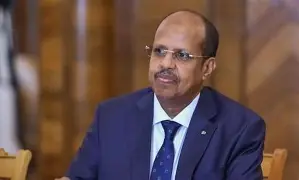
A significant two-week ceasefire agreement has been reached between the United States and Iran, marking a crucial step towards de-escalation in a conflict that has had profound global repercussions. The agreement, announced after intense diplomatic efforts, includes the temporary reopening of the vital Strait of Hormuz, a critical waterway through which a fifth of the world's oil and gas shipments typically transit. This development follows a period of heightened tensions, with US President Donald Trump having threatened "obliteration" if the Strait was not reopened.
The ceasefire, which took effect immediately, saw President Trump announce a halt to attacks for two weeks, stating he had received a "workable" 10-point proposal. He emphasized that the ceasefire was "double sided" and expressed optimism for a "definitive Agreement concerning Longterm PEACE with Iran, and PEACE in the Middle East." Iran, for its part, confirmed its agreement to safe passage through the Strait of Hormuz, contingent on attacks against Iran being halted. The agreement was facilitated by key mediators including Pakistan's Prime Minister Shehbaz Sharif, who announced its immediate commencement, alongside the constructive roles played by the Sultanate of Oman, the Republic of Türkiye, and the Arab Republic of Egypt.
The global economic landscape reacted dramatically to the news. Oil prices plunged, with West Texas Intermediate losing almost 20 percent and Brent North Sea Crude dropping by as much as 16 percent, as investors breathed a collective sigh of relief after more than five weeks of war that had severely impacted supplies. Concurrently, global equities soared, propelled by hopes that the crisis, which had shocked the world economy, was nearing an end. Major markets saw significant rallies: Seoul jumped 6.9 percent, Tokyo 5.4 percent, Taipei more than four percent, and Mumbai 3.8 percent. Hong Kong advanced nearly three percent, with other Asian markets also sharply higher. European bourses like London, Paris, and Frankfurt rallied, and US futures surged. Middle Eastern stocks also showed strong gains, with Dubai leaping 8.5 percent—its biggest intraday increase since December 2014—and Abu Dhabi climbing over three percent.
Beyond stock markets, the ceasefire also led to a sharp drop in the dollar, which had served as a safe-haven currency during the conflict, while the yen, euro, and pound all strengthened. Gold, previously hit by inflation concerns, rallied, and even bitcoin saw an increase. Analysts, such as Michael Brown at Pepperstone, noted that participants were not only pricing out the risk of near-term escalation but also factoring in the increased likelihood of a durable, long-lasting peace agreement being formed over the coming fortnight. Stephen Innes of SPI Asset Management highlighted the immense relief for Asia, where governments had been struggling with rising energy costs, with lower oil prices easing inflationary pressures and encouraging a rotation of capital back towards risk assets.
International political figures widely welcomed the development. H.E. Mahmoud Ali Youssouf, Chairperson of the African Union Commission, expressed strong support, describing the agreement as "a significant step that reflects commendable leadership and a shared commitment to de-escalation." He underscored that the conflict's repercussions had been felt globally, including across Africa, where disruptions to fuel supplies had driven inflation and increased the cost of basic commodities, and viewed the ceasefire as a critical opportunity to ease suffering. He also emphasized the necessity of "sustained dialogue and inclusive diplomacy" to consolidate these gains, fully supporting the ongoing Islamabad Talks.
In the United Kingdom, Sir Keir Starmer, Leader of the Opposition, welcomed the ceasefire during his trip to meet Gulf leaders, stressing the need to "support and sustain this ceasefire, turn it into a lasting agreement and reopen the Strait of Hormuz." Former foreign secretary Sir James Cleverly described it as an "opportunity for Iran to make some serious choices" and reiterated the "absolute priority" of ensuring Iran never acquires a nuclear weapon. The UK had previously hosted a virtual summit with over 40 countries to assemble a coalition for securing the Strait after the conflict.
The conflict originated in February, when the US and Israel launched coordinated attacks on Iran over concerns about Tehran's accelerating efforts towards building a nuclear weapon. In response, Iran launched strikes on its neighbors across the Gulf and the wider Middle East and imposed a stranglehold on the Strait of Hormuz. This blockade caused crude oil prices to spike, leading to sharp increases in petrol and diesel costs globally and concerns about the cost of living.
Following the ceasefire agreement, the reopening of the Strait of Hormuz has already seen its first movements. Maritime monitor MarineTraffic reported that two ships, the Greek-owned bulk carrier NJ Earth and the Liberia-flagged Daytona Beach, successfully transited the waterway. This activity suggests an early sign of movement, though analysts advise caution, noting it is "too soon to tell whether this reflects a broader ceasefire-driven reopening or a previously approved exception." Approximately 800 ships were estimated to be stuck in the Gulf due to the previous restrictions, with commodity carriers experiencing a 95-percent decrease from peacetime traffic levels between March 1 and April 7.
Looking ahead, the emphasis remains on fostering a durable peace. While Iran claimed "an undeniable, historic and crushing defeat" for its enemies, the immediate focus is on the two-week period for negotiations towards a longer-lasting peace agreement. Diplomacy and dialogue, in line with the Charter of the United Nations, are seen as the only viable path to resolving international crises and securing long-term stability in the region and beyond.