When Cities Consume Their Foundations: How Lagos’ Lagoon Is Being Dug Away
Lagos and other parts of Africa are being built on sand extracted from their own lagoon, and the ecological cost is mounting. This is a commentary on how dredging is collapsing fisheries, eroding coastlines, and what one of Africa's most populous cities risks losing before it notices what is gone.
Before the city wakes, the lagoon is already being dug away, slowly, and its occupants are not paying attention.
While the ever-busy city of Lagos continues to be ravaged with the sound of generators, daily hustling, and early morning traffic, something that looks insignificant and far more consequential is happening on the water.
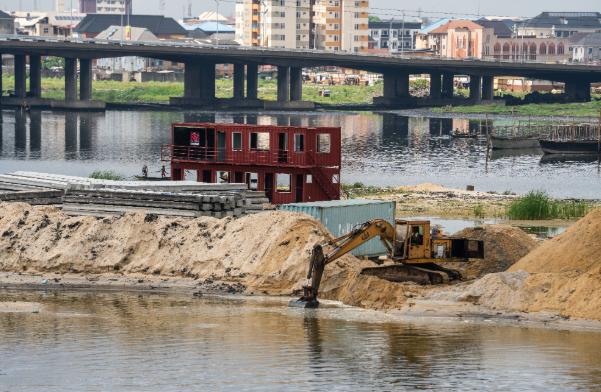
The suction pipes of dredging machines are pulling the floor of the lagoon upward, extracting sand that will become the foundation of high-rise apartments, luxury estates, and road infrastructure for a city that never stops building.
It is a transaction with no written contract and only one party that cannot walk away: the ecosystem itself.
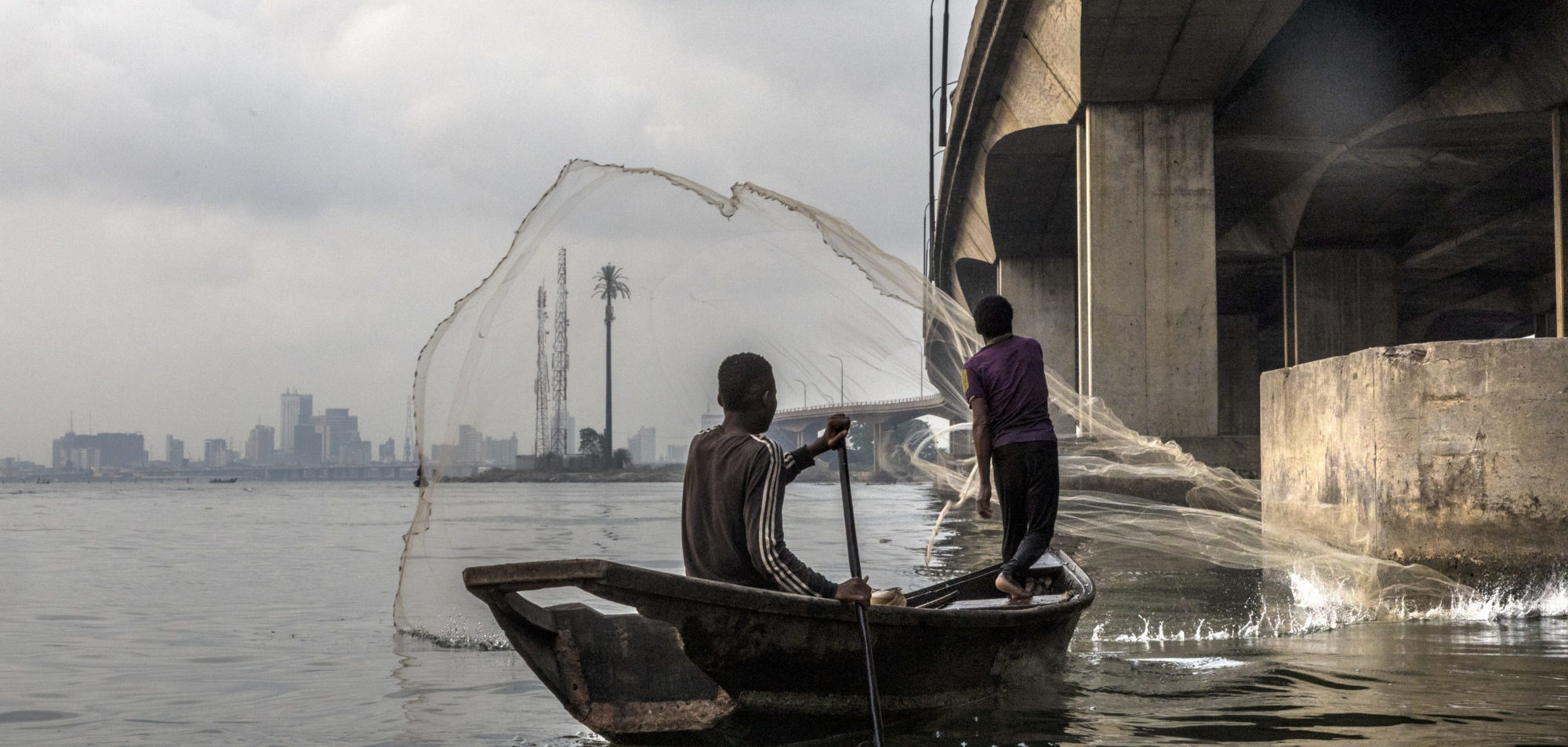
Imagine a fisherman, call him Emeka, 58, who has worked across the shores of the Lagos Lagoon for three decades.
He wakes up every morning before 4 am, mends his net by torchlight, and pushes his canoe into water that used to provide his source of income, fishing.
But now? He no longer expects a full net. He expects a long journey, more toiling, and returns that no longer justify the hours.
The fish are no longer where they used to be and seem to be farther away from reach. The water, he will tell you, has changed in ways that science can explain but cannot fix for him before his children need feeding tonight.
What Is Actually Happening Beneath the Surface
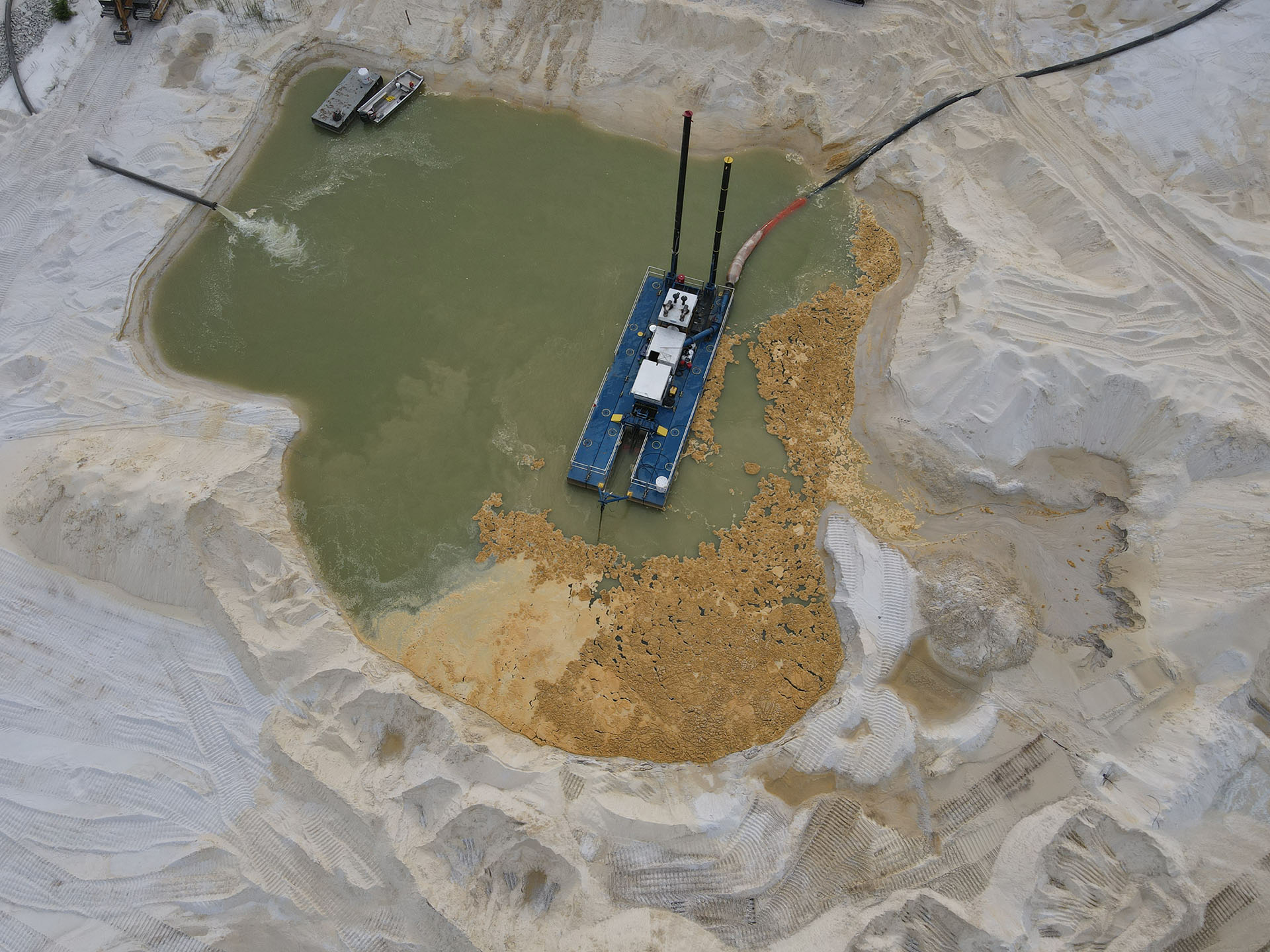
Sand is the second most extracted natural resource on Earth after water. It is the essential ingredient in concrete, glass, and asphalt, which means every building, road, and bridge in a rapidly urbanising city like Lagos requires it in enormous quantities.
Lagos, with a population exceeding 20 million people and a construction sector that has not slowed in years, has an insatiable appetite for sand, and the lagoon has become the quarry.
The consequences are documented and alarming. According to a report from The PunchNg, unregulated dredging and mining have eroded the seabed by nearly six metres in a roughly five-kilometre stretch of the central Lagos lagoon channel between Banana Island and the Third Mainland Bridge.
Six metres of seabed—gone. That is not erosion by weather or tide. That is extraction by machine, largely unmonitored and in many cases conducted at night to avoid distraction and noise.
When the seabed is destabilised at that scale, the effects cascade. Dredging increases turbidity, muddies the water, reduces light penetration, and destroys the breeding grounds and feeding habitats that fish depend on.
According to different reports, more than 230 fish species in Nigeria's inland waters are already showing population declines, partly as a result of these activities.
Read that again! More than 230 species are facing massive decline, not one or two. A quarter of a thousand species of fish, in various stages of population collapse in real time, in waters that millions of Nigerians depend on for protein.
The ecological damage does not stop at fish. Dr Joseph Onoja of the Nigerian Conservation Foundation, according to The Guardian, has documented early signs of ecosystem collapse extending to sea turtle nesting sites and migratory bird habitats.
The shoreline itself is retreating, and communities that have existed alongside the lagoon for generations are watching their land wash into the same water that is being mined beneath them.
The development of luxury real estate on reclaimed land is literally consuming the ground that artisanal fishing communities have lived on for generations, and the communities receiving none of the benefits are absorbing all of the loss.
The Benefits, the Contradictions, and What Nobody Is Counting
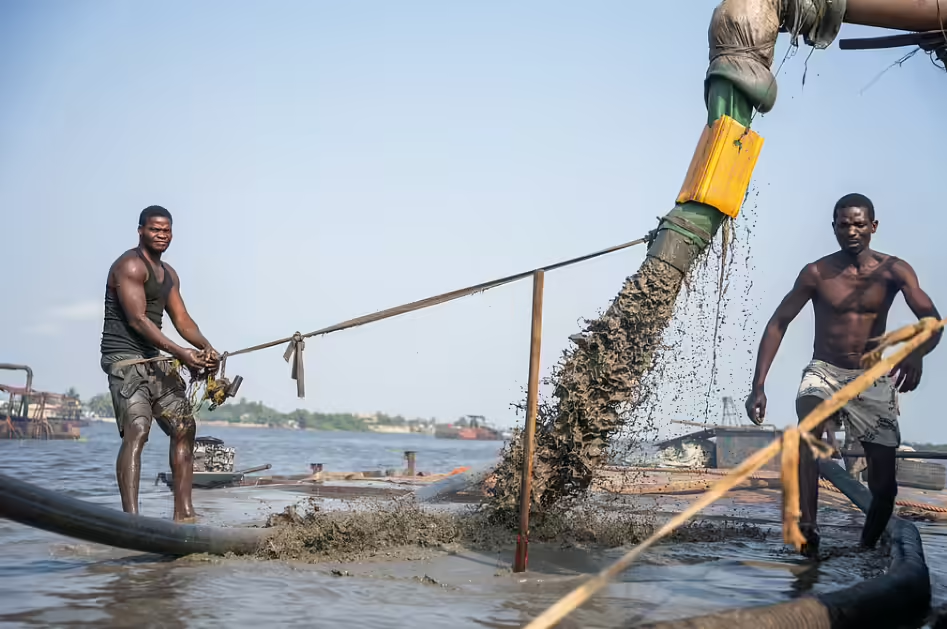
It would be dishonest to frame dredging as having no economic value. It actually does! Sand mining provides income for artisanal divers, men who descend to the lagoon floor and bring up buckets of sand by hand, filling one boat over three hours of physical labour.

For many of them, in an economy with limited alternatives, this is survival. For the construction industry and the real estate developers behind Lagos's most profitable estates, it is the raw material for enormous returns.
But the economic accounting being done is dangerously incomplete.
It counts the value of the sand extracted and the buildings constructed, but it does not count the loss of fish catch, the cost of declining food security in coastal communities.
It also does not count the infrastructural damage from coastal erosion, or the long-term cost of restoring, if restoration is even possible, an ecosystem that has been structurally altered at its foundation.
This is a conversation Africa must have more urgently than it currently does. Across the continent, rapid urbanisation is generating enormous demand for construction materials at precisely the moment when environmental governance is least equipped to manage the consequences.
Lagos is not unique, it is a warning. The same pattern of extraction-led development consuming the ecological capital of coastal and riverine communities is playing out in varying degrees from the Gulf of Guinea to the East African coast.
Regulation exists on paper; the Lagos State government and the waterways authority maintain a framework for dredging oversight.
In practice, enforcement is structurally weak, and the economics of the industry create powerful incentives to work around it.
Most mechanised dredgings are alleged to happen at night, and many operators move locations to avoid detection.
In cases when dredging permits are endorsed by local power brokers, the community voices most affected by the extraction are the least positioned to object.
The Long Game and What an Alternative Might Look Like
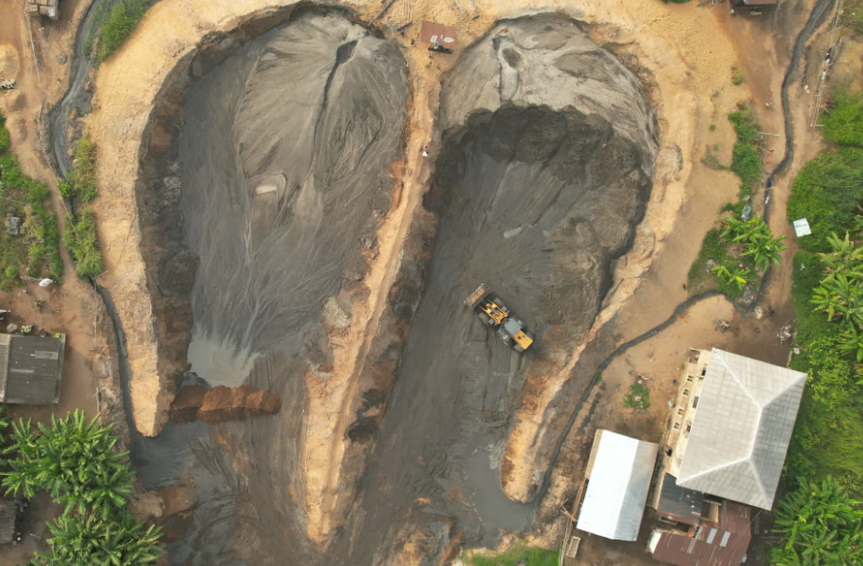
The argument for dredging moratoriums in ecologically sensitive zones is not anti-development.
It is pro-sustainability, a distinction that Nigeria's urban planning conversation has not yet made with enough clarity or political seriousness.
Environmental rights organisations, including the Health of Mother Earth Foundation and the Nigerian Conservation Foundation, have called for full-scale environmental monitoring, habitat restoration, and the genuine implementation of Environmental Impact Assessments before extraction begins.
These are not radical demands. They are the minimum threshold for responsible resource management.
There are alternatives that other rapidly urbanising coastal cities have explored, such as manufactured sand from quarried rock, recycled construction aggregate, and modular building systems that reduce material intensity.
It is important to say that none of these are simple to scale, and all of them cost more in the short term than pulling sand from a lagoon with minimal oversight.
But the cost comparison changes entirely when you factor in what the lagoon provides: the fisheries that feed millions, the coastal protection that prevents flooding, the biodiversity that underpins the food chain, and the livelihoods of communities whose economic survival has no backup plan.
Emeka, the fisherman at the beginning of this story, does not use the language of ecosystem services or sediment displacement.
He uses simpler words because the fish are disappearing, and his children still need to eat.
That sentence contains the entire argument. Growth that cannibalises the systems sustaining the people who were there before the developers arrived is not development.
It is a debt being accumulated in a currency that cannot be repaid, and the lagoon will eventually present the bill, whether Lagos or other parts of Africa are ready to pay it or not.