Meet the Nigerian Who Made Cancer Visible In Radiography
Meet Samuel Achilefu, the Nigerian-born biomedical scientist revolutionizing cancer imaging with CancerVision Goggles and redefining radiography and cancer treatment globally.
I have a theory to propose and I bet many of you that will come across this article and read this would agree with me. I've noticed that the Nigerian people—or perhaps if I put it more accurately—the Nigerian lineage—carry a legacy of brilliance that continues to echo across continents.
In science, technology, medicine, arts, and innovation, Nigerians have consistently risen to the forefront, not merely participating or observing but shaping global conversations.
There is something unmistakable about the Nigerian spirit or should I say the naija spirit—one that has a blend of resilience, intellectual audacity, and an unyielding belief that circumstances do not define destiny.
When dreams collide with opportunity—often in the form of scholarships, brilliance, and relentless curiosity, the result is excellence with global impact. One such embodiment of this reality is Professor Samuel Achilefu, a Nigerian-born biomedical scientist whose work is redefining cancer imaging and treatment.
Radiography, Biomedicine, and the Fight Against Cancer
Radiography and biomedical sciences sit at the heart of modern medicine. They form the bridge between diagnosis and treatment, allowing clinicians to see what was once invisible.
Over the decades and as the years have progressed by, advances in imaging—X-rays, MRI, CT scans, optical imaging, and nuclear medicine—have revolutionized how diseases, particularly cancer, are detected and managed.
Cancer treatment has evolved from blind surgical excisions and generalized therapies to precision-guided interventions. Biomedical engineering and radiographic sciences now focus on accuracy, minimizing harm to healthy tissue while maximizing treatment effectiveness.
This progress is owed to generations of scientists who understood that seeing disease clearly is often the first step to defeating it.
Across the globe, contributors in optics, radiology, molecular imaging, and materials science have laid the groundwork for today’s breakthroughs. Yet, the field continues to rigorously demand for innovation, tools that can work in real time, reduction in surgical errors, and improve patient outcomes as the end goal.

It is within this demanding scientific landscape that Samuel Achilefu’s work stands out, not only for its technical brilliance but for its transformative impact on cancer care and cancer treatment in general.
Samuel Achilefu: A Journey from Nigeria to Global Medical Innovation
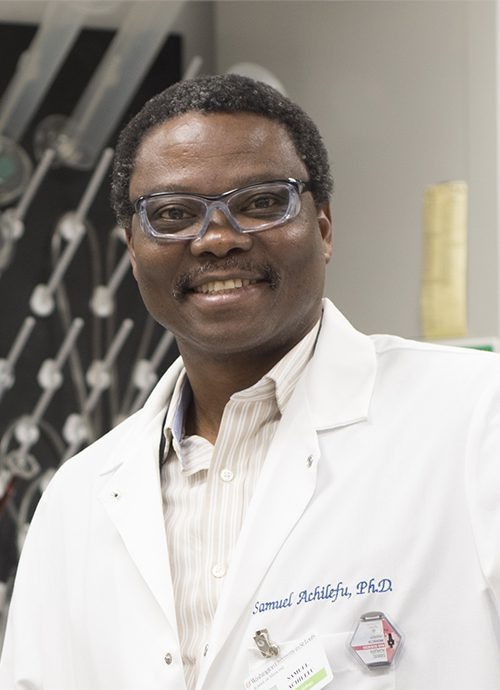
Samuel Achilefu was born in northern Nigeria in the 1960s. His early life was shaped by movement and resilience. When the Nigerian civil war broke out in 1967, his family relocated from the north to their ancestral home in Osaa-Ukwu, Obingwa, in present-day Abia State.
These early experiences, marked by displacement and adaptation, quietly shaped a mind prepared to navigate complex challenges that he later solved in his life.
Achilefu’s academic journey took a decisive turn when he became one of five recipients of a French government scholarship. This opportunity led him to the University of Nancy in France, where he earned a PhD in molecular, physical, and materials chemistry.
He later completed postdoctoral training at Oxford University in England, focusing on oxygen transport mechanisms, an area critical to both imaging and therapy.
In 1993, he moved to the United States to join Mallinckrodt Medical in St. Louis. By 2001, he had joined the Mallinckrodt Institute of Radiology at Washington University School of Medicine, where he established and led the Optical Radiology program, now comprising over 80 researchers.
His work centers on light-sensitive drugs and optical imaging techniques for cancer detection, imaging, and therapy.
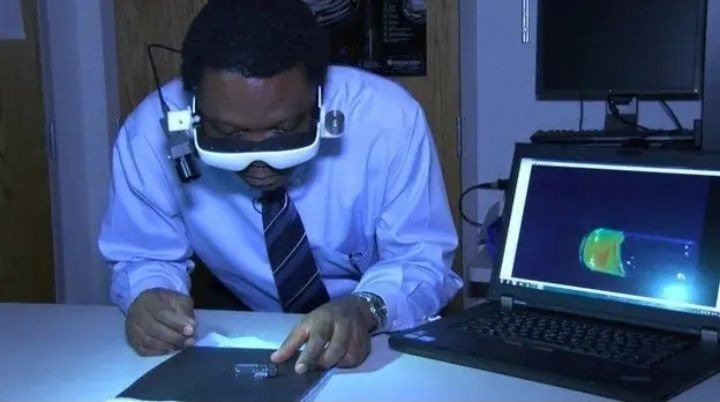
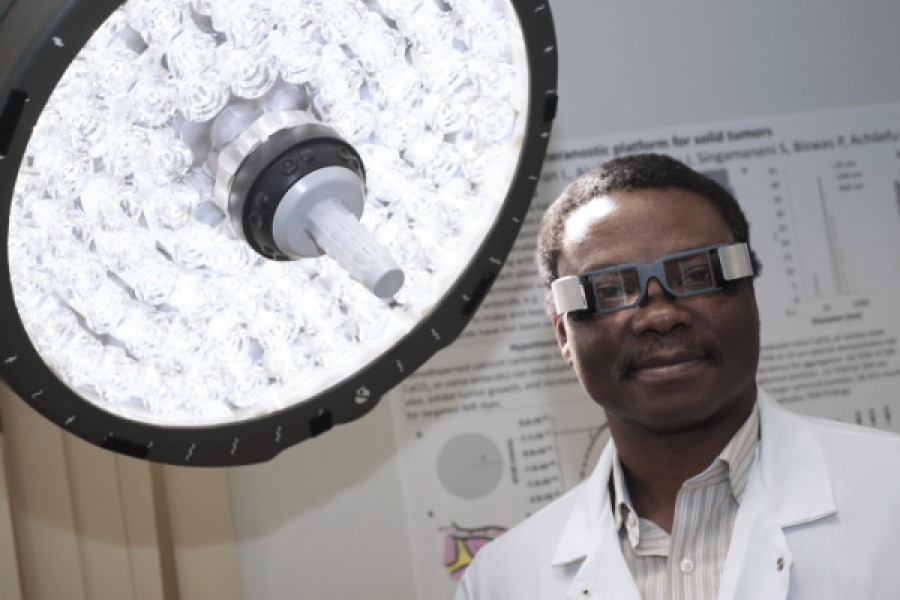
In 2016, Achilefu conceived one of his most groundbreaking innovations: the CancerVision Goggles. These wearable, high-tech goggles allow surgeons to see cancer cells in real time during operations using optical imaging principles.
By highlighting cancerous tissue while sparing healthy cells, the technology significantly improved surgical precision and patient outcomes. Beyond imaging, he also pioneered a novel cancer treatment approach that uses specific light wavelengths and non-pharmacological drug doses to selectively kill cancer cells.
His scientific output is formidable, over 300 peer-reviewed publications, 59 issued U.S. patents, and more than 30 prestigious awards, including the St. Louis Award and the Britton Chance Biomedical Optics Award.
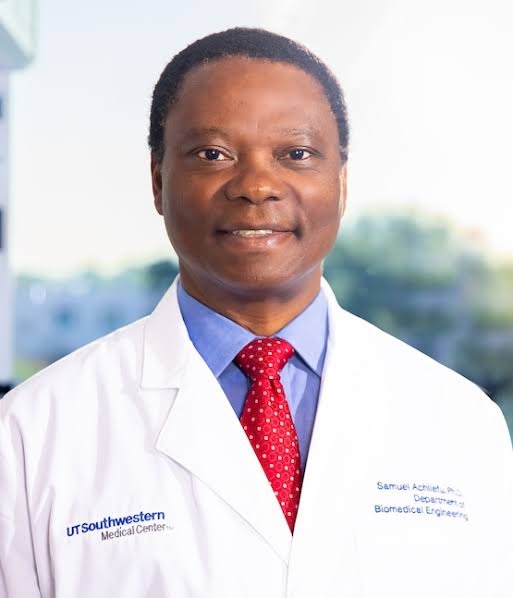
Today, he serves as a Professor and Chair of Biomedical Engineering at the University of Texas Southwestern Medical Center, continuing to shape the future of medicine.
Conclusion: You Can Do Anything You Want to Do
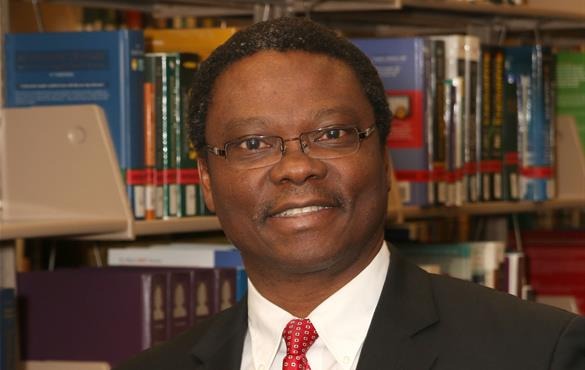
Samuel Achilefu’s story is not merely about science, it is about possibility. From a childhood shaped by war and migration to global recognition in biomedical innovation, his journey reveals a powerful truth and it is that our background does not limit brilliance. With curiosity, discipline, and opportunity, boundaries dissolve.
His work reminds young Africans and indeed anyone reading this, that impact is not reserved for a select few or specific geographies. You can do anything you want to do, if passion meets preparation and courage meets opportunity.
In making cancer visible, Samuel Achilefu has also made something else clear: African excellence belongs at the center of global progress.