Kogi State: The Only Place Where North, South, East, and West Truly Meet
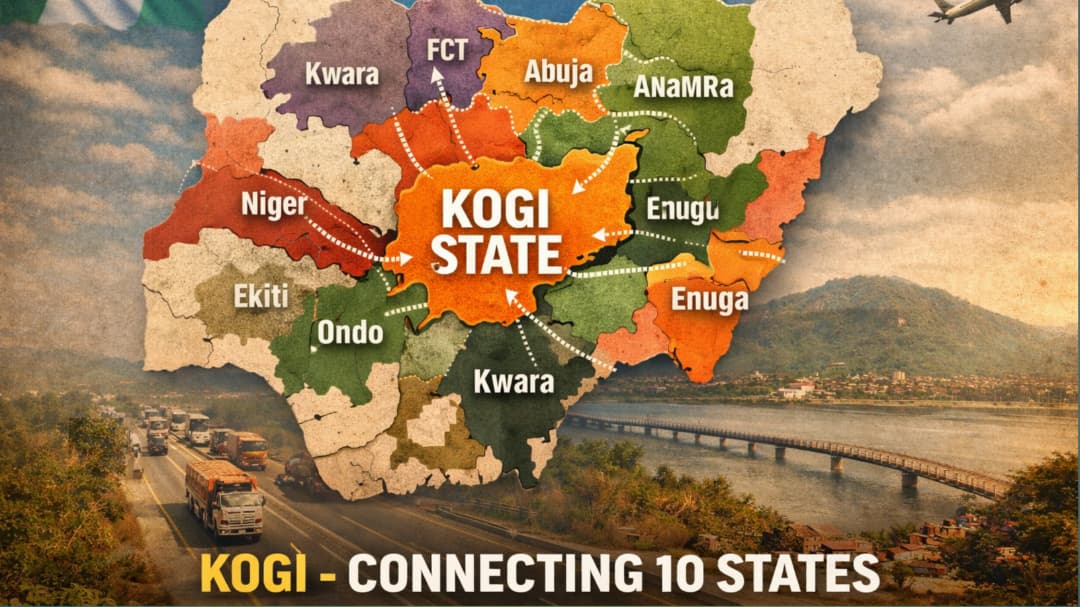
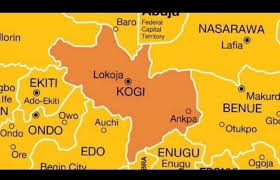
Kogi State is the only state in Nigeria that shares a boundary with ten other states including the FCT. This is why that single geographical fact carries more weight than most Nigerians have stopped to consider.
There is a state in Nigeria that sits at the centre of everything and somehow still gets talked about like it's on the edge of somewhere.
Kogi Statethe Confluence State, as it's known, shares a boundary with ten other states including the Federal Capital Territory. No other state in the country comes close.
It touches the North, the South, the East, and the West, all at once. And yet, for many Nigerians, it is mostly the place their bus passes through on the way to Abuja.
The ten borders
To really feel how unusual this is, consider that most Nigerian states share borders with four or five neighbours. Kogi shares borders with ten, plus the FCT sitting right above it to the north. These are the States Kogi shares borders with:
Niger State — Northwest
FCT, Abuja — North
Nasarawa State — Northeast
Benue State — East
Enugu State — Southeast
Anambra State — South
Edo State — Southwest
Ondo State — Southwest
Ekiti State — West
Kwara State — West
To the north sits the seat of federal power. To the east, the food basket of the nation. To the south, ancient kingdoms and commercial hubs. To the west, Yoruba heartland. No other state in Nigeria holds all of this within arm's reach.
Where two great rivers meet
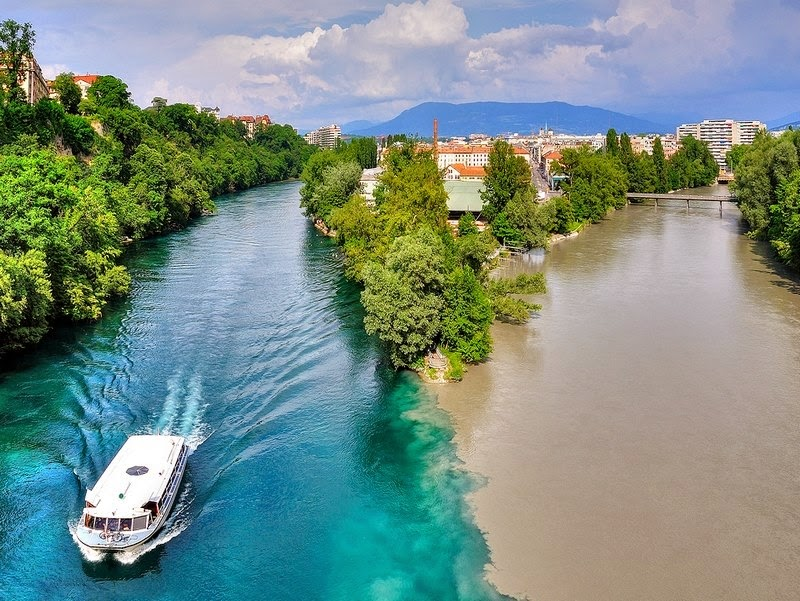
At the heart of Kogi lies Lokoja, the state capital, where the River Niger and the River Benue converge in one of Africa's most significant geographical meetings. This confluence is not merely scenic, it is symbolic.
At Lokoja, the state capital, the River Niger and the River Benue meet. Two of Africa's greatest rivers, arriving from entirely different directions, choosing the same spot to become one.
It is the perfect metaphor for a state that sits at the crossroads of an entire nation. It was here, standing on the hill of Mount Patti in Lokoja, gazing down at that confluence that Flora Shaw coined the name "Nigeria" in 1897, the name a whole country would carry into independence and beyond.
A diversity born of geography

The Igala, Ebira, and Okun make up Kogi's three major groups, but they share the state with the Bassa, Kakanda, Oworo, Ogori-Magongo, and others. This diversity is a direct consequence of geography.
Every border brought a people, a language, a way of life. Kogi became, over centuries, a conversation between cultures.
What the ground holds
Beneath all of this sits extraordinary wealth. The Ajaokuta Steel Company, Nigeria's largest iron and steel plant is in Kogi. So is the Obajana Cement Factory, one of the largest cement plants on the African continent.
The state's subsoil holds iron ore, coal, limestone, and over forty varieties of solid minerals. Its land produces yam, cassava, cocoa, and cashew in abundance.
A state that borders ten neighbours also sits on ten potential trade routes.
But the thing though, a state this central, this geometrically, historically, culturally essential to Nigeria should not be one that people mostly know as a long road to somewhere else.
Kogi has struggled with infrastructure, with investment, with the kind of sustained national attention that its position demands.
Geography has never been the problem, the map has always been generous to Kogi. What remains to be seen is whether the rest of Nigeria will eventually be generous back and whether Kogi itself will fully step into the enormous promise of what it already is: the state at the centre of everything.
Meta description
Tags
Lokoja River Niger River Benue North Central Nigeria Nigerian history Ajaokuta Steel Nigeria facts Nigerian states Flora Shaw