Tinubu’s Overwhelming Primary Win: Is APC Already Settling the 2027 Question?
The APC primary result is official. What it actually means is still being debated in comment sections, in barbershops, and in the slow calculation of whether people feel their lives have improved enough to vote the same way twice.
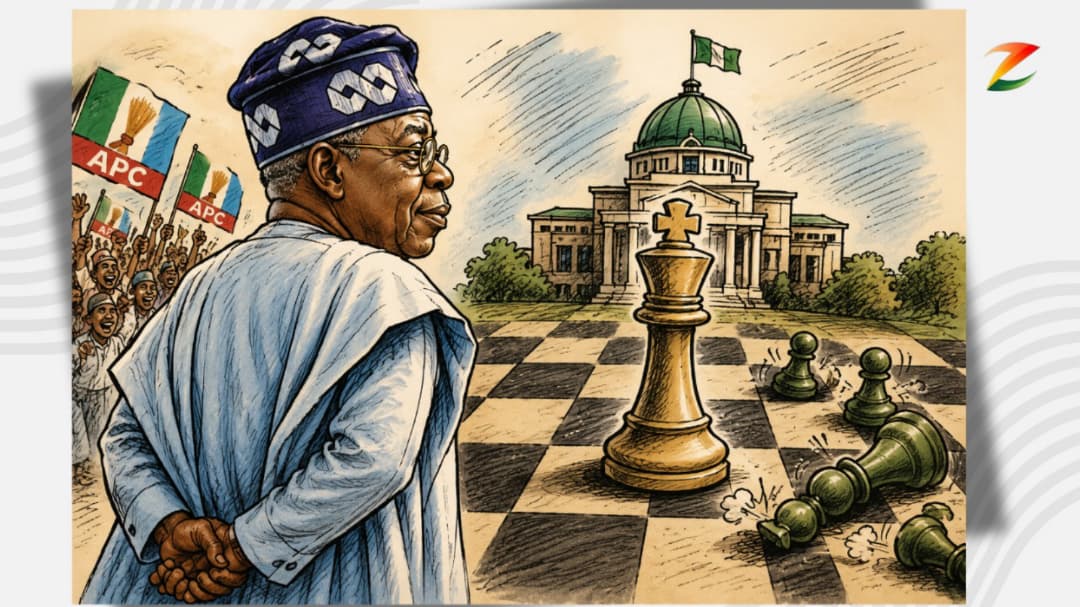
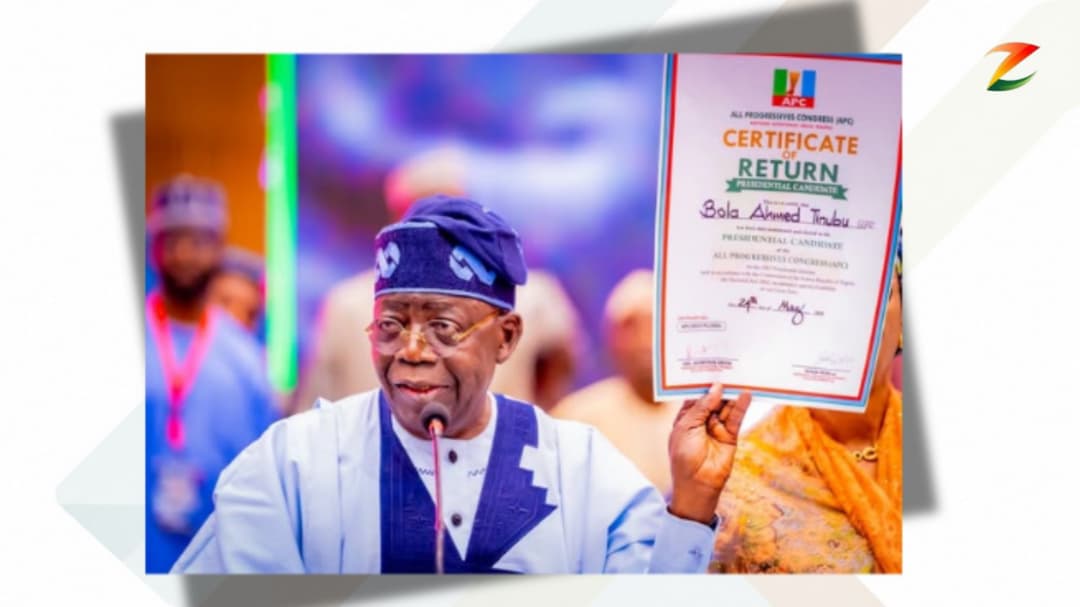
Bola Ahmed Tinubu (Bola Ahmed Tinubu) won the presidential primary of the All Progressives Congress (All Progressives Congress).
That part was never in doubt, what nobody quite expected was the number attached to the win: 10.9 million votes inside a party primary.
For context, in the 2023 general election Tinubu had secured about 8.79 million votes nationwide under INEC's final declaration — the one open to every registered voter in Nigeria.
The Comparison Nobody Could Resist
To be fair to the numbers, comparing an internal party primary to a national election is something like comparing a school assembly headcount to a census because they are definitely different processes, different scales and different rules entirely.

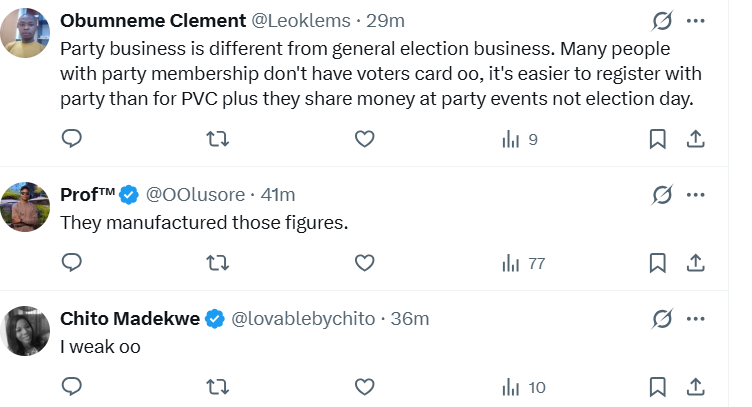
And this is the thing about political sarcasm in Nigeria, the questions that circulated weren't really about arithmetic, they were about proportion, about whether the numbers communicated felt tethered to anything recognisable from lived experience.
Because the numbers feels off in a way that is hard to argue about. If 8.79 million votes won a national election, how does an internal party process generate 10.9 million? Where did those voters come from? How many of them actually showed up somewhere and cast something?
How can a process most ordinary citizens had no part in produce figures at that scale?
It is worth remembering thatonly 26.7 percent of Nigeria's registered voters turned out for the 2023 presidential election, the lowest since the return to democracy in 1999. The idea that a closed party primary produced more votes than that nationwide exercise is what made the comparison stick.
Why Nigerians React the Way They Do
There is a reason Nigerian political commentary now travels almost entirely through humour. It is not because the audience is unserious, but because seriousness, in Nigerian political communication, has sometimes been used as a tool to close down questions rather than answer them.
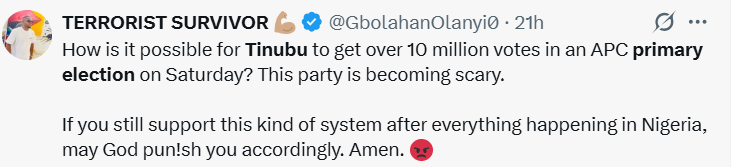
Laughter is a way of staying in the conversation without pretending to believe everything you are told. It says: I noticed, I am not impressed, and I am not going anywhere.
The speed of the reaction to the APC primary results, the instant comparisons, the memes, the sarcasm reflects how much that instinct has sharpened. Official announcements no longer land in silence. They land inside a public that is already talking.
What These Reactions Might Be Hinting At Ahead of 2027
The timing of this primary is deliberate.
The APC’s internal alignment around Tinubu has got people talking about what the party’s structure might look like heading into the next electoral cycle in 2027.
Some see the primary outcome as an early consolidation of influence within the ruling party while others see it as standard political organisation playing out ahead of time.
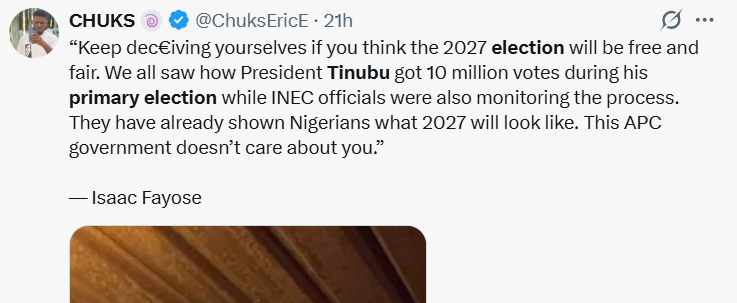

Maybe, just maybe the ground is already claimed, the coalition is already forming and now, whether that strategy holds depends on things still in motion: the economy, public patience, and whether the political structures that delivered 2023 remain intact or start to shift.
But what makes the current moment interesting is not certainty, it is interpretation.
The same set of figures is being read in multiple ways at once. For some, it signals strength and unity within a dominant political structure. For others, it raises questions about perception, scale, and how political legitimacy is communicated in modern Nigeria.
That is where the conversation sits now.
Not fully defined, not fully dismissed but open, shaped as much by online culture and everyday pressure as by official political narratives.
And maybe that is the point where it pauses, at least for now, without forcing an answer that the moment itself has not fully resolved.
When Does an Election Feel Fully Trusted?
Sometimes the reactions around moments like this move beyond numbers and winners. They drift into a solemn question about trust itself.
Not trust in one result, but trust in the process over time.
How results are received, how they are explained, and how they sit with public perception after the noise fades.
It is not a question with a clear answer. It just appears in conversations, especially when political figures and institutions release figures that people interpret in very different ways.
And it tends to linger, even when the debate moves on.