Kenya's Innovation Boom: Nonprofit Unveils Half-Million Fund for Assistive Tech Startups
A new $500,000 Momentous Pilot Fund, launched by Assistive Technologies for Disability Trust (AT4D) and the Judith Neilson Foundation, aims to bolster early-stage assistive technology startups across Africa. This initiative seeks to address the continent's significant unmet need for assistive devices by providing capital and support. The fund also endeavors to demonstrate the viability of disability-focused innovation as a sustainable investment sector.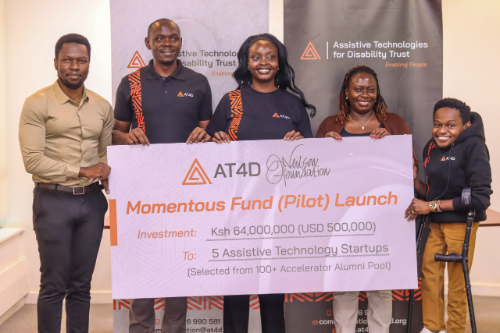
Assistive Technologies for Disability Trust (AT4D), a Kenya-based nonprofit dedicated to advancing assistive technology innovation, has partnered with the Judith Neilson Foundation to establish the Momentous Pilot Fund. Launched on March 13, 2026, this $500,000 fund is specifically designed to support early-stage assistive technology startups across Africa, addressing the critical issue of low access to essential devices on the continent.
The need for assistive technologies in Africa is profound, with the World Health Organization (WHO) estimating that nearly 200 million people require at least one assistive product, yet only one in ten can access the devices they need. Globally, this demand is even greater, with over 2.5 billion people needing assistive products, a figure projected to reach 3.5 billion by 2050 due to an aging population and increasing chronic health conditions. In Africa, these gaps are exacerbated by limited insurance coverage, insufficient local manufacturing capabilities, and the high cost of imported devices, making crucial tools like hearing aids, wheelchairs, and communication devices largely inaccessible.
The Momentous Pilot Fund aims to bridge this gap by providing comprehensive support to up to five early-stage ventures. This includes not only capital but also technical assistance, participation in venture-building programs, and strategic partnerships designed to facilitate the scaling of these companies. The program will primarily focus on startups developing digital and hardware solutions that tackle barriers faced by people with disabilities in key areas such as healthcare, education, employment, mobility, communication, independent living, and digital accessibility.
AT4D, founded in 2023 by Bernard Chiira, is committed to fostering the development and growth of startups that create technology for individuals with disabilities. The organization runs various accelerator programs, provides mentorship, and offers broader ecosystem support to founders. Notably, AT4D also operates the Innovate Now accelerator, which has previously backed innovative assistive technology startups across Africa, including Signvrse, which translates speech and text into sign language using AI and 3D avatars, mobility startup Linccell Technologies, and the education platform Village2Nation.
Bernard Chiira, CEO of AT4D, emphasized the unique nature of this initiative, stating, “Early-stage assistive technology innovators across Africa face structural barriers to accessing capital. This is the first fund on the continent dedicated to investing in emerging assistive technology startups at the early stage.” This highlights the groundbreaking effort to establish a dedicated investment pipeline for assistive technology ventures in Africa, a sector often overlooked by traditional investors.
Harry Ochieng, Investment Manager at AT4D, further elaborated on the fund's mission to challenge prevailing perceptions. He noted that many investors still view disability innovation primarily through a lens of charity. “The Momentous Fund is an opportunity to demonstrate that this sector presents opportunities for investment, impact, and sustainable returns,” Ochieng explained, advocating for a shift towards recognizing the scalable market potential within disability-focused technologies.
Ultimately, the Momentous Pilot Fund serves as a crucial test model for investing in disability-focused innovation. AT4D anticipates that the insights and results garnered from this pilot phase will inform the design of a subsequent phase, potentially leading to an expanded financing mechanism for assistive technology ventures throughout Africa. If successful, this model could attract larger pools of capital, helping to cultivate a new, vibrant segment within Africa’s technology ecosystem that is specifically dedicated to accessibility and inclusive innovation. Startups are already beginning to address this gap through mobile technology, artificial intelligence, and lower-cost hardware solutions tailored for local markets, while governments and development institutions are also increasing their support for inclusive technology.