Is FIFA Racist, Or Does It Just Prefer African Sound Without African Stars?
Is FIFA racist? Shakira has fronted African-inspired World Cup songs twice, while no African artist has ever been trusted to lead one alone. Is this representation, exploitation, or racism?

Shakira has now fronted two World Cup songs built around African music and imagery. African artists, meanwhile, are still being featured rather than placed at the centre.
Dear Africans, grab a seat— let’s talk.
Across the history of official World Cup songs and anthems, Shakira, yeah, the “hips don’t lie” Shakira, has been handed the spotlight more than once. Yet no African artist has been given the same opportunity to lead a globally promoted World Cup anthem alone.
That contrast becomes even harder to ignore because the two Shakira-led songs most closely associated with the tournament draw heavily from African music, culture, and imagery.
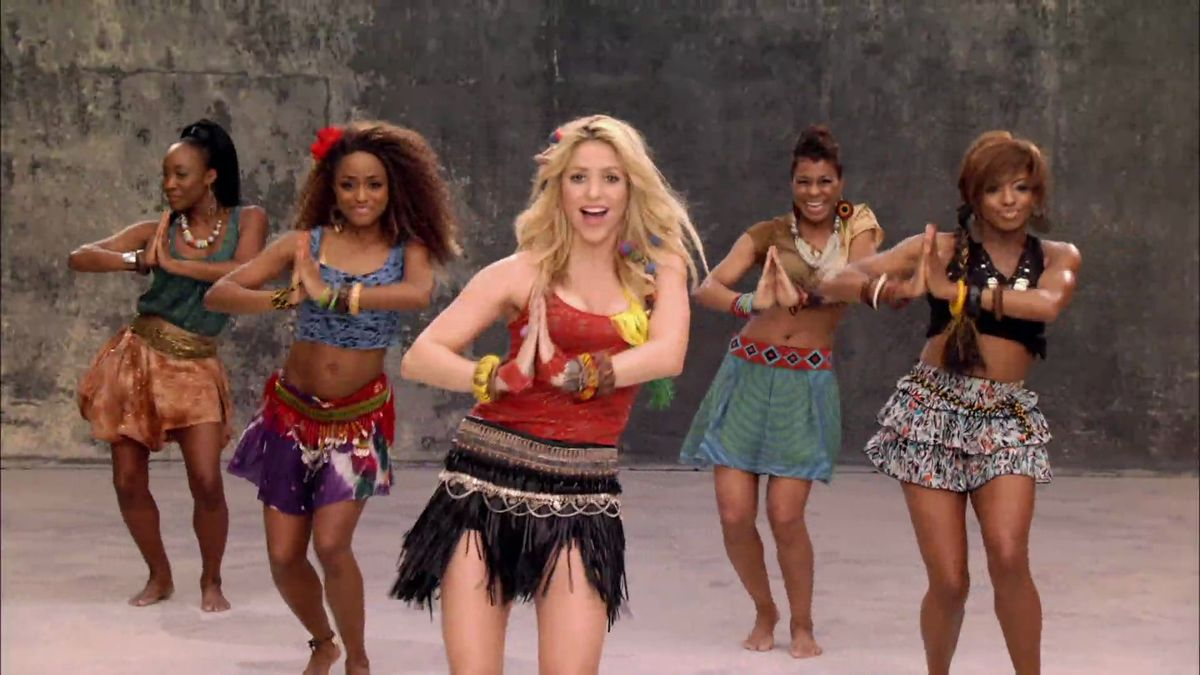
In 2010, FIFA selected Shakira to lead “Waka Waka (This Time for Africa),” the official song of the first World Cup hosted on African soil. The song became a global phenomenon, but its musical foundation was not created in Colombia.
Its famous chorus was adapted from “Zangaléwa,” a song popularised by the Cameroonian group Golden Sounds. South African band Freshlyground appeared on the track, but Shakira remained the unmistakable face, voice and primary beneficiary of the campaign.

Sixteen years later, the conversation has returned.
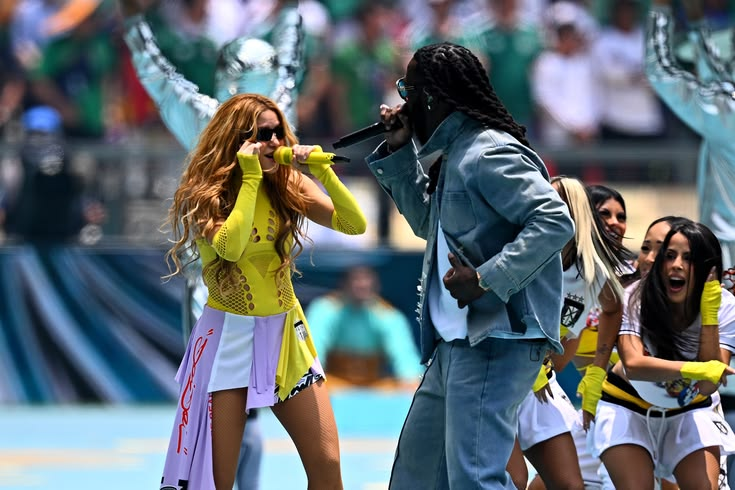
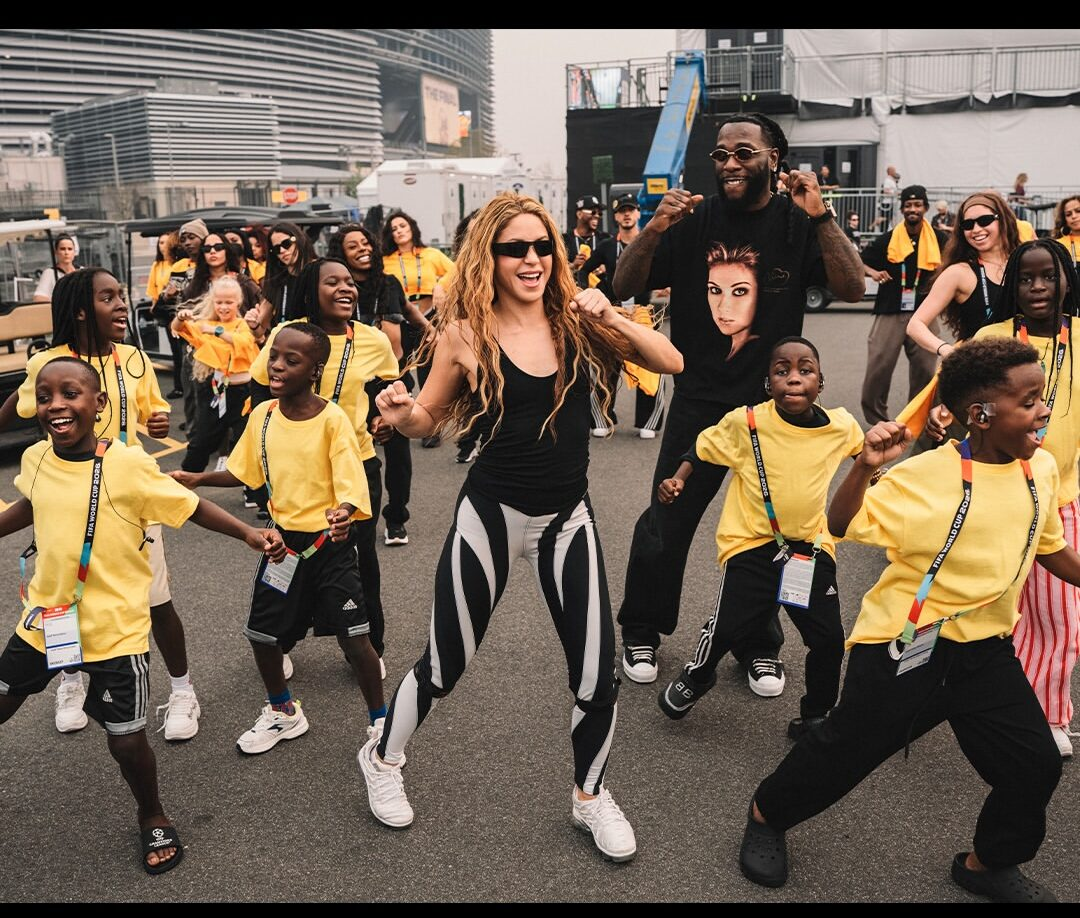
For the 2026 World Cup, Shakira was once again positioned at the front of an African-influenced FIFA release, this time alongside Nigerian superstar Burna Boy. Burna Boy is not an emerging act in need of international validation.
He is a Grammy-winning global performer who sells out arenas, headlines festivals and commands audiences across Africa, Europe and North America.
Yet even here, the African artist appears beside a familiar international face rather than being trusted to carry the moment independently.
That raises an uncomfortable question: does FIFA genuinely celebrate African creativity, or does it only consider African sound commercially safe when a non-African superstar is placed in front of it?
Africa’s Sound, Someone Else’s Spotlight
The issue is not Shakira’s talent.
She is one of the most successful pop stars of her generation, and “Waka Waka” became one of the most recognisable football songs ever released. The problem is the pattern surrounding her selection.
When FIFA wants African rhythm, African language, African dancers or African cultural symbolism, why does it repeatedly appear to require a globally familiar non-African star to package it?
That decision sends a message, whether FIFA intends it or not.
African creativity is good enough to inspire the music. African culture is colourful enough to shape the visuals. African children, communities and landscapes are useful enough to create an emotional backdrop.
But African artists are seemingly not trusted enough to stand alone as the face of the campaign.
Other African musicians have appeared on FIFA-related songs. Davido featured on “Hayya Hayya” for the 2022 World Cup alongside Trinidad Cardona and Aisha. Burna Boy is included in the 2026 conversation. Other internationally successful acts have also been placed in collaborative line-ups.
But appearing on a song is not the same as fronting it.
Featuring Is Not the Same as Leading
Music billing matters.

The artist whose name appears first normally becomes the person audiences associate most strongly with the song. That artist dominates the promotional images, interviews, headlines, playlists and long-term cultural memory surrounding the release.
Most casual listeners remember “Waka Waka” as Shakira’s World Cup song.
Freshlyground’s contribution is essential to the song’s African identity, but the South African group is rarely given equal space in the way the song is remembered internationally. The Cameroonian origins of the chorus are even less widely acknowledged.
This is why repeated feature credits cannot be treated as proof that African artists have received equal representation.
A featured artist may gain exposure, but the lead artist receives ownership of the moment.
That ownership can increase streaming numbers, expand international bookings, attract brand partnerships and permanently connect an artist’s identity to the world’s biggest sporting event.
African musicians have repeatedly been invited into the room. The concern is that FIFA still appears reluctant to hand them the keys.
The New Controversy Goes Beyond Music
The debate surrounding the 2026 song has also expanded beyond artist billing.
A short clip from the music video triggered criticism online after viewers accused it of presenting Africa through familiar images of children, huts, desert-like landscapes and rural poverty.
Some critics argued that the imagery reinforced an outdated idea of Africa as a continent defined mainly by villages and deprivation. Others questioned why African imagery was being used so heavily for a World Cup being hosted in the United States, Canada and Mexico.
The criticism became intense enough for viewers to accuse the video of promoting harmful and racist stereotypes. At the time of the report, neither Shakira nor her team had publicly responded to the backlash.
The reaction matters because Africa has spent decades being represented internationally through an extremely narrow visual language.
The continent contains megacities, luxury districts, technology companies, fashion capitals, universities, financial centres, contemporary art scenes and some of the world’s fastest-growing entertainment industries.
Yet when global campaigns want audiences to recognise “Africa” immediately, they often return to the same shortcuts: dusty roads, barefoot children, wildlife, huts and empty landscapes.
Those realities may exist in parts of Africa, just as poverty and rural communities exist on every continent. The problem begins when they are presented as the continent’s defining or most authentic identity.
Africa is not offended by the existence of villages.
Africans are frustrated by being shown as though villages are all they have.
Is FIFA Racist?
Calling an organisation racist is a serious accusation, and the current evidence does not prove that FIFA officials deliberately set out to discriminate against African artists.
There is no public document showing executives explicitly deciding that an African musician should not lead a World Cup anthem.
But racism does not always require an openly racist statement.
It can also appear through repeated institutional choices: who is trusted to lead, who is considered commercially reliable, whose image is placed at the centre and whose culture is treated mainly as supporting material.
FIFA’s pattern deserves scrutiny because the outcome keeps looking familiar.
African music is welcomed.
African culture is borrowed.
African performers are invited to participate.
But when the most visible credit is assigned, the organisation repeatedly looks elsewhere.
That may not prove deliberate racism, but it does expose a representation problem FIFA should no longer be able to dismiss as coincidence.
Perhaps FIFA once believed an African artist could not independently carry a global campaign.
That argument would already have been questionable in 2010. In 2026, it is indefensible.
African artists now dominate international charts, headline major festivals, win global awards and attract billions of streams.
Burna Boy, Tems, Rema, Davido, Wizkid, Tyla, Ayra Starr, Asake and several others have built audiences far beyond the continent. Afrobeats and amapiano have reshaped global pop music, influencing artists, producers and dance culture across the world.
FIFA does not need to attach an African musician to a Western or Latin American star to make the song globally relevant.
The African artist is already global.
What appears to be missing is not talent, reach or commercial viability. It is institutional confidence — the willingness to give an African artist full ownership of the platform.
What FIFA Should Do Next
The solution does not require another diversity campaign or a carefully worded statement about inclusion.
FIFA should commission an African artist to lead an official World Cup anthem.
Not as one name among four, a featured vocalist, and absolutely not as the source of a sample while someone else becomes the face of the song.
The artist should receive first billing, creative authority and the full promotional machinery FIFA has previously placed behind international stars.
FIFA has already demonstrated that it values African rhythm, African collaboration and African cultural imagery.
What it has not demonstrated is the willingness to trust an African artist to stand at the front of the stage without a globally familiar non-African “chaperone.”
Until that changes, the message remains difficult to ignore:
African sound is welcome, marketable, and African artists can participate.
But African artists leading the world on their own terms are still being asked to wait.