Ibadan Opposition Summit Ignites Political Firestorm and Defiance
The recent National Opposition Summit in Ibadan, aimed at uniting opposition forces for the 2027 presidential election, has ignited significant controversy. While attendees strategized for a single candidate, Omoyele Sowore rejected the initiative as "recycled failure," and the ruling APC condemned Governor Seyi Makinde's "Operation Wetie" remarks as inciting violence, further mocking former Vice President Atiku Abubakar for allegedly dozing during the proceedings.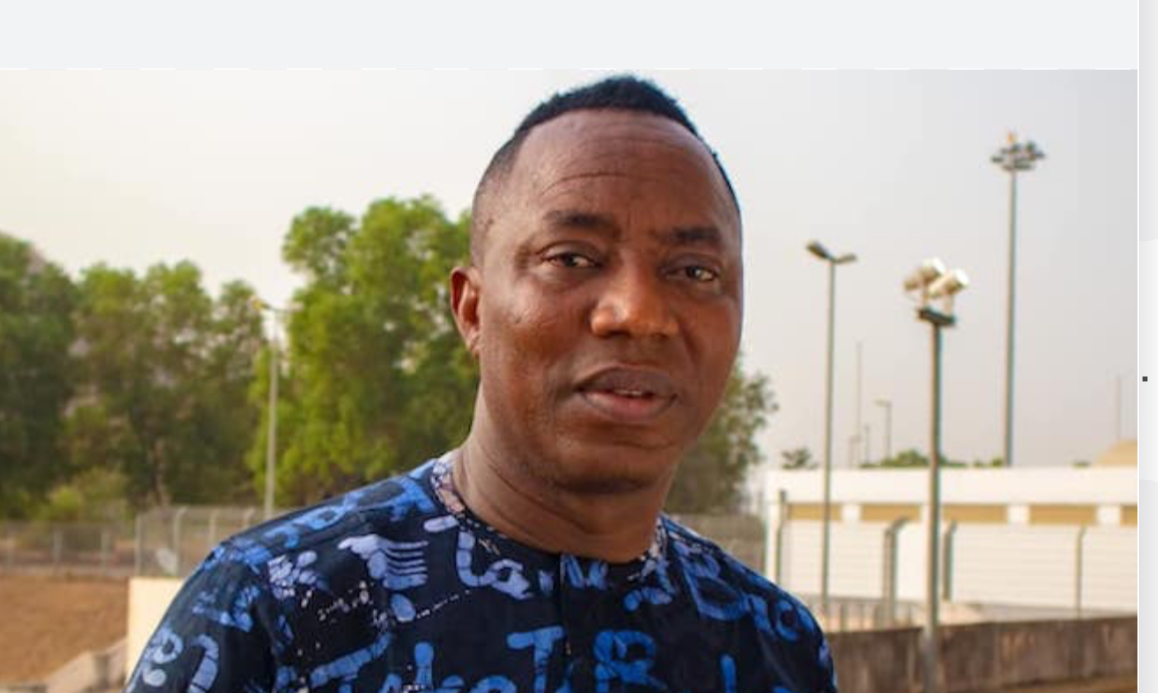
The National Opposition Summit, recently convened in Ibadan, Oyo State, aimed to unite various opposition leaders to present a single presidential candidate for Nigeria's 2027 general election. The coalition reportedly includes the African Democratic Congress (ADC), a faction of the Peoples Democratic Party (PDP) chaired by Kabiru Turaki, and the New Nigeria People’s Party (NNPP), among others.
However, Omoyele Sowore, the presidential candidate of the African Action Congress (AAC) in the 2023 election, publicly rejected his invitation to the summit. He described the gathering as an “attempt by entrenched political figures to rebrand themselves” and insisted that politicians responsible for years of stagnation and corruption cannot suddenly become agents of change. Sowore stated that Nigerians deserve a genuine alternative, not “recycled failure,” and affirmed that the AAC would not partake in what he termed a “political charade” designed to rebrand failed politicians. He emphasized the need for a decisive break from existing political structures rather than a mere reshuffling of the same actors, further criticizing both the ruling All Progressives Congress (APC) and major opposition parties like the PDP, ADC, and Labour Party for perpetuating a cycle of “decadence and deception.”
Oyo State Governor Seyi Makinde, who hosted the summit, sparked controversy with his remarks warning against growing attempts to consolidate legislative control under one party. He invoked the historical memory of “Operation Wetie,” cautioning that current political developments echoed troubling precedents. “For those that are carrying on as if there’s no tomorrow, they should remember that ‘Operation Wetie’ started from here. This is the same Wild Wild West,” Mr. Makinde stated, referencing Ibadan’s historical role.
“Operation Wetie” refers to a period of intense political violence in Nigeria’s Western Region during the mid-1960s, with Ibadan at its core. The Yoruba phrase, meaning “wet him,” described a brutal tactic where political opponents, their homes, and properties were doused with petrol and set ablaze. This violence followed the highly disputed 1965 regional elections, widely believed to be rigged against the opposition, contributing to a breakdown of law and order in the region, often called the “Wild Wild West.” It is considered a significant event that heightened political instability in the First Republic, preceding the military intervention of 1966.
The All Progressives Congress (APC) sharply criticized Governor Makinde’s comments, with its National Publicity Secretary, Felix Morka, describing them as dangerous, reckless, and unbecoming of a sitting governor. The APC accused Makinde of inciting violence and undermining national stability, urging security and intelligence agencies to take the matter seriously to safeguard lives and property. Morka warned that such rhetoric could fuel unrest, lawlessness, and instability, and insisted that constitutional immunity does not shield public officials from accountability when national security is threatened.
Beyond condemning Makinde’s remarks, the APC dismissed concerns about a drift towards a one-party state as an attempt by opposition leaders to mask their internal dysfunction. Morka attributed the opposition’s struggles to “self-inflicted injuries arising from anti-democratic practices, miserably poor leadership, internal contradictions, utter disregard for due process and the rule of law, persistent factionalization, and the desperate and dissonant presidential ambitions of their leaders.”
Morka specifically accused former Vice President Atiku Abubakar of destroying the PDP by ruthlessly confiscating its 2023 presidential ticket in violation of its constitutionally entrenched rotational zoning formula. He also claimed that Peter Obi, the Labour Party’s 2023 presidential candidate, effectively subverted his party through his “restless nomadic disposition” across parties. Furthermore, the ADC-led coalition was described as “stillborn,” undermined by internal power struggles among “marauding opposition figures.”
Adding to the criticism, APC National Secretary Ajibola Basiru mocked Atiku Abubakar after a photo circulated showing him apparently dozing during the Ibadan summit. Basiru shared the image on Facebook with a sarcastic caption, drawing numerous critical and humorous reactions from users. Basiru also questioned the legitimacy of the summit, arguing it did not constitute a formal meeting of political parties without prior authorization from their National Working Committee or National Executive Committee. The summit, nevertheless, included prominent figures like Peter Obi, Aminu Tambuwal, Rabiu Kwankwaso, David Mark, and Rauf Aregbesola.
In a communiqué issued after the meeting, the participating opposition parties announced plans to field a single candidate for the 2027 presidential election and called for urgent amendments to the Electoral Act 2026, also expressing concerns about the leadership of the Independent National Electoral Commission (INEC). Despite the mocking, Atiku Abubakar later posted on Facebook, emphasizing a unifying tone and the need for a united front to “defend and sustain our democracy.” The APC, however, affirmed its commitment to strengthening democratic institutions, upholding the rule of law, and delivering on the Renewed Hope Agenda for all Nigerians, stating it would not be drawn into managing the affairs of opposition parties.