Crime's New Tool: Suspect Allegedly Used ChatGPT for Body Disposal Tips
A former University of South Florida student has been charged with the premeditated murders of two USF doctoral students from Bangladesh, his roommates. Prosecutors revealed the suspect had asked ChatGPT about disposing of a human body days before the victims went missing, adding a chilling dimension to the case. The bodies were discovered after an extensive investigation involving digital forensics and physical evidence found at their shared apartment.The man charged with killing two University of South Florida doctoral students, Zamil Limon and Nahida Bristy, looked up ways to hide a body.
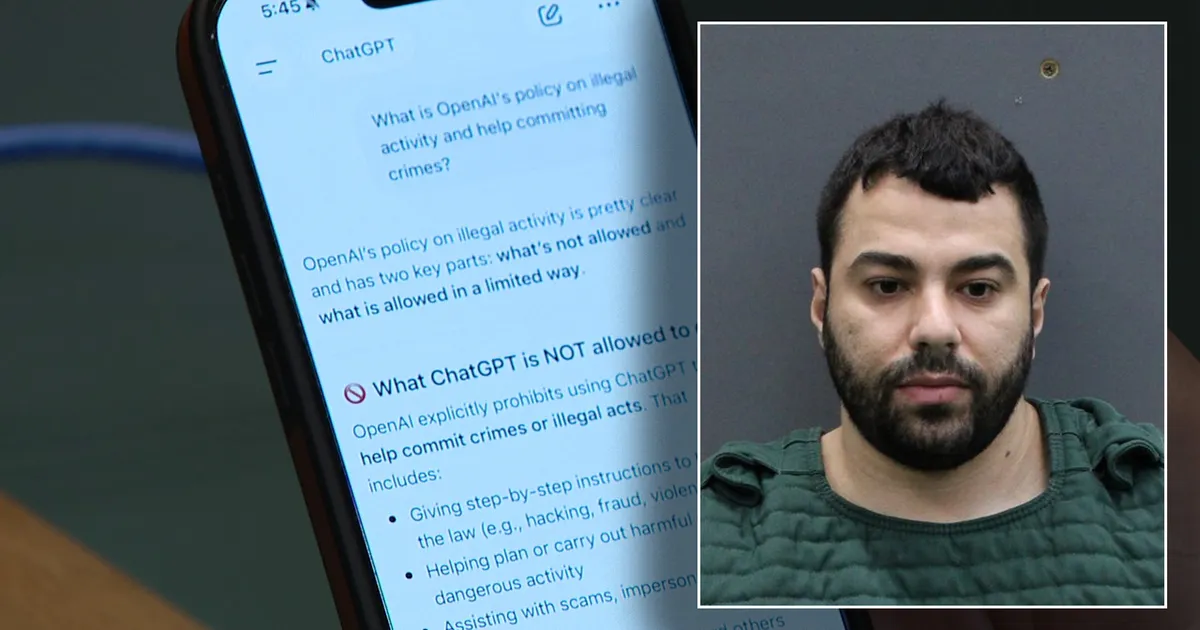
The prosecutors even say that he asked ChatGPT what would happen if someone was put in a garbage bag and thrown in a dumpster, and how it could be detected.
Hisham Abugharaibeh, 26, was charged after investigators found Limon’s remains on Friday on the Howard Franklan Bridge. An autopsy revealed multiple sharp force injuries.
He also queried about changing a car's VIN identification number and possessing a gun at home without a license, to which ChatGPT responded that the body-related question sounded dangerous.
Before Limon and Bristy disappeared on April 16. Limon was last seen at the off-campus apartment complex he shared with Abugharbieh, while Bristy was last seen at a campus science building.
Limon was pursuing studies in geography, environmental science and policy, and Bristy was a Ph.D. candidate in chemical engineering, described by her alma mater, Noakhali Science and Technology University, as a talented and promising student.
The investigation began on April 17 when a friend reported being unable to reach both Bristy and Limon.
The next day, police investigators searched Bristy’s campus office, where they found her purse, lunchbox, MacBook, and iPad, suggesting she had not left campus voluntarily.
At Limon’s off-campus apartment, detectives questioned Limon’s two roommates, noticing Abugharbieh’s left pinky finger was bandaged.
Despite denying any involvement in Limon’s disappearance, a third roommate provided crucial information, stating that Abugharbieh had used a cart overnight on April 16 to move cardboard boxes from his room to the trash compactor.
Further investigation at the trash compactor yielded chilling discoveries: Limon’s wallet, campus ID badge, credit card, eyeglasses, and clothes that appeared to be stained with blood.
Detectives also found blood trails leading from the kitchen to Abugharbieh’s bedroom, with more blood visible inside his room.
In Limon’s bedroom, Bristy’s campus ID and credit cards were found, strongly indicating that she had been at the apartment prior to her disappearance.
Cellphone location data and license plate reader information played a critical role, showing that his car and Limon’s phone had both been on the Howard Frankland bridge and Clearwater Beach.
Then utilizing location data from his phone, detectives focused their search around the bridge, ultimately discovering a trash bag containing Limon’s body.
The medical examiner later confirmed that Limon had sustained numerous stab wounds.
Abugharbieh, a native-born U.S. citizen, was initially taken into custody on Friday at his family’s home, following a report of domestic violence.
Officers, responding to the domestic violence call just north of the campus, were able to secure his relatives, but Abugharbieh then barricaded himself inside.
A SWAT team, accompanied by a drone, a robot, and crisis negotiators, responded to the scene.

He eventually emerged with his hands raised, reportedly wearing only a blue towel. His initial preliminary charges included unlawfully moving a dead body, failure to report a death, tampering with evidence, false imprisonment, and battery, which later escalated to the murder charges.
University records indicate that Abugharbieh had attended USF from Spring 2021 through Spring 2023, pursuing a Bachelor of Science in Management, but was not currently enrolled.
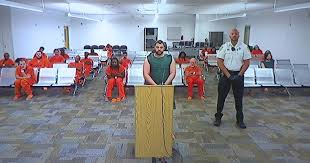
He was ordered held without bond, with a hearing scheduled for Tuesday, and an attorney from the public defender’s office in Tampa stated they would not comment on Abugharbieh’s case.