How AI Is Making Cybercrime Cheaper, Faster, and More Dangerous for Africa
Cybercrime in Africa is exploding as hackers use AI and cheap tools to launch thousands of attacks. Here’s how it works and why it’s getting worse

Hackers no longer need to be experts. New tools are letting them attack thousands of targets at once, and Africa is one of their top destinations.
The Threat Is Growing, and It's Getting Easier to Launch
Cybercrime used to take skill. Writing malicious software required months of work, technical expertise, and careful testing. That's no longer the case.
The March 2026 HP Wolf Security Threat Insights Report, which reviews attack patterns tracked in the final quarter of 2025, shows that hackers are now reusing cheap, off-the-shelf malware components across multiple campaigns.
They're combining these building blocks with AI coding tools to produce attacks faster than ever, often at minimal cost.
The result is a new kind of cybercrime: less precise, but far more widespread and harder to stop.
Why Africa Is Being Hit Harder
As more African businesses move online, adopt digital payments, and shift to cloud services, they're also becoming easier targets. Cybercriminals are paying attention.
According to the HP report , organizations across Africa face an average of 3,153 cyberattacks every week roughly 60% more than the global average. In Nigeria alone, the average company is hit by close to 4,700 attacks weekly. Most of these aren't highly crafted hacks. They're automated scripts scanning for a single weak point.
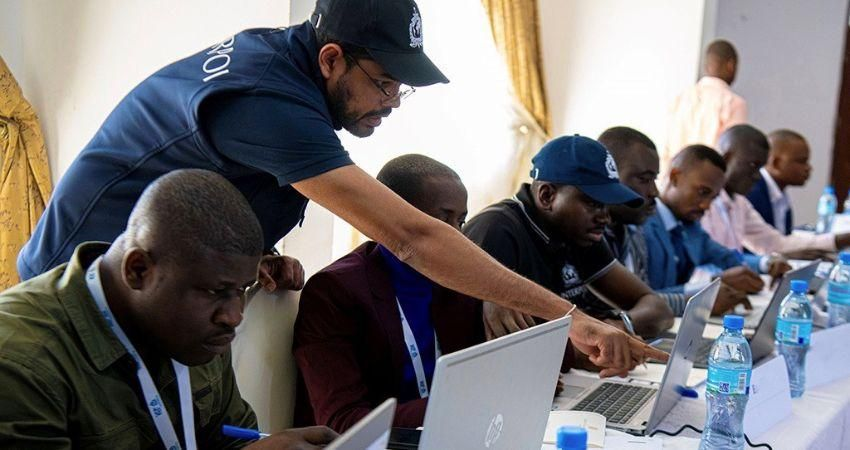
Cybercrime is estimated to cost African economies around $10 billion every year . For small businesses, the damage can be permanent. In South Africa, studies show roughly 22% of smaller businesses that get hit by ransomware end up shutting down.
How AI Is Changing the Way Attacks Are Built
AI coding assistants, sometimes called "vibe coding" tools, let developers write working software just by describing what they want in plain language. Cybercriminals have figured out how to use the same technology to build malware.
The HP report found that some malware loaders showed clear signs of being built with AI coding tools, pointing to a growing trend of attackers leaning on AI assistants to speed up development.
The key advantage for attackers is variation. Each time they tweak the code slightly, it looks different to security software. Traditional antivirus tools work by matching files against a database of known threats.
When every version of the malware looks a little different, that matching process fails. In Q4 2025, at least 14% of email threats caught by HP Wolf Security had already slipped past one or more email security filters, up from the previous quarter.
The Rise of "Flat-Pack" Malware
Just as you'd buy flat-pack furniture and assemble it at home, cybercriminals are now buying pre-made malware components online and putting them together for specific attacks.

HP researchers found that attackers reused the same intermediate malware stage across completely different campaigns, swapping out lures and file types while keeping the core infection process identical, delivering payloads like DarkCloud and AsyncRAT with minimal extra effort.
Some of these components sell for less than $10 on underground forums. For an attacker, the economics are simple: the cost to launch is tiny, and even a small number of successful hits produces a profit.
Fake Websites That Look Completely Real
Building the malware is only half the job. Getting someone to run it is the other half, and that's where fake websites come in.
Attackers created fake websites impersonating Microsoft Teams, tricking users into downloading what looked like a legitimate installer.
The installer quietly delivered malware alongside the real Teams app, using a technique called DLL sideloading through a signed executable to install a backdoor called OysterLoader.

This kind of attack is called brand mimicry, copying the logos, colors, and layout of a trusted brand so convincingly that most users can't tell the difference. Attackers push these fake sites to the top of search results through a technique called SEO poisoning, exploiting how search algorithms rank pages.

In Africa, banks are frequent targets. Criminals create fake social media accounts posing as customer support for major banks, then direct frustrated customers to cloned banking websites designed to steal login details.
How the Deception Actually Works
Here's a typical attack sequence in simple terms:
Someone searches online for software like Microsoft Teams. A fake website appears near the top of the results.
The user clicks, downloads what looks like the real installer, and the app works fine, so they assume everything is normal. But in the background, a hidden program has already been installed, giving attackers remote access to the computer.
HP researchers also found that attackers hid malicious code inside images downloaded from archive.org, a legitimate and widely trusted website, making the traffic look normal to security tools watching for suspicious connections.
What This Means Going Forward
The shift in cybercrime isn't just about smarter technology. It's about volume and deception. Attackers are becoming more operationally efficient without necessarily becoming more technically advanced, doing more with less, using shared tools and trusted platforms to stay under the radar.

For businesses across Africa, this means that firewalls and antivirus software alone aren't enough. The most dangerous attacks often look completely normal right up until the damage is done. Staying safe requires training staff to question what they download, where they click, and who they trust online, because the biggest security gap today isn't in the software. It's in the moment a person decides to click.