How Africans Can Shape Their Own Stories and Spaces in the Digital Age
With resources like Google Maps, Archivi, Wikipedia, and National Geographic, the story of Africa—its past, present, and future, is yours to tell.
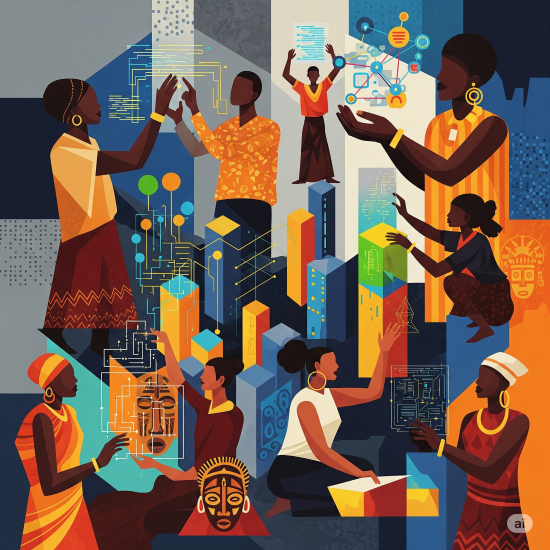
In the age of digital storytelling, the way a place is seen often defines how it is treated. For much of Africa, that view has long been framed by outsiders: foreign journalists, international organizations, and even travelers with smartphones. The resulting picture has been one of extremes, either poverty-stricken desolation or glossy safari imagery that strips places of nuance, history, or pride.
The problem is not just representation; it’s misrepresentation. But what if ordinary Africans could reclaim the lens? What if citizenship today means not just voting or protesting, but curating and contributing to the global narrative of one’s own community?
Across the continent, a quiet but significant shift is underway: citizens are beginning to document their world, not for profit, but for posterity.
From uploading geotagged photos of street corners to contributing to Wikipedia articles in local languages, there is a growing consciousness that the digital realm is not just a marketplace or playground, it is a battleground for visibility, respect, and autonomy.
Citizenship in the Information Age
Citizenship is often reduced to what happens every four or five years at the ballot box. But in a connected world, civic duty also includes being a custodian of your local knowledge, history, geography, and culture. That means not waiting for a documentary filmmaker to stumble into your village to “tell your story.” It means picking up your phone and telling it yourself.
One of the most accessible ways to do this is through initiatives like the Africa Wiki Photo Challenge, an annual campaign that encourages Africans to upload pictures of their communities, cultures, architecture, food, and people to Wikimedia Commons.
These images are not just pretty pictures; they serve as essential visual references for Wikipedia articles. If someone Googles “Benin street food” or “Ethiopian building designs” the photo they see might be yours.
Become a Wikipedia Editor

Image Credit: Unsplash
The African continent is still grossly underrepresented on Wikipedia, the world’s largest encyclopedia. A large part of the problem is a lack of editors from Africa. Wikipedia is written by volunteers. If Africans aren’t editing or creating pages, their histories, heroes, languages, and local innovations simply don’t get the documentation they deserve.
Signing up as a Wikipedia Contributoris surprisingly easy. You don’t need a degree or a journalism background. All you need is a passion for your community and a desire to contribute accurate, well-sourced information. Imagine updating your hometown’s Wikipedia page to include its real population, notable figures, festivals, or ecological features.
Picture This: Becoming a Visual Archivist

Image Credit: Unsplash
The phrase “stock photography” rarely conjures up images of real African life. Try searching for “African office” or “African modern family” on major stock image sites and you’ll often find unrealistic, outdated, or even demeaning visuals. This is where African photographers, both amateur and professional, can step in. Platforms like Shutterstock, Adobe Stock, and Getty Images are constantly hungry for new, authentic content.
By uploading high-quality, diverse images of African life—both the polished and the unpolished—you don’t just earn money; you help reshape how Africa is seen by businesses, media, and educators around the world. Take photos of tech hubs in Nairobi, student life in Dakar, bustling markets in Accra, or quiet moments in rural Lesotho. Showcase joy, struggle, ambition, and contradiction.
Social Insight
Navigate the Rhythms of African Communities
Bold Conversations. Real Impact. True Narratives.
For the more documentary-minded, consider submitting to platforms like National Geographic’s Your Shot, where citizen photographers from around the globe share powerful, often intimate photos of their environments. These images have the potential to reach global audiences and even be featured in print.
But visual archiving doesn’t need to focus only on the present. Across Africa, a rich visual history is hidden in shoeboxes, family albums, and forgotten filing cabinets. Old photographs, postcards, ID documents, and newspaper clippings tell stories that are rapidly being lost.
The Power Of Archiving Platforms

Image Credit: Unsplash
This is where platforms like Archivicome in—a Nigerian-born, pan-African digital archive that allows anyone to upload scanned images of historical photographs, newspaper articles, documents, and other culturally significant materials. By contributing to Archivi, individuals help build a living public archive of African histories, one that is owned by Africans and accessible to all.

Other initiatives such as African Digital Heritage, The Nest Collective’s “Return to Sender”, and the South African History Archive (SAHA) also encourage contributions from individuals who want to preserve their family histories, local cultures, or social movements. These platforms are helping reshape the memory of the continent—not through textbooks, but through the photos, pamphlets, posters, and stories passed down through generations.
Even if you only have a few fading photographs of a graduation, a protest, or a traditional ceremony, those items are historically important. They fill in the everyday details that formal archives often ignore. Together, they help tell the full story of African life.
Becoming a visual archivist, then, is not just about using your camera to document what is happening now. It is about using whatever you have—old or new—to preserve and project African realities into the future. Your contribution could become a reference point for scholars, artists, teachers, or a curious teenager 50 years from now, searching for a piece of their past.
Mapping the Continent: One Street at a Time

Image Credit: Unsplash
Another critical and often overlooked aspect of civic engagement in the digital era is geospatial mapping. If your neighborhood doesn’t exist on Google Maps, does it really exist in the eyes of the world? Many African communities remain under-mapped, making it harder for emergency services, delivery apps, tourists, or even government services to operate effectively. And when places are invisible on digital maps, they become invisible in policy and planning.
Fortunately, individuals can change this. Platforms like Google Maps Local Guides,Google Maps Street View,Waze, and OpenStreetMap allow users to contribute data about roads, businesses, landmarks, and even footpaths. Local governments, too, can be encouraged by citizens to verify and add essential infrastructure and services to these platforms. If a new health clinic opens, map it. If a dangerous pothole appears on a main road, mark it.
There’s also Mapillary,an open platform where users upload geotagged street-level photos, helping improve digital maps for navigation and urban planning. Through a smartphone and a bit of patience, anyone can become a street cartographer of their own town.
Accessible Language and Culture
Africans speak over 2,000 languages, yet most online content is in English, French, or Arabic. By contributing to Wikipedia in African languages, creating YouTube tutorials in your mother tongue, or even starting a podcast that discusses local issues in Kiswahili, Yoruba, Amharic, or Tigrinya, you enrich the digital ecosystem with African linguistic diversity.
This is also about preserving cultural knowledge. If your grandmother has recipes, proverbs, or healing practices passed down orally, document them,with her consent. Turn them into blog posts, audio recordings, or eBooks. The more local knowledge we archive digitally, the less likely it is to disappear.
Radio Renaissance

Social Insight
Navigate the Rhythms of African Communities
Bold Conversations. Real Impact. True Narratives.
Another everyday act of civic participation often overlooked is calling in to local radio stations to report traffic conditions, hazards, or service disruptions. These real-time updates help other commuters navigate safely and also alert authorities to problems that need fixing. In many African cities where digital infrastructure may lag, radio remains one of the most immediate and democratic platforms for public dialogue. By simply sharing what you see on the road, you’re contributing to a more responsive, connected community.
Civic Responsibility Reimagined
Civic behavior is no longer confined to the walls of government offices or ballot stations. It’s in your pocket, waiting to be activated through your camera, your internet connection, and your voice. Every African who contributes to a global platform is doing the vital work of digital citizenship,filling in the blanks left by history, policy, and stereotype.
Final Thought
In the end, the question is simple: Who gets to tell Africa’s story? For too long, the answer has been: anyone but Africans. But the tools are here. The platforms are open. The demand for authentic African perspectives has never been greater.
It’s time for Africans to tell their own stories, map their own streets, document their own cultures, and define their own futures. One photo, one word, one pixel at a time.