How A Nigerian AI startup Is Uplifting 140,000 Smallholder Farmers
Babban Gona is harnessing AI and finance to turn smallholder farmers in Northern Nigeria into rural entrepreneurs.
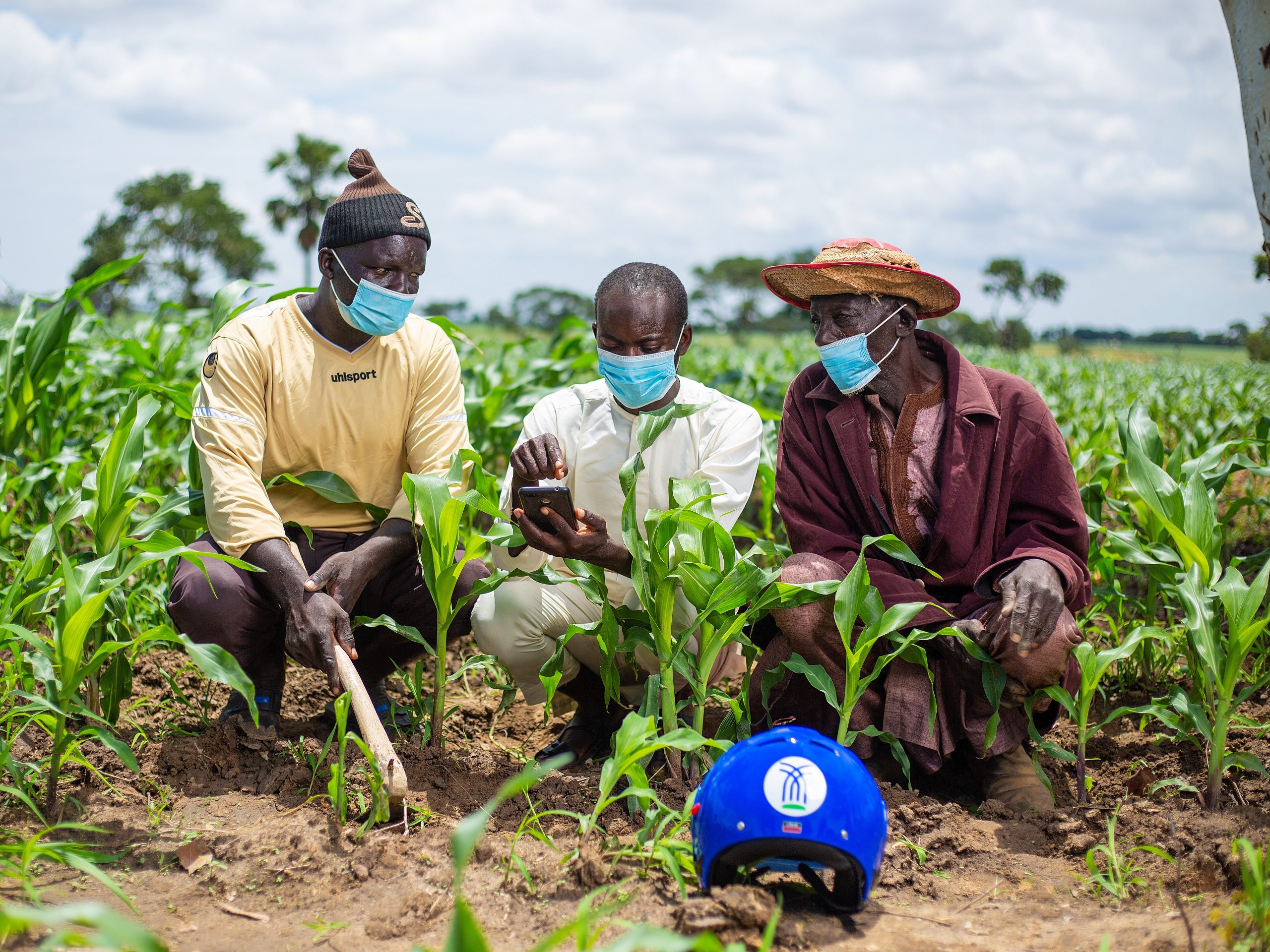
In the dry, dusty farmlands of Northern Nigeria, a quiet revolution is taking root. It’s not about genetically modified crops or big machines. It’s about something much more subtle—and potentially far more powerful: artificial intelligence, debt financing, and a vision for small-scale farmers to become rural entrepreneurs.
The company leading this charge is Babban Gona, a Nigerian agritech startup that just raised $7.5 million in debt funding from British International Investment (BII), the UK government’s development finance institution. But this isn’t your typical tech startup chasing urban markets. Babban Gona is turning its focus to rural communities often ignored by global investors.
Its mission? To radically transform the lives of 140,000 smallholder farmers in Northern Nigeria by 2029. And to do it with AI, education, and electric bikes.
From Seeds to Sales: A Full-Service Model for Small Farmers

Image Credit: Huruma Fund
Unlike traditional agribusiness models that focus on a single part of the farming process like seeds or sales, Babban Gona offers end-to-end support. Using AI as a backbone, the company provides everything a farmer might need: credit, training, farming inputs, harvest support, storage facilities, and access to markets.
This comprehensive approach is crucial in a region where farmers face mounting challenges: climate change, lack of financing, poor infrastructure, and limited access to education or technology.
Babban Gona’s model is not just about giving tools to farmers—it’s about turning them into entrepreneurs. Through a franchise system, high-performing farmers are given the opportunity to manage small, localized businesses. They supply their peers with farming inputs and working capital, creating a peer-to-peer support network that lifts entire communities.
And when these micro-enterprises succeed? Babban Gona helps connect them with local banks so they can grow even more.
Investing in Climate Resilience

Image Credit: Huruma Fund
Latest Tech News
Decode Africa's Digital Transformation
From Startups to Fintech Hubs - We Cover It All.
While boosting incomes is central to the company’s mission, Babban Gona is also laser-focused on climate resilience, a critical issue for agriculture in sub-Saharan Africa, where droughts and erratic weather patterns are becoming the norm.
Through the new funding from BII, Babban Gona is scaling its climate-smart offerings. This includes drought-tolerant seeds, eco-friendly farming inputs, and even multi-peril area yield insurance—a safety net that helps farmers recover from unexpected weather disasters.
“By backing this pioneering franchise model, we are not only addressing a critical financing gap but also helping to build a more resilient and productive agricultural sector,” said Benson Adenuga, BII’s regional director for West Africa.
The investment is part of BII’s broader push into African agriculture, following recent stakes in firms like AgDevCo and Johnvents. But Babban Gona stands out for its integration of AI, not as a buzzword, but as a deeply practical tool for everyday farmers.

AI in the Fields
Babban Gona started experimenting with artificial intelligence back in 2018, long before ChatGPT and generative AI captured global headlines. The company now uses an AI system trained on over 2 million images to help farmers diagnose plant health problems—just by taking a photo.
For farmers with limited access to agricultural extension workers or internet connections, this technology can be transformative. It means faster, cheaper decisions and higher productivity, without the need for in-person experts.
And the use of AI doesn’t stop at farming. In rural communities where Babban Gona operates, the company is also using AI to power after-school literacy programs for children and provide antenatal screening for women. The goal is to use technology to fill the education and health gaps that often come with rural poverty.
According to Kola Masha, Babban Gona’s founder and managing director, the company's early work in AI earned it recognition on the global stage. “We were one of 12 organizations around the world invited to a monastery in Lake Como,” he said, “to discuss the role of AI in global development with people from Nvidia, OpenAI, and Google.”
The Bicycle Revolution
But perhaps the most surprising piece of Babban Gona’s vision for rural Nigeria is this: a Tesla for the countryside.
Masha revealed that the company is now working on deploying two-wheeled electric bikes; along with the charging stations to power them in farming communities. The aim? To reduce transportation costs, cut carbon emissions, and make farming more efficient.
Latest Tech News
Decode Africa's Digital Transformation
From Startups to Fintech Hubs - We Cover It All.
In remote areas where farmers often walk miles to their fields or local markets, electric bikes could be a game-changer. They enable faster transportation of goods, better access to services, and even opportunities for women and youth to participate more actively in agricultural commerce.
It’s a bold idea, but one grounded in Babban Gona’s track record of combining tech innovation with community development.
A Model for the Continent?
Babban Gona means “Great Farmer” in Hausa. Its model could serve as a blueprint for other countries facing similar challenges: small farms with low productivity, limited access to capital, and growing threats from climate change.
And with global interest in AI’s real-world applications rising, Babban Gona offers a refreshing counter-narrative to Silicon Valley’s fixation on digital ad clicks and synthetic media. Here, AI isn’t about replacing humans, it’s about amplifying them, making their labor more productive, their incomes more stable, and their futures more secure.
The Road Ahead
As Babban Gona looks to expand its reach over the next four years, the stakes are high. If successful, the company won’t just be a tech story, it will be a development story, a climate story, and a story of rural innovation that could redefine the role of African farmers in the 21st century economy.
And it all started with a simple but radical idea: that the world’s most overlooked farmers deserve not just financial aid, but agency, tools, and technology to build their own futures.
Cover Image Credit: West Africa Trade Hub