Ghana's Fiscal Crisis: Gideon Boako Reveals Soaring Debt Amid Revenue Shortfalls
Dr Gideon Boako, Deputy Ranking Member on Parliament's Finance Committee, has criticized the government's fiscal strategy, citing persistent revenue shortfalls that compel borrowing and expenditure cuts. He highlighted significant misses in Q1 2026 revenue targets and questioned the swift return to the debt market post-IMF, urging intensified efforts in domestic revenue mobilization. Boako calls for the Finance Ministry to strengthen revenue generation and fiscal management to ensure sustainable financing of national projects and reduce debt dependence.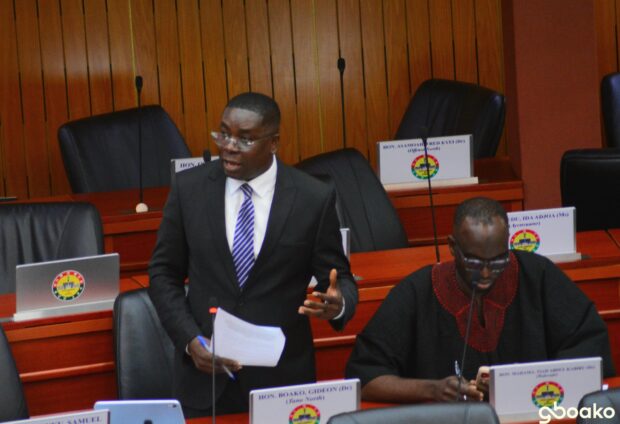
The Deputy Ranking Member on Parliament's Finance Committee, Dr Gideon Boako, has voiced serious concerns regarding the government's fiscal management, asserting that persistent revenue shortfalls are compelling the nation to rely on borrowing to finance critical national programmes, including education and essential investments. Speaking in Parliament on Tuesday, the Tano North MP underscored that weak revenue performance severely undermines the government's capacity to fund crucial sectors from domestic resources, leading to a problematic dependence on external financing.
Dr Boako substantiated his argument with official fiscal figures, highlighting significant shortfalls in the first quarter of 2026 alone. He revealed that VAT collection was below 6% of its target, while the NHIS Levy and GETFund both fell short by 29.9% of their respective targets. Furthermore, crude oil receipts were a mere 37% of the target, excise duties missed by 23%, and import duties were 14% below target. He stressed that when such shortfalls occur, the government is left with little choice but to either cut expenditure or resort to borrowing, particularly for critical outlays.
Building on this critique, Dr Boako accused the government of significantly reducing expenditure as a direct consequence of poor revenue performance during the first quarter of 2026. He stated that in this quarter alone, government revenue fell short by 4.5%, forcing a substantial 29% reduction in expenditure. This pattern of shortfalls and cuts was not isolated to 2026; Dr Boako noted that in 2025, government revenue fell short by 2.2%, leading to a 13% drop in overall expenditure and a 13.8% decrease in capital expenditure, impacting development projects.
The Tano North MP also questioned the government's renewed reliance on borrowing, expressing alarm that the country has returned to the debt market too swiftly after exiting the International Monetary Fund (IMF) programme. He argued that instead of immediately seeking new loans for key investments, the government should have concentrated on enhancing domestic revenue mobilisation. According to Dr Boako, this rapid return to borrowing indicates that the Finance Ministry and the management of national finances are doing