Ghana Demands Justice: Fallout from Afrophobic Attacks Sparks Evacuation Debate
Ghana's government has defended its evacuation of citizens from South Africa amidst afrophobic attacks, with Ernesto Yeboah attributing the violence to apartheid's enduring legacy and political dynamics. Meanwhile, Kofi Bentil of IMANI Africa is demanding South African multinational corporations operating in Ghana financially contribute to these evacuations, advocating for tougher diplomatic and economic measures against Pretoria.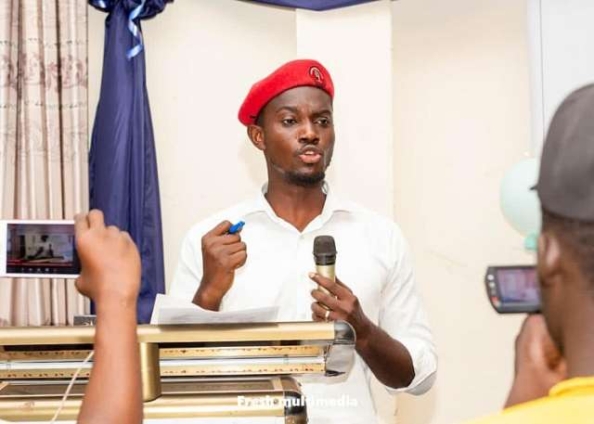
Ghana's government has strongly defended its decision to evacuate its nationals from South Africa following recent afrophobic attacks, a move that has drawn both praise and criticism. Ernesto Yeboah, leader of the Economic Fighters' League (EFL), vehemently dismissed South African opposition politician Julius Malema's questioning of Ghana's evacuation efforts as 'complete rubbish', asserting that the safety and welfare of Ghanaian citizens must always remain paramount. Mr. Yeboah commended Ghana's intervention as a demonstration of responsible leadership and a commitment to protecting its citizens, urging national pride in the government's mature response.
However, Mr. Yeboah also highlighted that the escalating wave of afrophobic attacks in South Africa cannot be fully comprehended without addressing the nation's profound socio-economic challenges and the lingering ramifications of apartheid. He underscored that many Black South Africans continue to endure severe economic hardships, with widespread poverty, unemployment, and inequality persisting decades after the official end of apartheid. Drawing from personal visits, Mr. Yeboah recounted the distressing scale of deprivation in some Black communities, describing informal settlements constructed from makeshift materials that he found difficult to believe without witnessing firsthand. He noted that conditions in these settlements were far worse than many low-income areas in Ghana, illustrating the severity by comparing it to an entire locality like Kokomlemle living in cardboard structures.
These continued economic disparities, particularly between Black and White South Africans, have generated widespread frustration, which Mr. Yeboah believes contributes significantly to hostility towards migrants from other African countries. He argued that South Africa's education system and successive governments have failed to adequately address historical injustices inherited from apartheid, fostering unresolved resentment and social tensions that fuel anti-foreigner sentiments. Furthermore, Mr. Yeboah suggested that Mr. Malema's comments were influenced by South Africa's competitive political landscape, where the Economic Freedom Fighters (EFF) lost ground to the MK Party. During the election campaign, the EFF's Pan-African stance was perceived as a vulnerability, as narratives suggesting migrants were taking jobs resonated with frustrated voters, leading to a political balancing act by Mr. Malema, who had previously challenged afrophobic sentiments but later criticized the evacuation.
Concurrently, Mr. Kofi Bentil, Vice President of the policy think tank IMANI Africa, has called for significant South African multinational corporate entities operating in Ghana to bear the financial cost of evacuating Ghanaian nationals. Mr. Bentil contended that the Ghanaian state should not solely shoulder the substantial fiscal burden of emergency repatriations while South African companies repatriate billions of dollars in profits from the Ghanaian market. He argued that these corporate organizations, benefiting immensely from integrated African markets, have a non-negotiable moral and structural responsibility to publicly condemn violence against fellow Africans and actively support affected communities, stating, 'Companies that make billions across Africa cannot remain silent when Africans are attacked in their home country. What the government is doing comes at a cost. They must bear part of the cost.'
Advocating for a fundamental shift in Ghana's traditional diplomatic engagement with Pretoria, Mr. Bentil insisted that repeated failures by a foreign nation to protect Ghanaian migrants should elevate the crisis beyond a standard immigration dispute. He asserted that such systemic violence constitutes a direct, hostile infringement on the nation of Ghana itself, declaring, 'When citizens of a country are under attack, the country itself is under attack.' Mr. Bentil commended the Ghanaian government's rapid evacuation efforts, recalling his prior advice for swift emergency airlifts. He also urged national unity, emphasizing that moments of acute national crisis should transcend partisan divisions and unite citizens in protecting supreme national interests. Moreover, he aggressively rejected the 'illegal migrant narrative' often used to rationalize the violence, stressing that international humanitarian law and basic human decency dictate that every person within a sovereign country's territory deserves total legal protection, irrespective of their documentation status.
Mr. Bentil described the recurring and bloody nature of the pogroms as undeniable evidence of a broader, systemic failure by South African authorities to definitively address xenophobia. He noted that decades of repeated incidents suggest the violence can no longer be dismissed as isolated occurrences, invoking the principle: 'When something happens once, it may be accidental. Twice may be a coincidence. By the third time, it becomes a pattern that demands accountability.' He also sharply criticized the African Union (AU) for its persistent inability to effectively respond to structural challenges affecting ordinary Africans. To compel a change in behavior, Mr. Bentil proposed that Ghana should initiate a thorough reassessment of aspects of its economic relationship with South African businesses if meaningful, permanent action is not taken to halt the attacks. While clarifying that he was not advocating for unlawful retaliation, he stressed that governments possess legitimate economic, fiscal, and regulatory tools to defend national interests. He concluded by asserting that all future bilateral engagements and corporate licensing regimes granted to South African companies must consider the treatment of Ghanaians and other Africans within South Africa, calling for a coordinated response involving diplomacy, legal action, and strategic economic pressure to end the cycle of violence, ensuring accountability and consequences for such actions.