Carbon Credit Catastrophe: Koko Networks Forced to Sell Assets!
Koko Networks, a clean-cooking company, is selling its assets after shutting down due to Kenya's refusal to approve carbon credit sales. The sale, managed by PwC, includes patents, factories, and its distribution network, highlighting the risks of businesses reliant on policy-dependent revenue. This event raises critical questions for climate-finance projects and investors in Africa.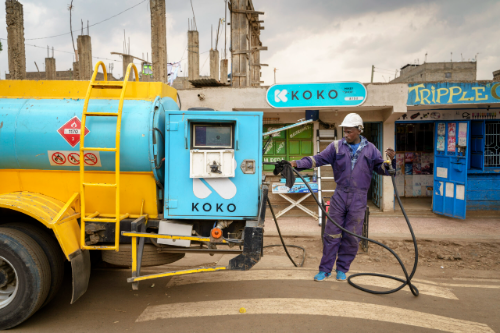
Koko Networks, a clean-cooking company, ceased operations in January after the Kenyan government withheld crucial approval required for its carbon credit sales. Administrators, led by PwC, have now initiated the marketing of Koko's assets, inviting expressions of interest from potential buyers by July 17 for transactions exceeding $15 million. This substantial threshold suggests a sale of the entire business platform rather than individual asset disposal.
The comprehensive package offered for sale includes Koko's patents, hardware designs, software, and its proprietary ethanol cooking system. Additionally, it encompasses a stove and fuel-canister factory located in Gujarat, India, along with the extensive distribution network that previously supplied over 3,000 automated fuel stations across Kenya. Prior to its shutdown, Koko Networks served approximately 1.3 million households and employed more than 700 individuals.
Koko's business model was fundamentally built on using income generated from carbon credits to subsidize the cost of its bioethanol fuel and smart stoves, making clean cooking affordable for its users. The business became unviable when Kenya declined to issue the necessary Letter of Authorisation, which was essential for selling carbon credits in certain international markets. This withdrawal of government approval directly impacted the company's ability to fund its core subsidy, rendering the fuel unaffordable for its target demographic.
Founded in 2013 by Gregg Murray, Koko Networks had attracted significant equity and debt funding from a diverse group of investors. These included Microsoft’s Climate Innovation Fund, Mirova, Verod-Kepple, and Rand Merchant Bank. Furthermore, the World Bank’s Multilateral Investment Guarantee Agency (MIGA) had provided a substantial $179.6 million guarantee to cover investments in the business.
The asset sale of Koko Networks serves as a stark illustration of the inherent risks involved in developing an energy business that heavily relies on a single source of policy-dependent revenue. Despite possessing a robust operational foundation, including a significant customer base, manufacturing facilities, fuel stations, and advanced technology, the affordability of its products was inextricably linked to income derived from carbon credits. The absence of state approval to sell these credits effectively dismantled Koko's financial structure, leading to its collapse.
The repercussions of Koko's shutdown extend beyond its immediate operations, impacting its former employees, investors, and the households it served, who may now be forced to revert to less clean cooking alternatives like charcoal or paraffin. This situation also prompts critical questions for the broader landscape of climate-finance projects across Africa. While carbon income can play a vital role in subsidizing products for low-income users, project developers remain highly exposed to unpredictable changes in regulation, evolving carbon-accounting rules, and fluctuations in buyer demand.
For any strategic buyer interested in Koko's assets, reusing its established technology and distribution network would necessitate the implementation of a completely new revenue model or a clear pathway to securing carbon credit approvals. The current sale will ultimately test the intrinsic value of Koko's infrastructure when decoupled from its original financing structure. The overarching lesson for investors is clear: even strong operating assets cannot mitigate the significant approval risk that arises when a business's viability is contingent upon government action and policy decisions.