Xiaomi Unveils Vision Gran Turismo EV Hypercar Bridging Virtual and Real-World Design
Xiaomi has unveiled its Vision Gran Turismo EV Hypercar Concept, becoming the first Chinese automaker to design a concept explicitly for the popular racing simulator. This life-size model, guided by design chief Tianyuan Li, redefines hypercar aerodynamics with features like Active Wake Control and a 0.29 drag coefficient. It hints at future design language and technological ideas for Xiaomi's production vehicles.
The Xiaomi Vision Gran Turismo Concept marks a major step in Xiaomi’s expanding ambitions in the automotive world.
This is a proof showing how the Chinese tech giant is moving beyond smartphones and consumer electronics into high-performance electric mobility.
Known primarily for its software and mobile ecosystem, Xiaomi entered the automotive sector in 2024 with the Xiaomi SU7 sedan, followed by the high-performance Xiaomi SU7 Ultra.
The 1,527-horsepower SU7 Ultra was later introduced into the racing universe of the Gran Turismo series in January 2026, making Xiaomi the 36th automotive brand to feature in the long-running franchise developed by Polyphony Digital.
Xiaomi’s presence in the franchise reached a new milestone with the unveiling of the Vision Gran Turismo concept, created specifically for the game at the invitation of Kazunori Yamauchi, the creator of Gran Turismo.
The concept places Xiaomi alongside prestigious brands such as Ferrari, Lamborghini, Porsche, Mercedes-AMG, and Jaguar that have contributed vehicles to the series.
Unveiled as a full-scale model in Barcelona, the concept also makes Xiaomi the first Chinese automaker to design a vehicle specifically for the Gran Turismo platform.
Aerodynamics and Design Philosophy
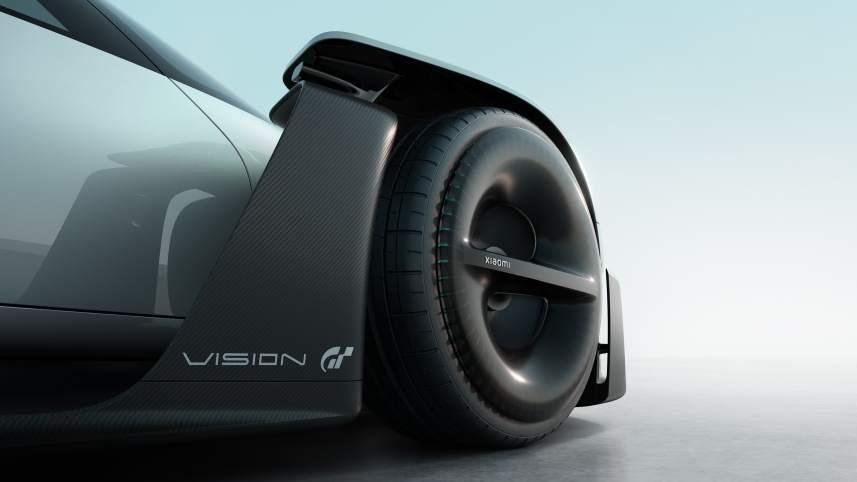
The design of the Vision Gran Turismo was led by Tianyuan Li, Xiaomi’s design chief and a former designer at BMW.
Development involved collaboration across Xiaomi’s design studios in Shanghai, Beijing, and Munich, with the Munich studio leading the project.
According to Xiaomi, the concept allowed Xiaomi to rethink hypercar design from a technology-driven perspective, combining advanced electrification with artificial intelligence.
The vehicle’s teardrop-shaped central body and airfoil-inspired structural components reflect a design philosophy focused on maximizing aerodynamic efficiency while minimizing drag.
Other different innovation is seen in the car’s airflow management system, which channels air from the front through sculpted passages beneath the body before releasing it through a rear outlet marked by a large looping taillight.
The system incorporates an “Active Wake Control” feature—micro-vents around the taillight that adjust airflow using real-time speed and yaw data to reduce turbulence.
Latest Tech News
Decode Africa's Digital Transformation
From Startups to Fintech Hubs - We Cover It All.
Additional aerodynamic enhancements include magnetically stabilized wheel covers that appear to float while directing cooling air to the brakes.
Xiaomi says the hypercar achieves a drag coefficient of 0.29, improving efficiency and enabling a lighter battery pack, ultimately delivering higher performance while maintaining the company’s technology-driven design ethos.