Forgotten African Kingdoms That Shaped World Trade
Long before European ships set sail for foreign shores, Africa’s kingdoms were powering the arteries of global commerce. From Mali’s gold caravans and Ife’s bead networks to Aksum’s maritime empire and Great Zimbabwe’s stone-walled markets, these states traded across continents, spread religion, and influenced cultures from India to the Mediterranean. Yet colonial narratives erased their role, framing Africa as a passive bystander in history. Reclaiming these stories not only restores Africa’s place on the map of world trade—it reshapes how we understand the making of the modern world.
Introduction: Rewriting the Global Map
Close your eyes and imagine history’s great trading empires. Chances are, the first names that emerge are Rome, Persia, or the Song empire of China. Yet, if you truly trace the arteries of medieval world trade, you’ll find African kingdoms—not merely participants, but vital architects of transcontinental exchange. From the gold-laden caravans crossing the Sahara to the glittering beads of Ife, these kingdoms thrived long before European exploration. Their stories urge us to redraw maps of global influence and reclaim Africa’s central role in shaping precolonial commerce.
Gold, Salt, and Camel Caravans: The Trans-Saharan Heartbeat
As early as 500 BCE, the Berbers of North Africa began trading salt—an essential preservative—with West African states in exchange for gold, ivory, and agricultural goods. Camels, adapted with Tuareg saddles, made Sahara crossings possible. (BlackPast.org, HisGovOnline, CWI Pressbooks)
Between the 7th and 11th centuries, this trade structured the rise of the Ghana Empire, hidden at the nexus of Saharan salt routes and West African goldfields. Al-Bakri, an 11th-century Arab geographer, described Kumbi Saleh as a city of dazzling wealth—gold-embraced rulers, gilded artifacts, and organized governance. (MetMuseum, History Textbook)
As Ghana waned, Mali under Mansa Musa and later Songhai, with their capitals in Timbuktu and Gao, became pivotal nodes in trade and Islamic scholarship—drawing caravans, thought, and gold through the desert’s beating heart. (Wikipedia: Mali Empire)
Ife: Beadwork That Traveled Across Kingdoms
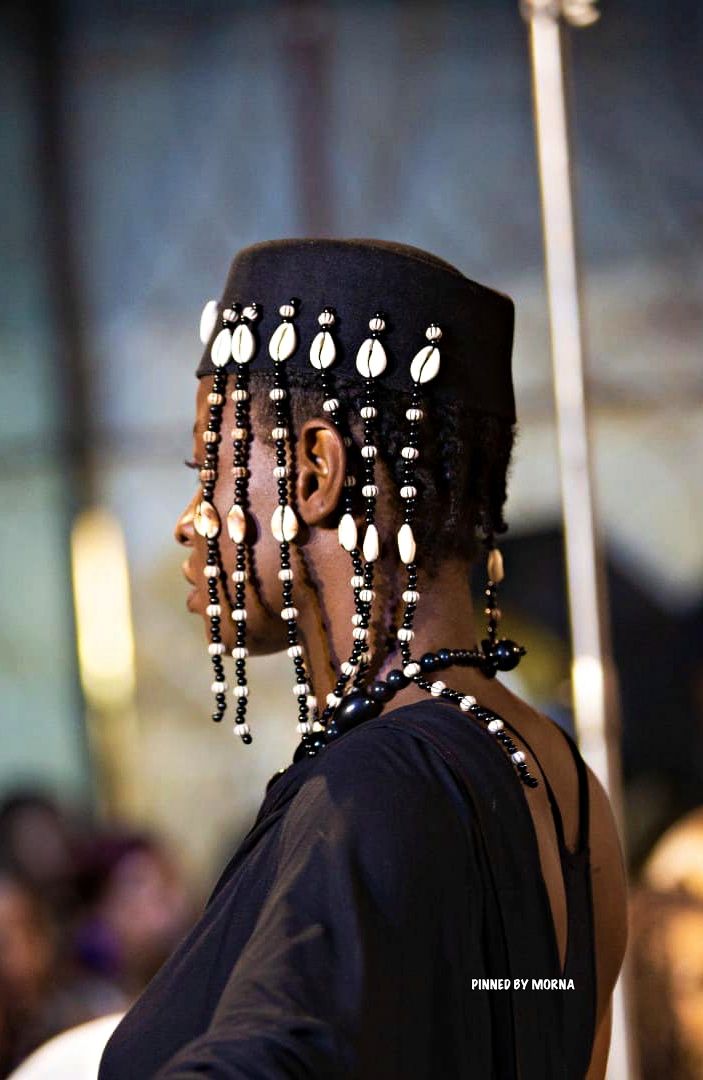
image credit: pinterest/ Mali
Further south, a less-heralded empire thrived: Ife (c. 1000–1420 AD), located in present-day southwestern Nigeria, was not just a center for craftsmanship—it controlled a specialized bead trade that punctuated long-distance commerce. Ich glasswork was so prized that dichroic beads from Ife have been found in Chad, Mauritania, Senegal, and Mali. Around the 12th–14th centuries, these beads were used as currency. (Wikipedia: Ife Empire)
Remarkably, Ibn Battuta heard tales of a powerful pagan kingdom “to the south” during his visit to Mali in 1352—almost surely Ife. Here, local culture created its own economy, integral to trans-Saharan and sub-Saharan trade flows.
Aksum: East Africa’s Crowned Beacon of Trade
Turn your gaze east, and you land on the Kingdom of Aksum, anchored in what is now northern Ethiopia and Eritrea. Considered one of the four great powers of the third century—alongside Rome, Persia, and China—it minted coins found as far away as southern India. Its trade network stretched across the Red Sea, linking Rome to India, and even shaping early Christian political economy.(Wikipedia: Aksum)
Under King Ezana (320s CE), Aksum bolstered its influence through military conquest (including Kush), trade control, and religious alignment with the Greco-Roman world. Aksumites pioneered maritime commerce, long before Europeans charted those waters.
The Orungu Kingdom of Gabon
Not every trading empire comes into focus easily. The Kingdom of Orungu (17th–19th century), in the Ogooué River delta of Gabon, traded not in grand scale but in strategic finesse. As skilled metalworkers and boat builders, they brokered ivory, beeswax, dyewood, and metal goods along the Central African coastline. Unlike other kingdoms, Orungu adapted swiftly—importing slaves with proceeds from ivory, and knowing when to pivot in response to colonial-shifted markets. (Wikipedia: Orungu Kingdom)
This kingdom shows how regional actors leveraged niche strengths to navigate shifting global tides.
The Kingdom of Kongo: From Crafts to Commerce
Meanwhile, in Central Africa, the Kingdom of Kongo participated actively in global trade and cultural exchange. Portuguese records and artifacts reveal a developed society known for its raffia cloth, carved ivories, and strong political institutions. After the abolition of the slave trade, Kongo shifted toward trade in ivory, wax, peanuts, and rubber—fostering economic inclusivity by broadening participation in commerce. (Wikipedia: Kongo Kingdom)
The Rise and Fall of Great Zimbabwe
Traveling southeast reveals the ancient ruins of Great Zimbabwe, a city whose towering stone walls rise from the African grasslands without mortar. It housed tens of thousands and thrived on gold trade and cattle. European writers of the 19th century refused to credit local peoples for its construction, attributing its origins to outsiders instead. This assault on memory was ideological, not archaeological. Great Zimbabwe reminds us how narratives of African underachievement were built—and how they persist. (Epochs and Echoes)
Case Study: Wadai—The Sahara’s Last Stand
In eastern Chad, the Wadai Kingdom (1611–1912) emerged after the fall of Nubian states, becoming a centralized state across Sahara’s edge and the Lake Chad basin. At its height, Wadai encompassed nearly one-third of what is now Chad. Its power rested on controlling trans-Saharan routes, linking diverse ecological regions and trade networks. Wadai’s longevity challenges misconceptions that Sahara trade collapsed long before colonial rule. (Reddit summary of history of Wadai)
image credit: pinterest
History
Rewind the Stories that Made Africa, Africa
A Journey Through Time, Narrated with Insight.
Trade, Religion, and Cultural Transmission
These kingdoms—Ghana, Mali, Ife, Aksum, Orungu, Kongo, Great Zimbabwe, Wadai—shared more than commerce. They were nodes of cultural exchange. Islam spread across the Sahara alongside gold. Christianity took root in Aksum long before northern Europe’s conversion. Bead designs, metallurgy, cloth patterns, language, and legal models flowed along trade routes just as surely as ivory or salt. (Time interview with Henry Louis Gates Jr.)
Why These Kingdoms Were Forgotten—and Why That Matters
Much of this history went undocumented—oral traditions overshadowed by colonial archives, archaeology sidelined by imperial narratives. The result has been a collective amnesia that allowed stereotypes about Africa’s stagnation to flourish.
But scholarship, archaeology, and digital archives are rebuilding memory. The excavation at São Tomé’s Praia Melão (sugar plantation ruins) shows the island’s early role in global trade and in institutionalizing race-based slavery. (The Guardian News)
Conclusion: Reclaiming Africa’s Place in World Trade
Revisiting these kingdoms is not nostalgia—it’s restitution. Together, they reveal that Africa was not waiting to be discovered. It was a force shaping trade, faith, metallurgy, and culture—often long before Europe’s rise to global dominance.

Their memory challenges not just misperceptions, but our understanding of global history itself. Re-centering these stories expands our imagination about African past and African agency—pinning new significance on old stones, caravan routes, and bead strings that crossed continents. History deserves its full complexity, not hollow echoes of empire.